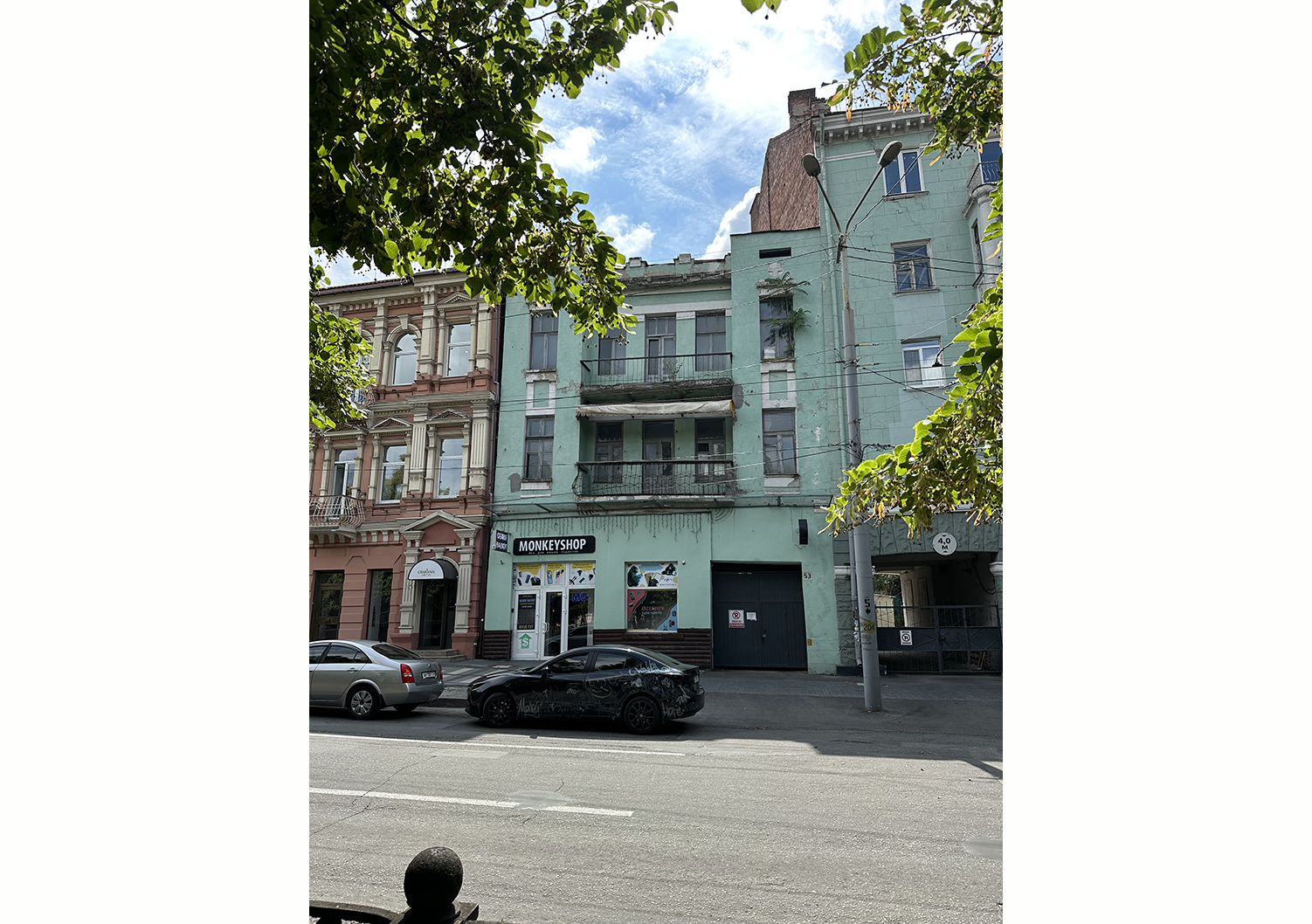
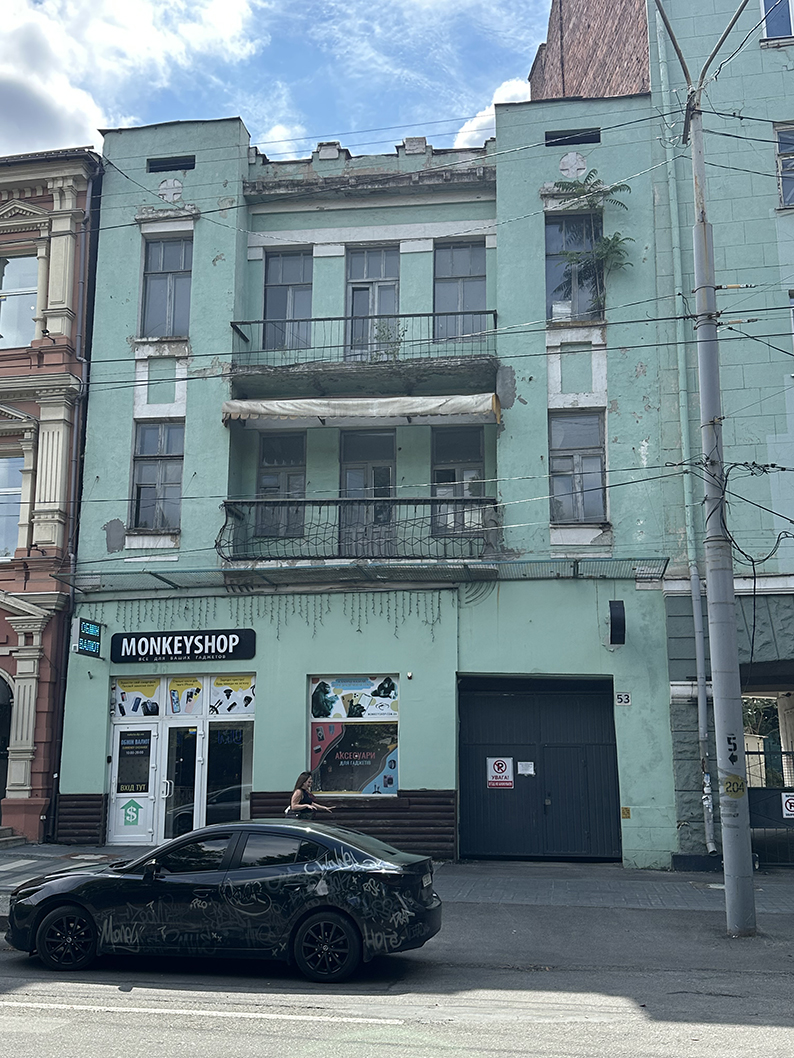
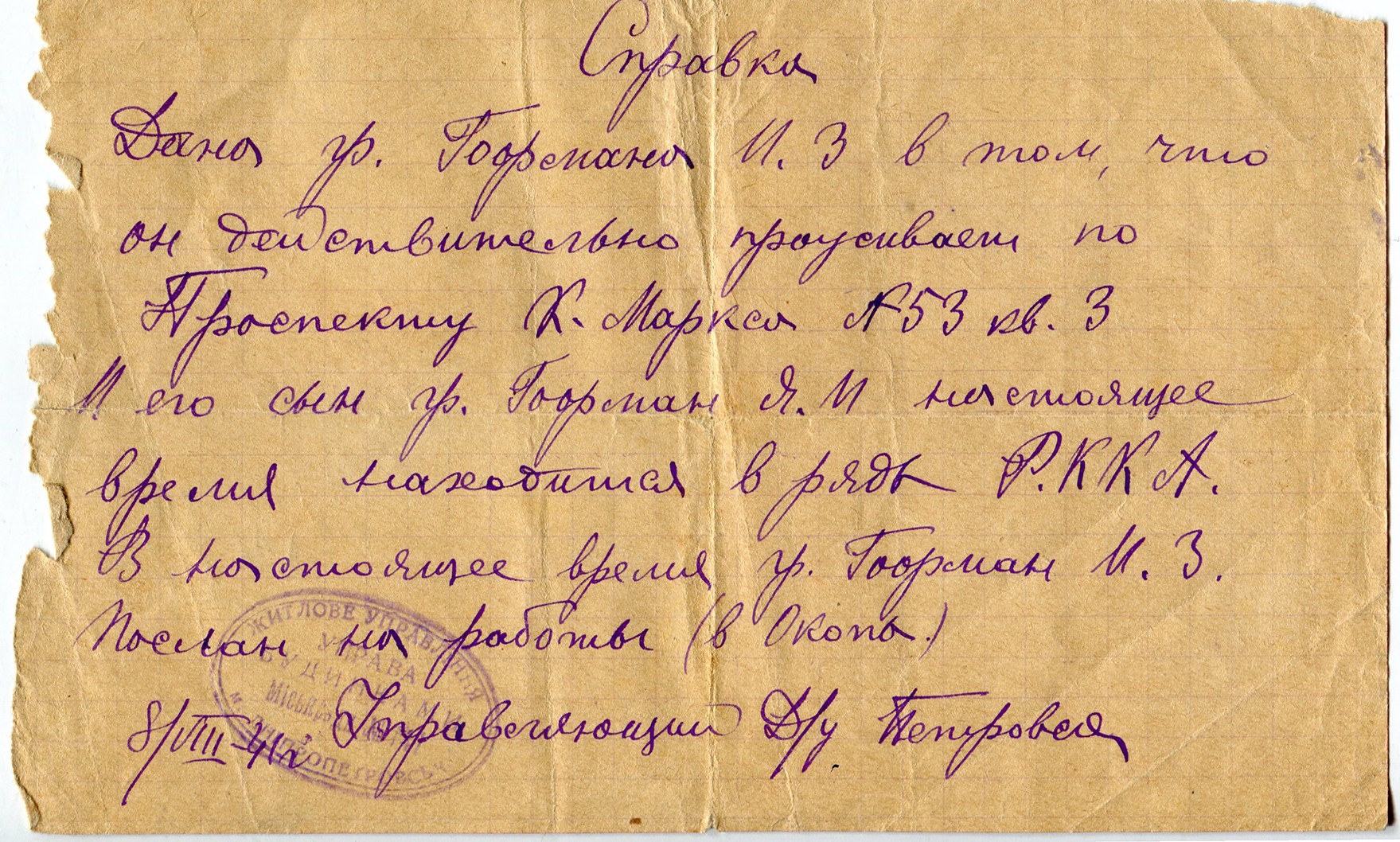
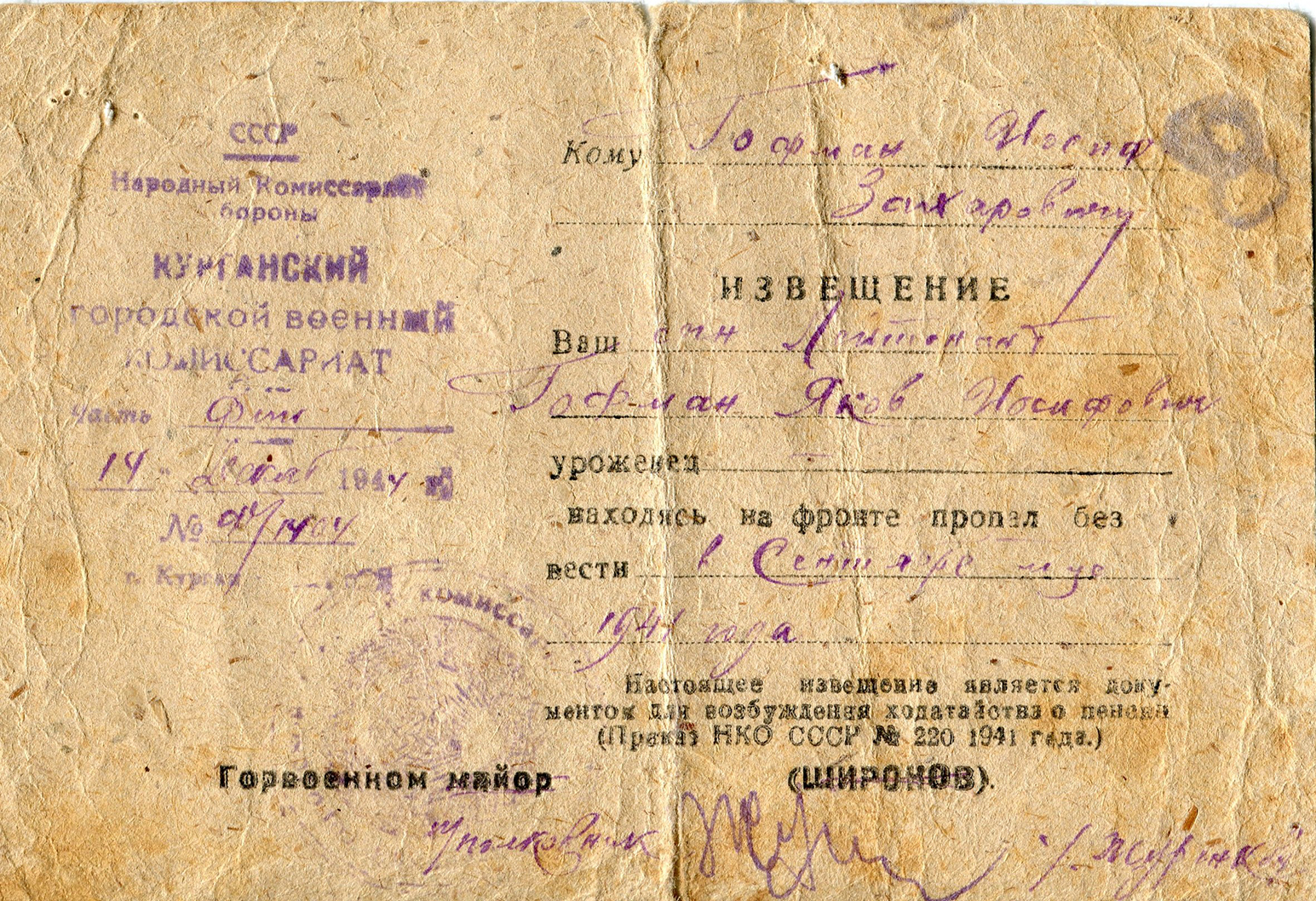
A few hundred meters from the Museum, just behind the “Kölnskyi Bulvar” bus stop, there is a three-story building with an address sign – 53 Dmytra Yavornytskyi Avenue. Every day, thousands of people, absorbed in their own affairs and thoughts, pass by it. Some disappear behind the doors of the institutions and shops located in the building. Like every building on central Dnipro Avenue, building No. 53 knows countless stories, which are intertwined with human dramas, tragedies and moments of indescribable happiness. Today we will try to talk about one of them, or rather, about a fragment of the life of the Jewish Hoffman family – one of the families that lived in the building. Documents from the Museum’s collections will help us with this.
In August 1941, as the Wehrmacht troops were approaching the city on the Dnieper River, its residents increasingly began to think about the worst – the possibility of enemy occupation. Indirect evidence of this was the gradual dismantling of equipment at individual enterprises, the departure of families of leaders and party figures. A resident of house number 53 on Karl Marx Avenue[i], Joseph Zakharovich Hoffman, could see how his neighbors were gradually leaving, while more frightened women and children, hung with bundles, appeared on the streets. Most of them gathered near the train station. This surprised the 58-year-old tailor, because it was in the train station that explosions of aerial bombs were regularly heard, which German pilots did not spare for the city and its residents. On the other hand, Joseph understood that something truly bad was coming: if people were willing to risk their lives and spend days and nights at the station, cherishing the illusory hope of a place in one of the trains to the east, it did not bode well.
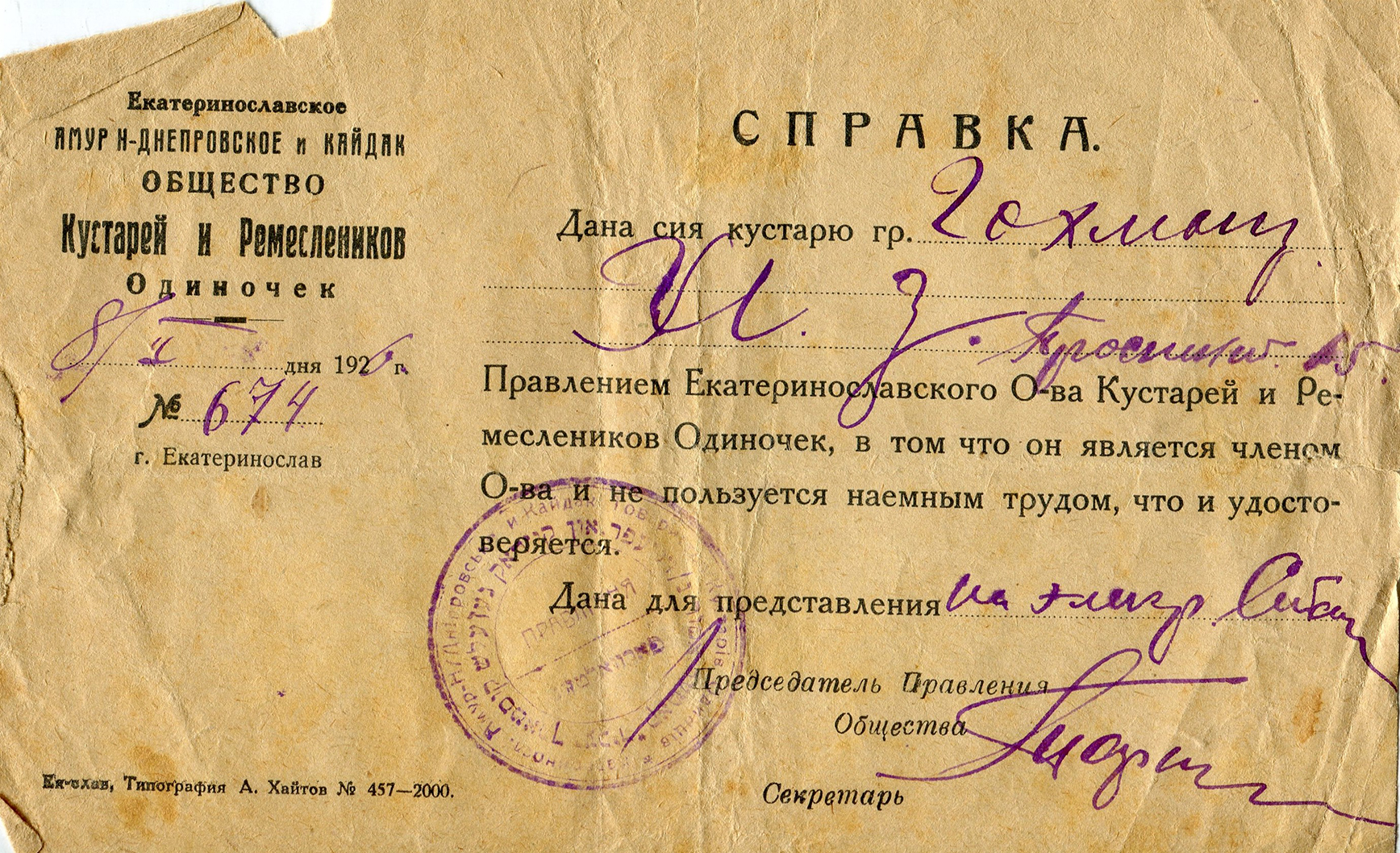
This and many other things were the thoughts of the Jewish tailor, who spent almost his entire life measuring, cutting, and sewing. He sewed privately, and later, in the mid-1920s, he was forced to join the Ekaterinoslav Society of Artisans and Craftsmen. Society retained the name of the imperial city, although in the same year that Joseph received one of the numerous certificates confirming his proletarian status, the city changed its name again[ii]. Now, in the new world that was being built on the ruins of the old, there was no place for saints, emperors, and empresses (even Russian ones). Instead, revolutionaries were a perfect fit, especially those who did not hesitate to fight against opponents of justice[iii]. The certificate emphasized that Hoffmann did not use hired labor and therefore could not be hostile to Bolshevik ideology. He was an ordinary man, one of thousands of Jewish urban artisans who worked in what would now be called domestic services. The face of this sector was also predominantly Jewish. Even the seal of the society was bilingual – Ukrainian and Yiddish. The latter corresponded to both the national composition of the Society and the spirit of the time of indigenization.
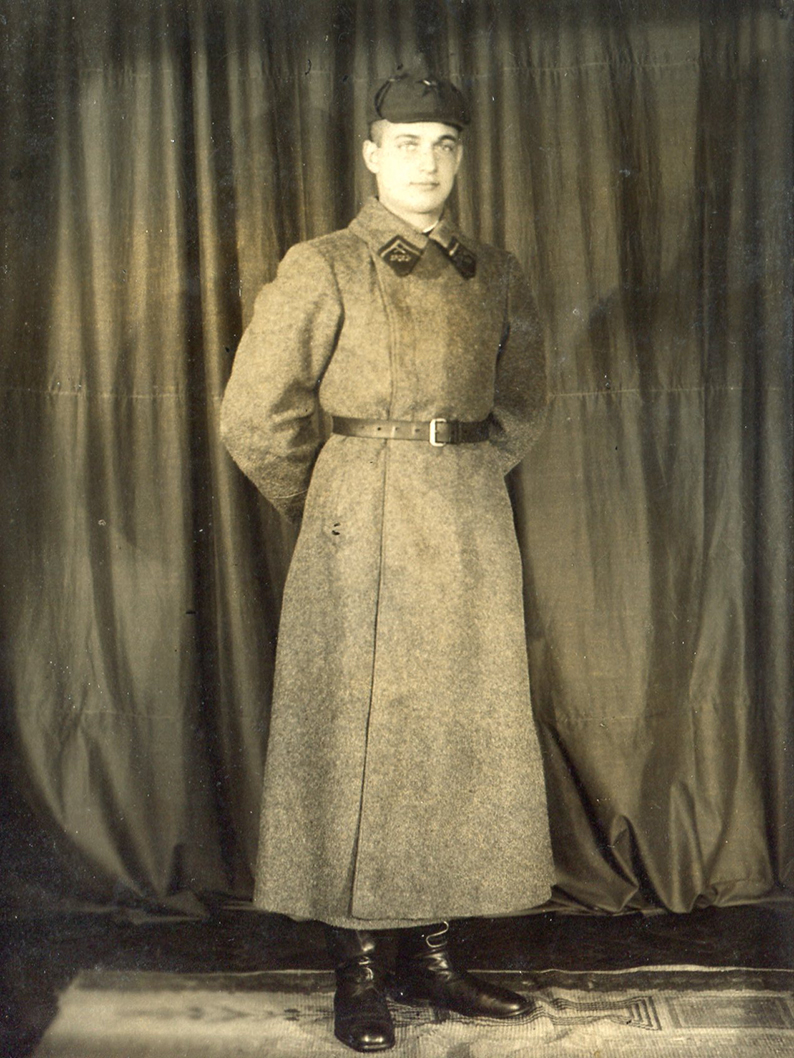
Times were difficult, but were there any easy ones in his tailoring life? Like today, on the seventh day of August, or, as devout Jews would say, on the 14th of Av. During the war, one had to work, regardless of the calendar and customs. At the end of July, instead of scissors and a centimeter ruler at the Indposhiv factory, Yosyp Hoffman, like thousands of Dnipropetrovsk residents, was forced to pick up a shovel and dig trenches. It is obvious that working under the scorching August sun was not an easy task. Especially for a man who was almost close to exchanging his sixth decade of life[iv]. At the same time, the monotonous and exhausting work had one advantage - it gave him time to think. I wanted to remember something good, but my thoughts drifted to my eldest son, Yakov. Back in 1940, he was mobilized into the Red Army and sent to officer courses in Kyiv. From there, in March of the same year, he sent his last photo. He is serving somewhere in the artillery. Where is he now?
“Maybe when I get home, a letter from Yakov will be waiting for me?”
Instead, a message from a neighbor was waiting at home: I need to go to the kerbud[v] – pick up some kind of certificate and generally prepare for the evacuation, which will supposedly be announced tomorrow. Tomorrow… Tomorrow is August 8, or the 15th of Av, – thought Yosyp.
– Shabbat… Shabbat begins tomorrow, and we are getting ready to hit the road…
At that time, Joseph Hoffmann did not yet know that he would celebrate the next Shabbat in his hometown only after the end of the Great War. Even though his house would be preserved, the city would change greatly. Many acquaintances and friends would not remain alive. Lieutenant Yakov Hoffmann would not return home either. An official message would arrive in Kurgan – the place of evacuation of tailor Hoffmann – and in a stately tone would announce that his beloved son Yasha had gone missing in September 1941.
75 years will pass since that August. A little more than Joseph Hoffman had when he returned to Dnipropetrovsk. The lights in the windows of house No. 53 on the avenue are almost the same. Some of the windows seem to have emerged from distant 1941 – naively dressed in paper crosses that were supposed to protect against the blast wave. After all, just like then, today an air raid siren is heard on the streets of the city. As it turned out, even after such a long period of time, war can return. Perhaps because the post-war generations have gradually forgotten its horrors, or perhaps they naively did not want to see Evil that this time grew on the other side of the Dnieper.
[i] Now it is Dmytro Yavornytsky Avenue
[ii] In 1926, the city of Katerynoslav was renamed Dnipro-Petrovsk
[iii] The Russian Bolshevik Grigory Petrovsky (1878-1958), after whom the city was named, was particularly notable for signing the infamous resolution of the Council of People's Commissars “On Terror” of September 5, 1918
[iv] Joseph Zakharovich Hoffman was born in 1883
[v] The head of the house, the administrator