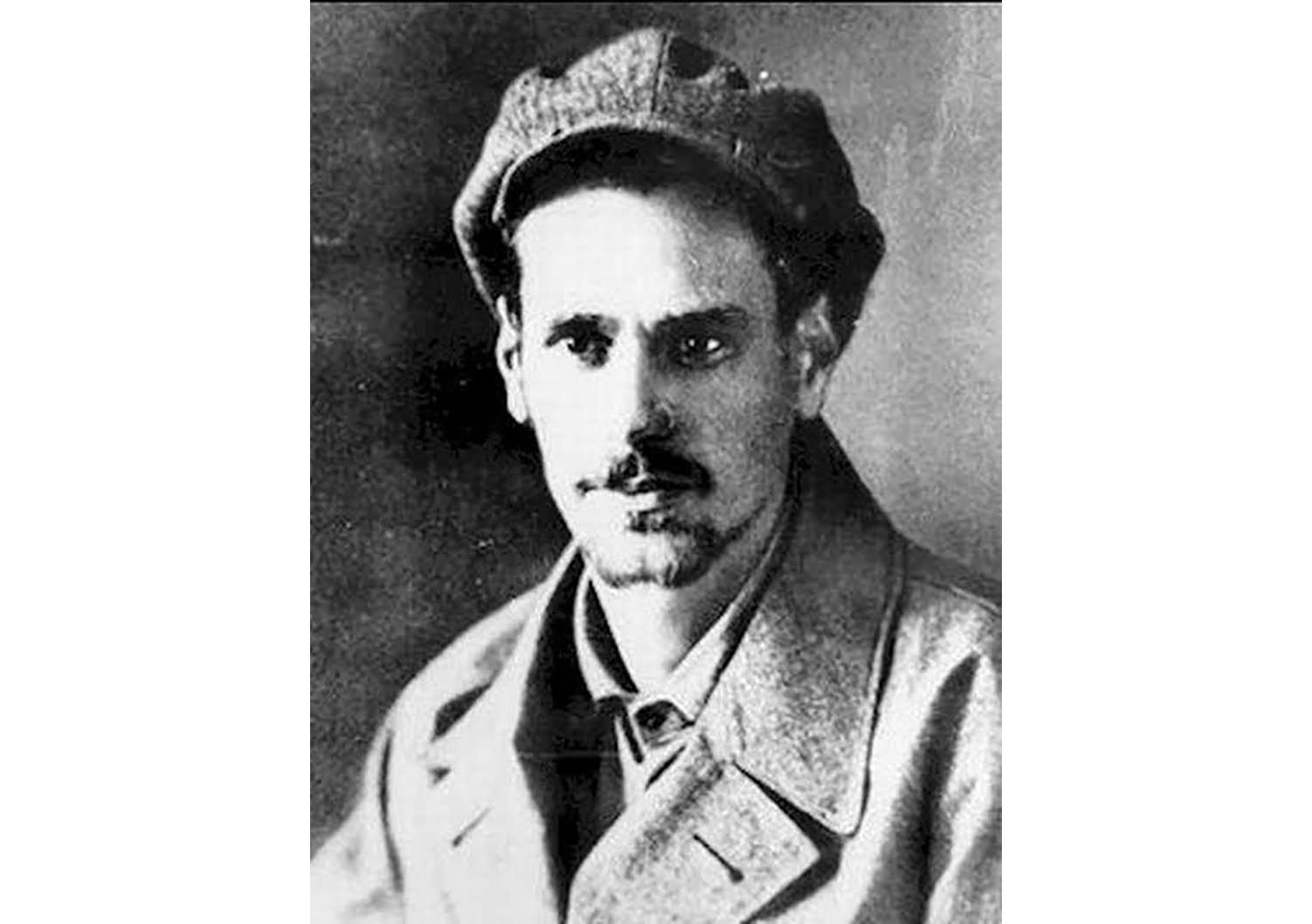
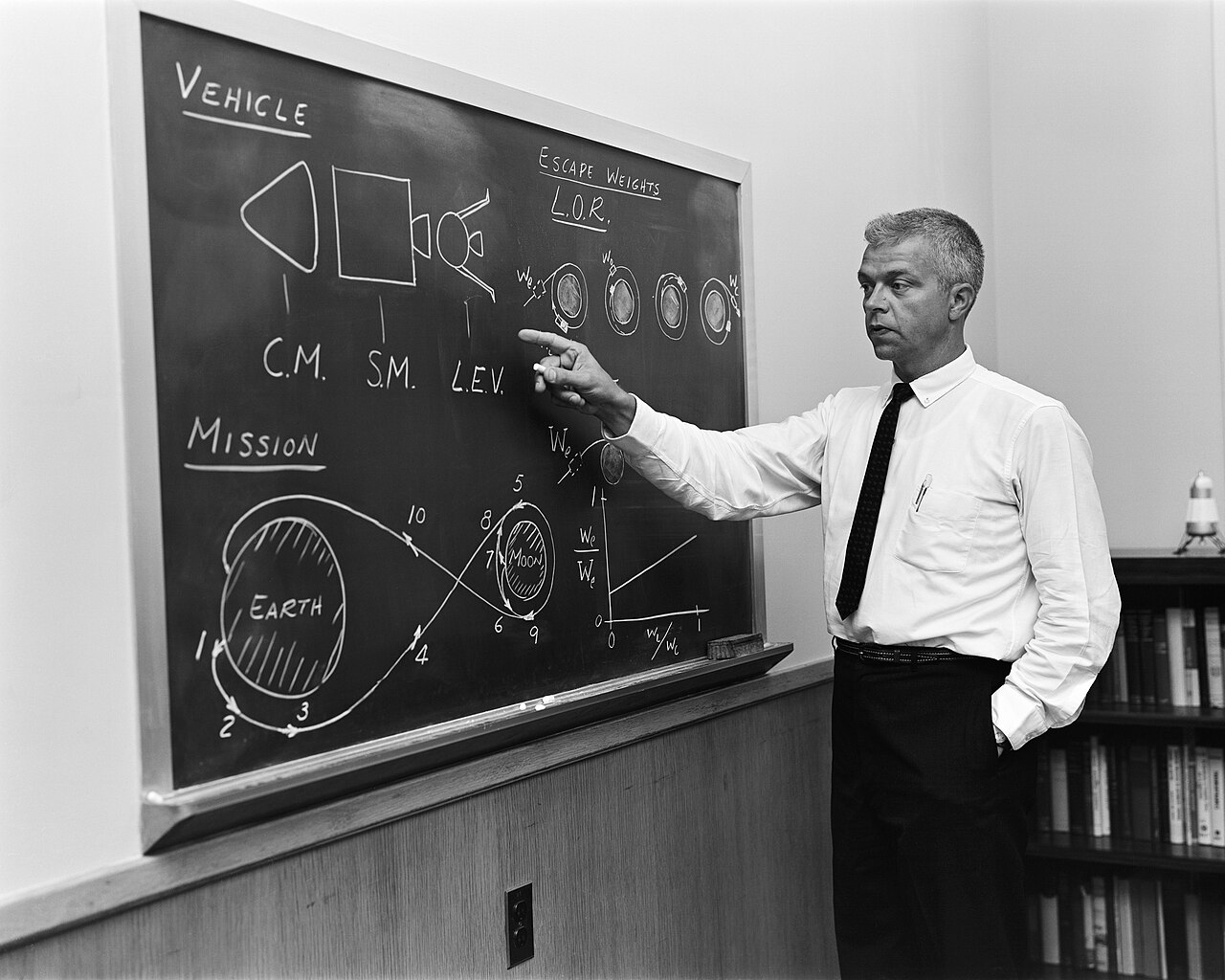
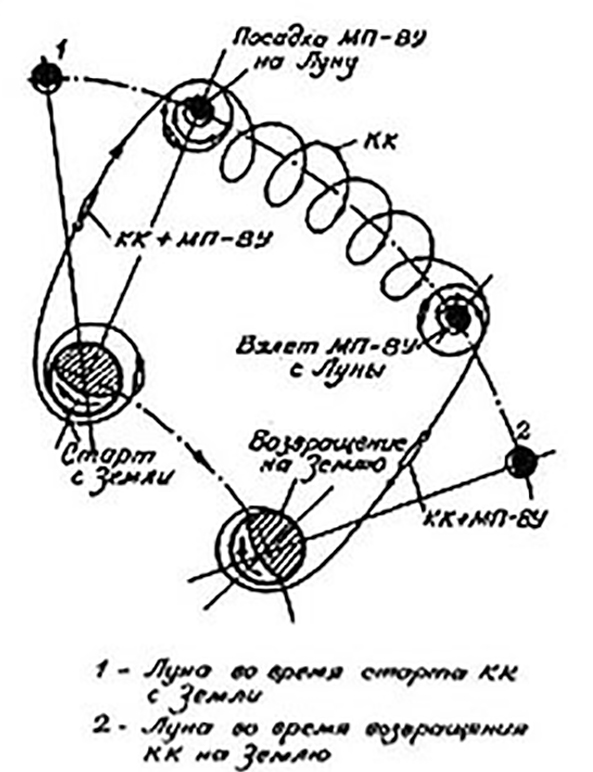
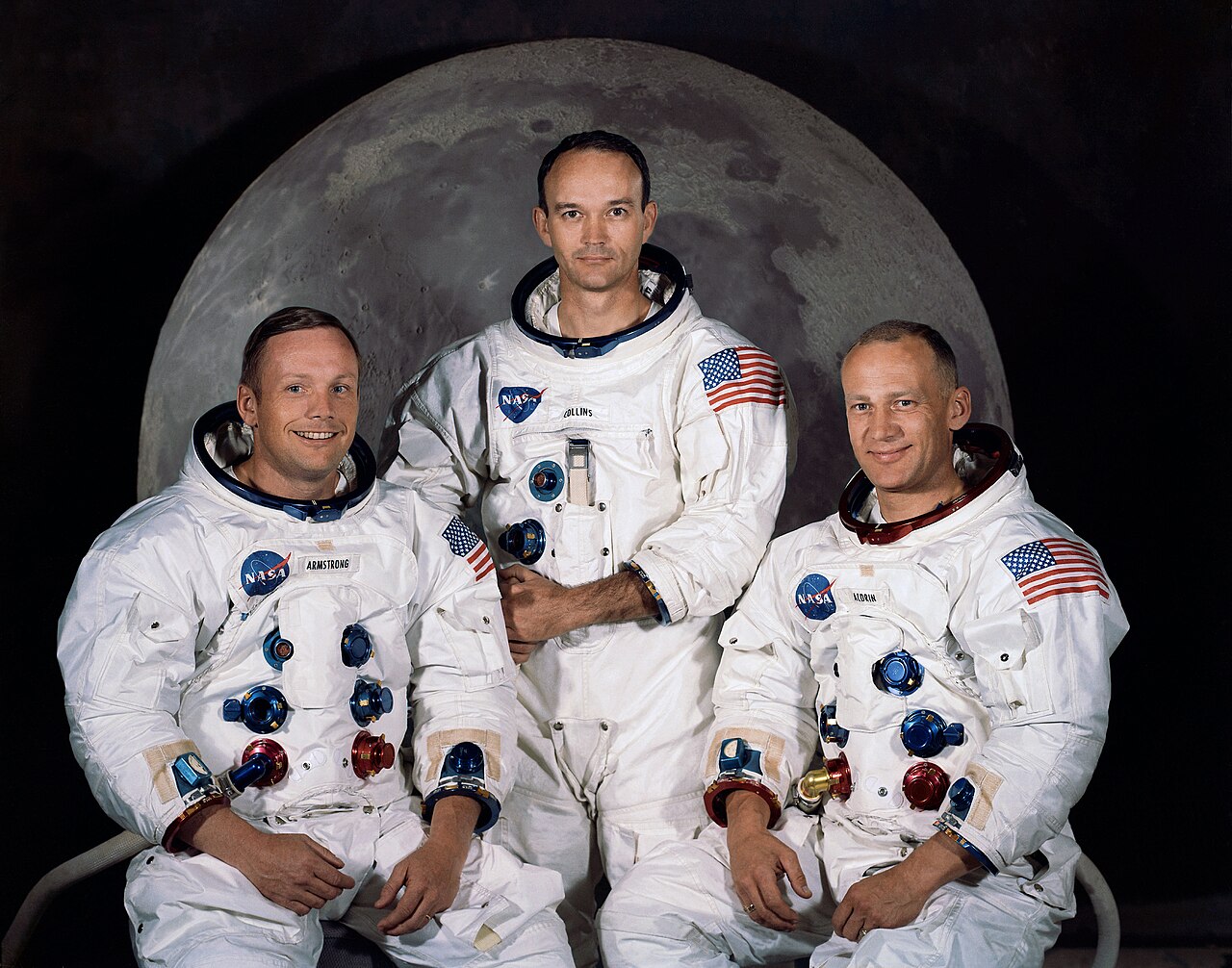
“When, at dawn in March 1968, I watched with my heart sinking at Cape Kennedy as the rocket carrying the Apollo spacecraft towards the Moon launched, I thought at that time about the Ukrainian Yuri Kondratyuk, who 50 years ago developed the very route along which our astronauts were to fly: My God!”, – These words belong to John Cornelius Hubolt, one of the leaders of the US lunar program. On July 1, 1969, American astronaut Neil Armstrong became the first person to set foot on the surface of the moon.
Few people know, that the flight of the American rocket Apollo 11 was the practical embodiment of the ideas of the Ukrainian engineer Yuri Kondratyuk (1897–1942). It was he who developed the theoretical foundations of future interplanetary flights, as well as the most economical option for a human journey to the Moon. Even fewer people know that this outstanding figure also had Jewish roots.
Oleksandr Shargey was born on June 21, 1897, in Poltava. His father, Ignat Shargey (1873–1910), was born in Berdychiv to a Jewish family originally from Lithuania. Ignat's family moved several times, so the father of the future inventor spent his childhood in the Poltava region (in Zinkiv), where he graduated from high school.
At the time of the birth of his firstborn, Ignat Shargey was studying at the Physics and Mathematics Department of the Faculty of Natural Sciences of St. Volodymyr's University of Kyiv.
Alexander's mother, Baroness Lyudmila Lvovna Schlipenbach, came from a well-known aristocratic family of Swedish origin. Her great-great-grandfather, Volmar Anton Schlipenbach (1653–1721), a major general in the Swedish army, took part in the Northern War and, unfortunately, was captured by Moscow during the infamous Battle of Poltava in July 1709. From 1712, he served in the Moscow Kingdom. Almost all of V. Schlipenbach's descendants in the male line chose the path of a military career.
For the sake of marriage, Ignat Shargei changed his religion and converted to Christianity. However, the family union of the student and the French teacher was difficult to call happy. Shortly after the marriage and the birth of Alexander, his mother developed a mental illness. Therefore, the boy’s fate was taken care of by his paternal grandmother, Kateryna Datsenko (Friedricha Rosenfeld) (1846–1917), a midwife by profession[i]. Interestingly, after the death of her first husband, she married the Poltava zemstvo doctor Yakym Datsenko[ii] and also changed her religion and, accordingly, her name.
In 1916, Alexander Shargei graduated from the Second Poltava Men's Gymnasium. Paradoxically, this institution would be the only one whose educational course Alexander would master in full. Unfortunately, various obstacles would arise on the path of the young man thirsting for knowledge. In September 1916, he entered the Petrograd Polytechnic Institute, but two months later he was mobilized into the army of the Russian Empire. The Great War was already in its third year, and the empire needed more soldiers. Having received the initial officer rank of ensign, in the spring of 1917, O. Shargei was sent to the Caucasus, where the Russian army opposed the Ottoman Empire.
The maelstrom of the Russian revolution engulfs millions of people, including our hero, who in 1919, already as part of the so-called Armed Forces of the South of Russia, returns to Ukraine and most likely flees from Denikin's army in the Kyiv region.
With the help of his stepmother, he receives new documents in the name of Yuri Vasilyevich Kondratyuk, born in 1900, a native of Lutsk. Most likely, in this way the young man sought to finally break with his military past, as well as to hide his officer rank and, what is more dangerous, traces of his stay in Denikin's army. The latter, under the conditions of war communism and the Red Terror, could have become a death sentence.
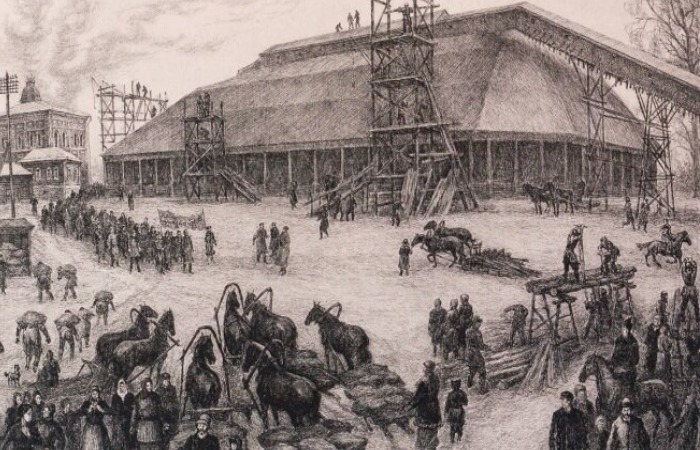
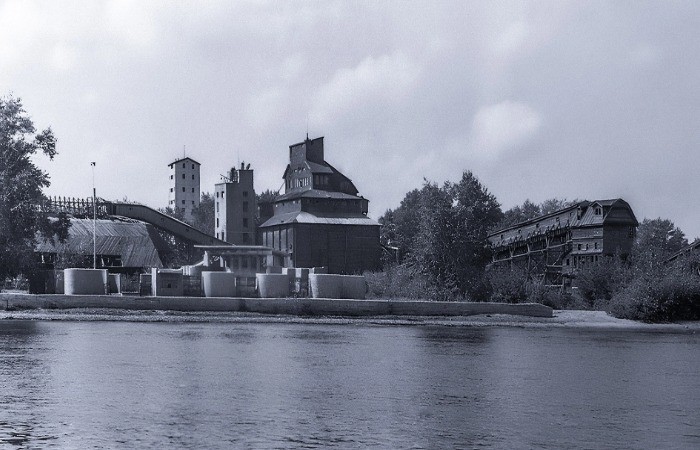
During 1921–1927, Yu. Kondratyuk changed many professions and places of residence, overcoming the path from Ukraine to distant Novosibirsk. Despite the lack of higher engineering education, the desire for invention needed to be realized. Working as a technician at the Khliboprodukt enterprise, Yu. Kondratyuk created a project for a unique grain drying complex “Mastodont” with a capacity of up to 13 thousand tons. Its peculiarity was that the building was built exclusively from wood without the use of nails and other metal fasteners. As you can see, 100 years have passed, but to this day Moscow officials complain about the lack of “Russian nails”. And then, in conditions of a huge deficit, Yu. Kondratyuk’s engineering solutions were maximally effective and, as it turned out, durable[iii].
If this were not true, it would be extremely funny, because the creation of Yu. Kondratyuk was the reason for his arrest in 1930 on charges of deliberate sabotage during construction. However, instead of sending the gifted inventor to dig canals or cut down forests, Yu. Kondratyuk, like some other prisoner engineers, was placed in a specialized closed bureau for the design of coal mines[iv].
Y. Kondratyuk was an extremely energetic and creative person. Even a sad experience did not curb his initiative. In 1930–1932, as part of a group of Novosibirsk engineers, he submitted a project for a wind power plant to the All-Union competition. The ideas of Yuri Kondratyuk and Nikolai Nikitin (later the architect of the Ostankino Tower in Moscow) greatly interested government officials from the People's Commissariat of Heavy Industry, who eventually achieved the release of our hero from prison.
Since 1933, Yu. Kondratyuk has been an employee of the Institute of Industrial Power Engineering in Kharkiv. It was here that he finalized the final design of a power plant that was to be built on Mount Ai-Petri on the southern coast of Crimea. However, the work did not proceed beyond laying the foundations of the buildings, because in 1938 the direction of creating large wind power plants was recognized as unpromising. Yu. Kondratyuk continued to work in the Design and Experimental Office of Wind Power Plants, but on projects of much smaller scales.
Around 1933, another prominent native of Ukraine, Serhiy Korolev, who had just taken up the position of deputy director of the newly established Jet Research Institute, drew attention to the gifted inventor. However, Yu. Kondratyuk refused to cooperate. The likely reason for this decision could have been the fear of thorough checks by the Soviet punitive authorities and the discovery of his “White Guard” past. Life indirectly confirmed Yu. Kondratyuk’s fears, because in 1938, S. Korolev himself, the future “father of the Soviet space program,” was arrested and sentenced to 10 years in prison in a camp on Kolyma.
What caused S. Korolev's interest in the person of Y. Kondratyuk?
The fact is that the figure of the latter was already known in narrow circles of space flight theorists. Back in 1919, Yu. Kondratyuk wrote an article “To Those Who Will Read in Order to Build,” in which he presented his own equation of rocket motion and also proposed a scheme for a four-stage aircraft for space travel.
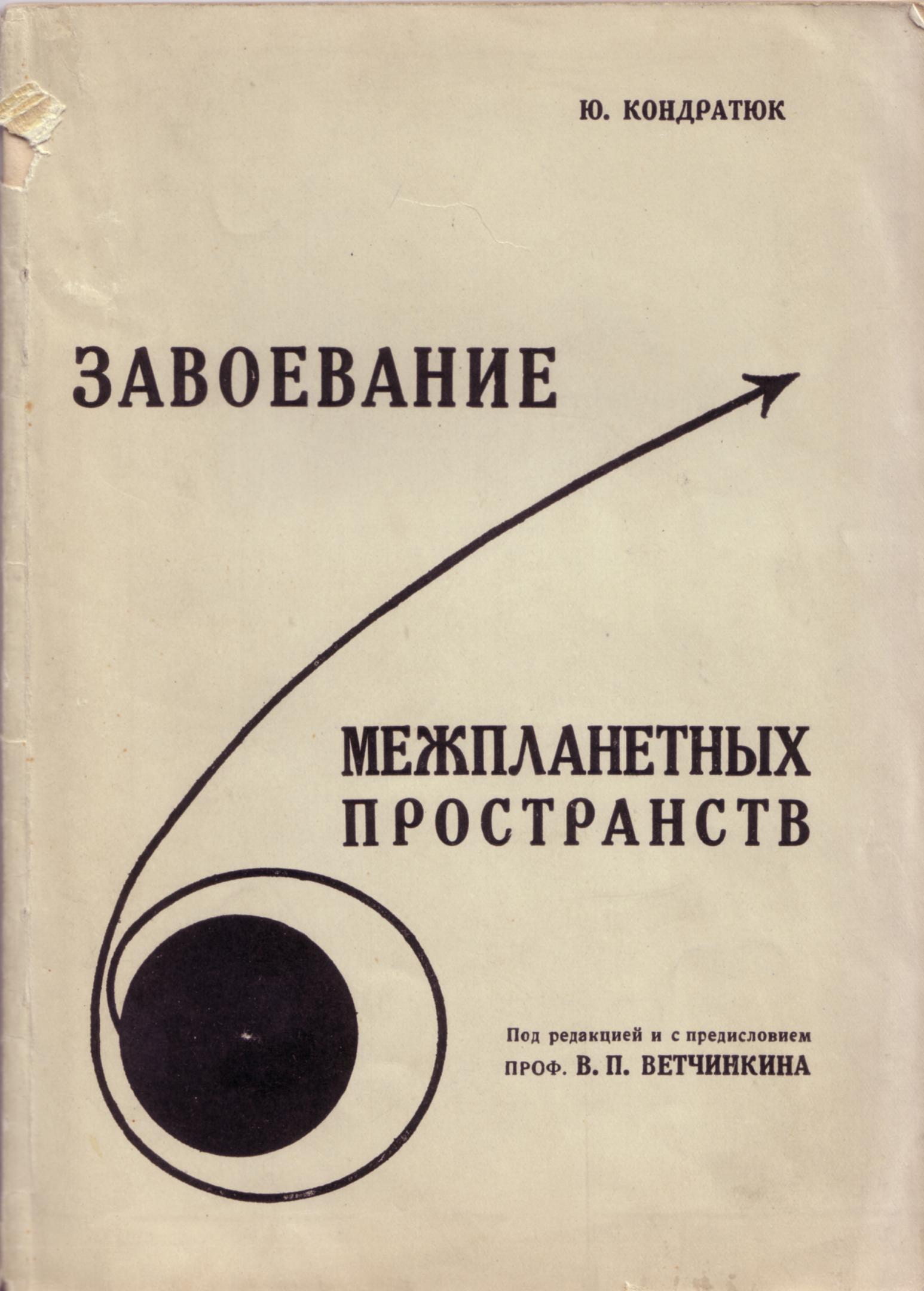
In 1929, he also wrote and published a small book, "The Conquest of Interplanetary Spaces," in which he proposed a theoretical solution to the problem of flying from the Earth to the Moon, namely, the most energetically advantageous route for space flight, as well as an algorithm for its implementation. Later, the flight scheme was named after its author - the Kondratyuk Route.
As of 1939, Yuriy Kondratyuk was living in Moscow. During the German-Soviet War, he voluntarily joined the units of the 21st Moscow Division of the People's Militia, fought (including in the conditions of encirclement near Vyazma) and died on February 25, 1942 in the Oryol region[v].
The figure of the outstanding native of Ukraine is relatively well known in the world. However, since the 1970s, the USSR authorities have sought to present him precisely as a Soviet (read: Russian) scientist. It is symptomatic that in 1970, during an official visit by the American astronaut, a participant in the mission to land on the moon, Neil Armstrong, he was taken to Novosibirsk to the house where the outstanding inventor lived. Interestingly, in the same year, that is, only four decades later, the same Soviet authorities finally managed to officially rehabilitate Yu. Kondratyuk and recognize the fact of his groundless arrest and conviction in 1930.
Fortunately, the memory of Yuriy Kondratyuk lives not only in Ukraine, but also in the USA - the country that implemented the ideas of the Ukrainian engineer. There is a monument at the Canaveral Cosmodrome (Florida), and one of the craters on the far side of the Moon bears Yuriy Kondratyuk's name. Since 1997, he has also been the patron of the National Technical University in his native Poltava.
Dr. Yehor Vradii
[i] Kateryna Datsenko (Friedricha Rosenfeld) was born in Poltava into the family of the owner of a candle-making workshop. After the death of her first husband, Bendyt Shargei, she returned from Berdychiv to the Poltava region, and in 1882 she married Yakym Datsenko.
[ii] Oleksandr's grandfather, Yakym Mykytovych Datsenko (1856–1920), was a prominent figure in Poltava's social circles. He closely communicated with famous writers, including Panas Rudchenko (Panas Myrny) (1849–1920), Volodymyr Korolenko (1853–1921), and others.
[iii] The wooden complex “Mastodont” in the town of Kamen-na-Obi (Altai Krai, Russian Federation) was actually in operation until the early 1990s and would probably still be in use if it had not been destroyed by fire.
[iv] In the same year that Yu. Kondratyuk was arrested, the Supreme Soviet of the National Economy of the USSR, together with the ODPU (United State Political Administration), adopted a resolution “On the use of specialists convicted of sabotage in production.” In other words, the document initiated a system of scientific and technical prisons, popularly called “sharashkas,” which existed in the USSR throughout the entire period of Stalin’s rule.
[v] In publications devoted to the biography of Yu. Kondratyuk (O. Shargei), one can also find another version of the end of his life. According to it, in 1942 he was taken prisoner by the Germans, and later, in 1945–1952, he lived in the USA under a different surname. For more information, see, for example: Builder of the lunar route: 10 interesting facts about Yuriy Kondratyuk https://universemagazine.com/budivelnyk-misyachnoyi-trasy-10-czikavyh-faktiv-pro-yuriya-kondratyuka/