At the end of this month, it will be 85 years since the beginning of the German-Soviet war – a key stage of the Second World War and, at the same time, the logical conclusion of the period of "friendship and cooperation" between two totalitarian regimes: the Nazi and the Soviet communist ones.
The Sunday morning of 1941 forever split the lives of millions of people living on Ukrainian lands into "before" and "after." Many of them were killed as a result of military actions, became victims of famine, diseases, forced displacement, and inhumane working conditions. Ukraine found itself at the epicenter of the horrific genocide of European Jews – the Holocaust, and in May 1944, the criminal deportation of the Qirimli (Crimean Tatars) and certain ethnic groups of Crimea (Bulgarians, Armenians, Greeks).
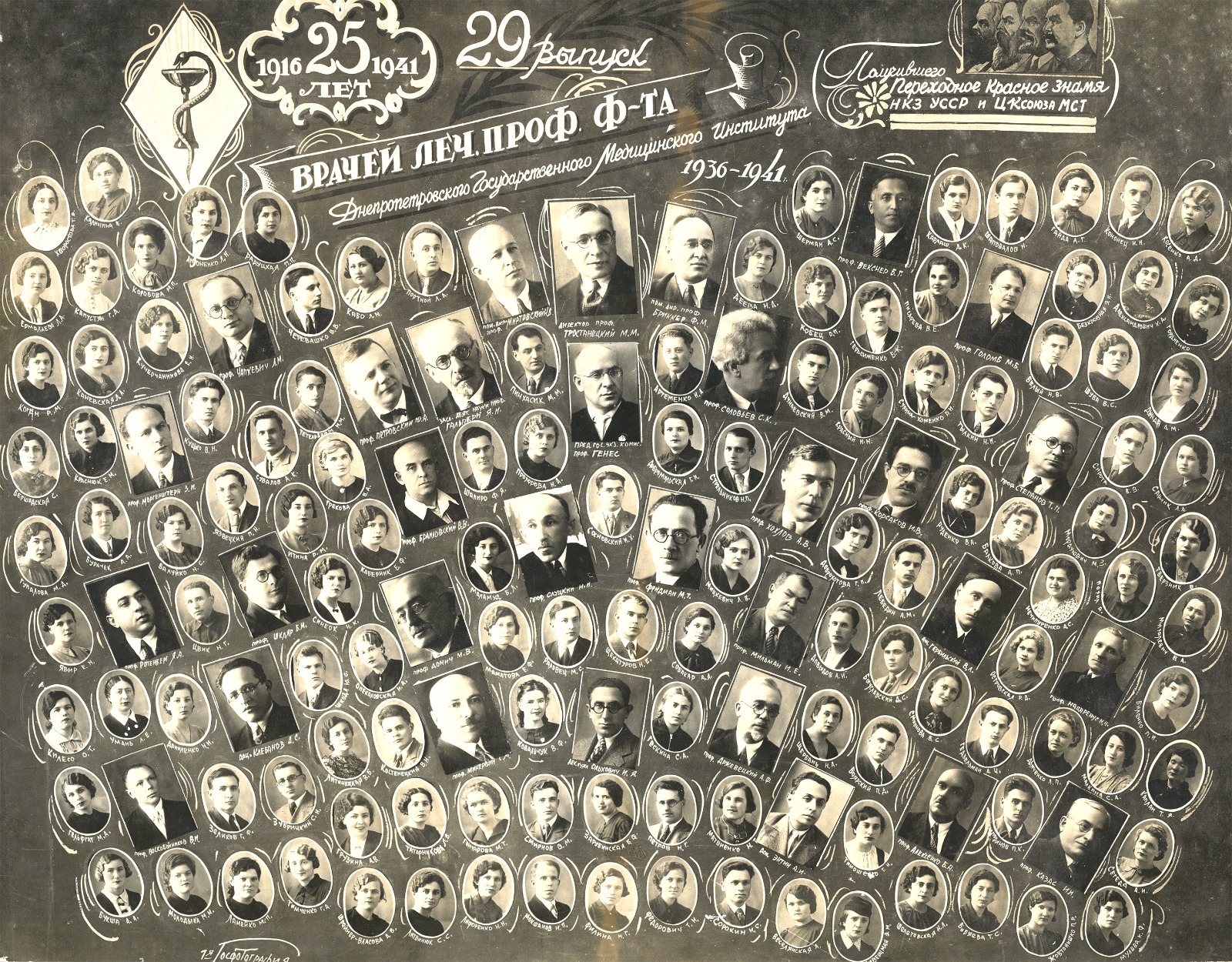
This week, the Museum acquired an important artifact, a unique witness to the final peaceful days of June 1941 – the graduation photograph of students from the Faculty of Medicine and Preventive Medicine of the Dnipropetrovsk State Medical Institute (now Dnipro State Medical University). It features portraits of 152 people: 121 students and 31 lecturers. The destinies of these people would unfold in completely different ways; however, back then, after their final exams, the students were filled with optimistic expectations of an "adult" professional life, while the lecturers were saying goodbye to yet another graduating class…