In the important period of commemoration of Passover, the Museum is launching a new section – “Exhibit of the Month”. In it, we will introduce our readers to the most interesting items from our funds, as well as present new arrivals. We will be glad for your feedback, and we also remind you that everyone can contribute to replenishing the Museum's funds and exhibition.
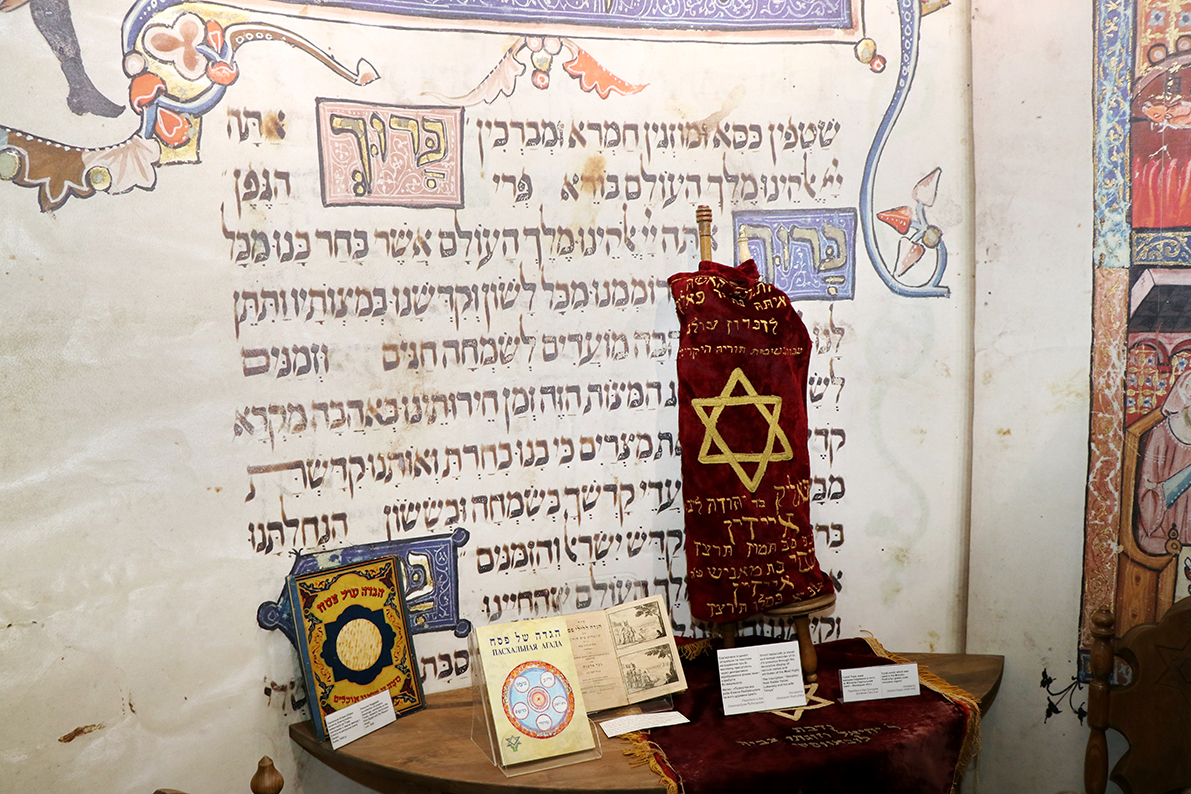
Considering the festive period, the first exhibit in this section is the Easter Haggadah, published 200 years ago – in the first third of the 19th century. This is one of the rare editions placed in the Museum's permanent exhibition. Reading the texts related to the Exodus of the Jews from Egypt is an integral part of commemorating the Passover holiday – the Holiday of Liberation and Freedom.
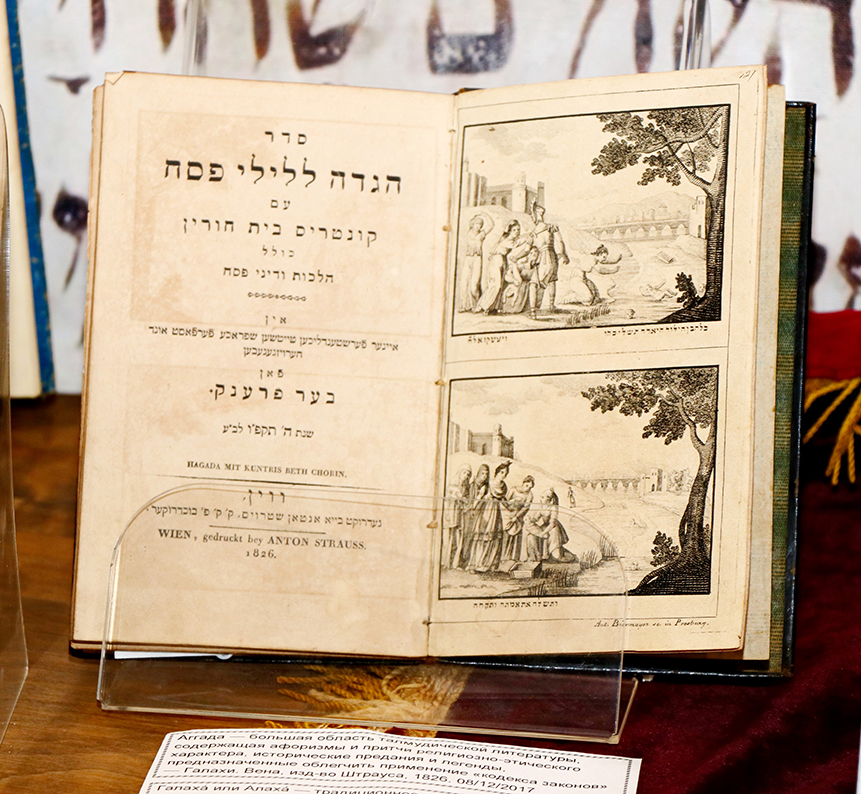
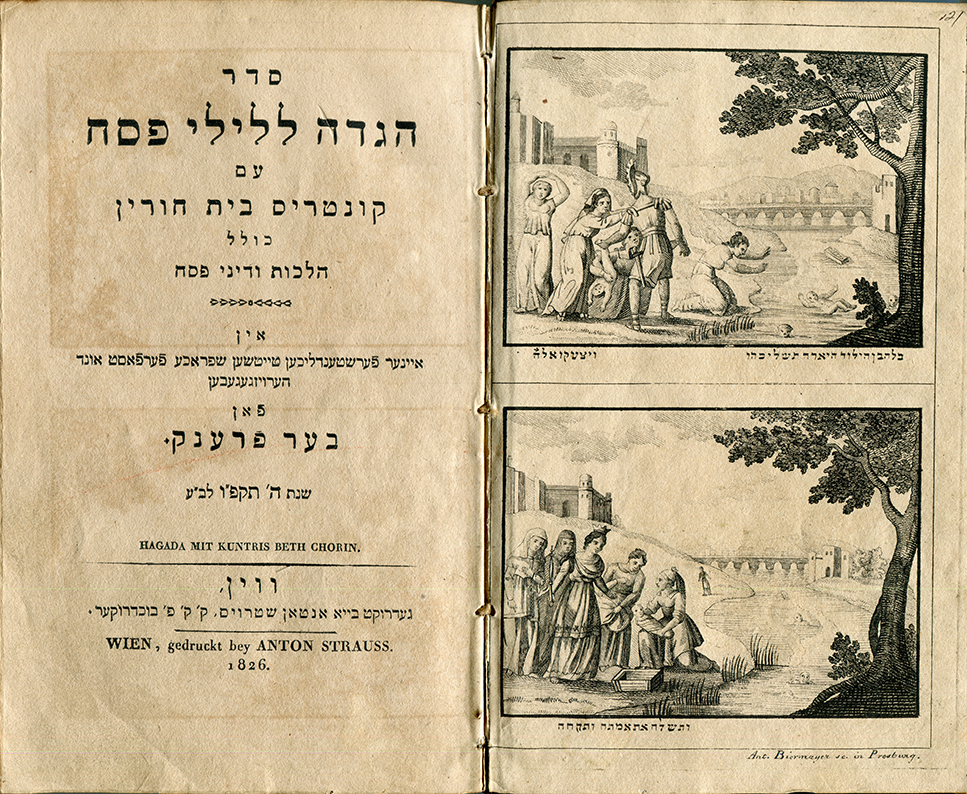
The book “Haggadah to the Passover” (Haggadah le-Lelei Pesach) 1826, printed in Vienna by the Anton Strauss publishing house. Its owner, Anton Strauss (1775-1827), was one of the most famous and influential Austrian printers. It was his publishing house that published one of Austria's two government newspapers – “Österreichische Beobachter” (“Austrian Observer”).
The publishing house of A. Strauss was extremely versatile and was noted for its high-quality printing. And it also featured publications not only in German or Latin, but also in Greek, Hebrew, and even the recently invented Louis Braille font.
The publication, placed in the Museum's permanent exhibition, is accompanied by illustrations by the artist and engraver Anton Biermayer (????–1851), who lived and worked in Pressburg (now Bratislava) for a long time. According to art critics, the two drawings may be a reproduction or, rather, an interpretation of an earlier graphic work (1630) by another artist - Mattheus Merion (1593-1650), an artist, engraver, cartographer from Basel[i].
At the end of the book, a German-language sample of a typical contract for the purchase of khamts (fermented) is presented – any food products, the technology of which involves the fermentation process. Hametz is under a strict ban during the Pesach celebration, and Jews must get rid of it during the preparation for the holiday (including by selling it).
In general, this book monument is one of the many artifacts of the Museum related to the religious tradition of the Jews of Central-Eastern Europe – a world of unique cultural heritage without which the period of the 19th century cannot be imagined.
[i] Детальніше див. David Lazar Sh’mot: You can’t save them all https://rabbidavidlazar.com/shmot-cant-save/