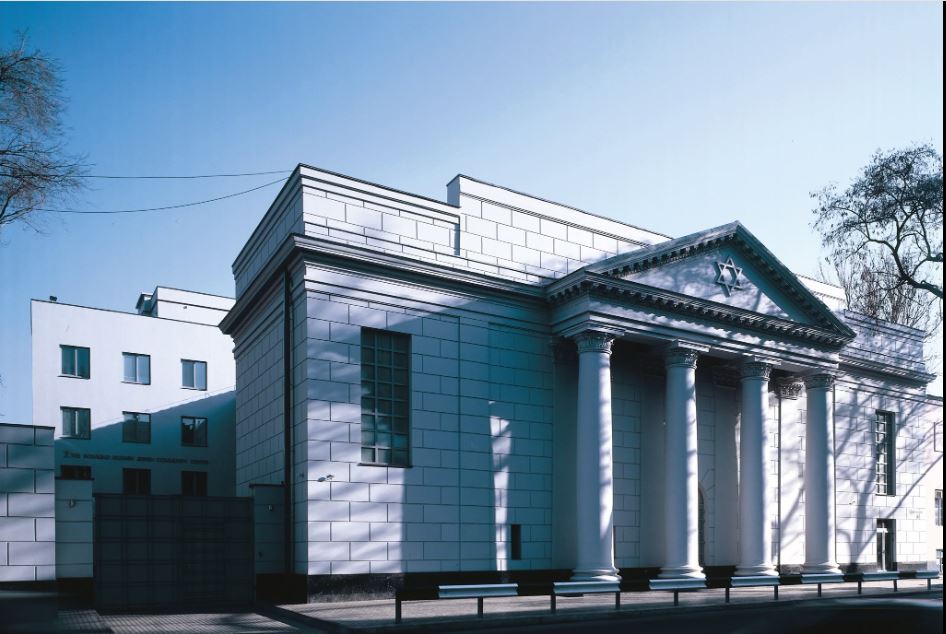
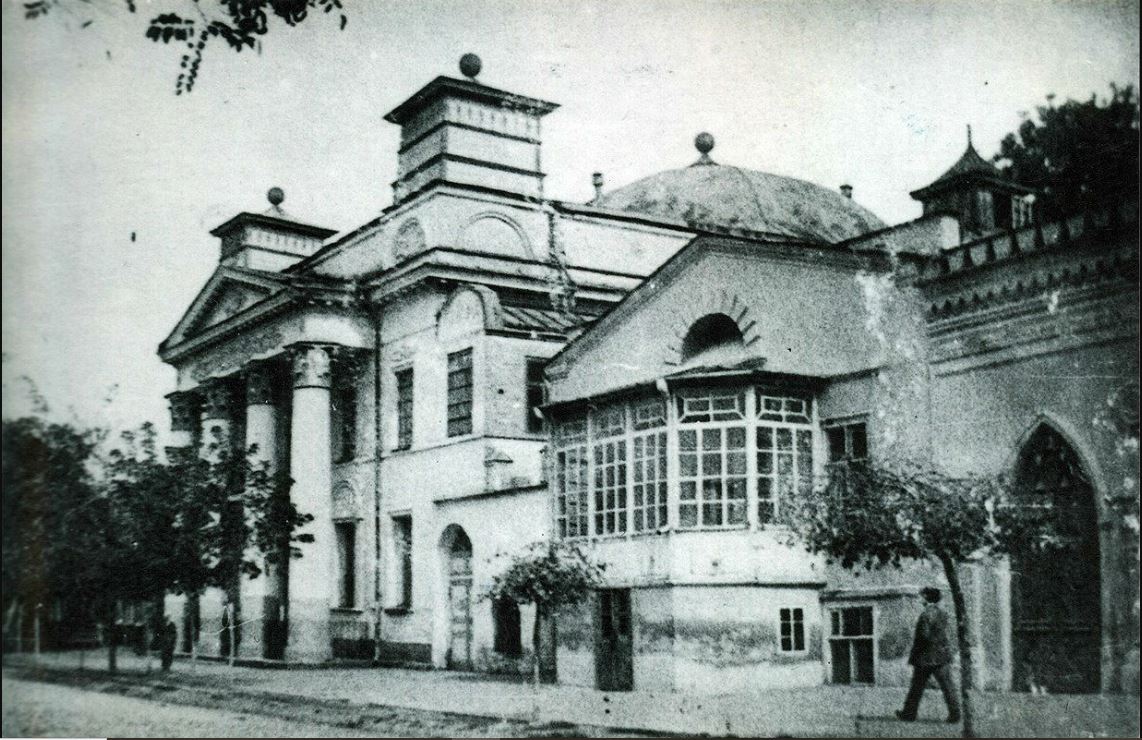



The term “choral synagogue” derives from the presence of a choir that participates in prayer services; this designation underscores the synagogue's scale and its central status among other sacred structures. The exact scale of the first synagogue in Katerynoslav—which stood on the very site now occupied by the “Golden Rose”—is unknown. Built of wood in 1800, it was destroyed by fire in 1833. Over the course of fifteen years, the Katerynoslav Jewish community constructed a large, central stone synagogue, designed in the prevailing Classical style with Moorish elements. The year of its completion, 1852, was inscribed on the pediment. For the next three-quarters of a century, the choral synagogue served as the principal institution of the city's Jewish community.
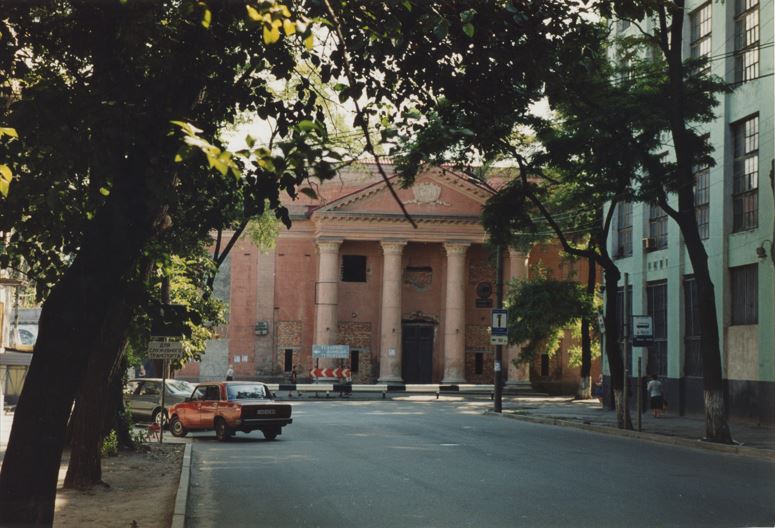
The post-revolutionary era ushered in a time when the religious worldview was rejected; for Jews, this meant the dismantling of the Jewish community as a whole—including its educational and charitable institutions and its Hebrew-language literary culture. Synagogues, as centers of Judaism, were doomed. In 1929, a decision by the Dnipropetrovsk City Executive Committee—ostensibly “at the behest of the broad working masses” and at the request of the “Godless” society—led to the closure of the Choral Synagogue; the building was subsequently repurposed as the Garment Workers' Club (and from 1947, the Palace of Culture of the Volodarsky Factory). This official decision met with no resistance from Dnipropetrovsk’s Jewish population, as it stemmed from the fundamental Bolshevik doctrine opposing all religions. Over the preceding decade, city residents had witnessed various anti-religious campaigns, including the closure of religious institutions, the confiscation of valuables, and repressions against clergy. The choice of the building's new occupant was deliberate: the garment factory was located right next to the synagogue (on Yevreyska Street—renamed Sholem Aleichem Street in 1923), and its workforce consisted of former Jewish artisans who had recently been consolidated within the large building of a former tobacco factory. The decision was also calculated with an eye toward maintaining an interfaith balance: the Bryanska Church—one of the city's largest Orthodox cathedrals—was being closed at the same time.
To convert the synagogue building into a club, a stage house was added; many windows were bricked up; the dome and two decorative side towers were dismantled; and a bas-relief of the hammer and sickle appeared on the pediment. During the 1980s and 1990s, the premises served as a warehouse for a garment factory. From the second half of the 1980s, collectors of stamps, postcards, and coins gathered in one of the rooms of the former synagogue.
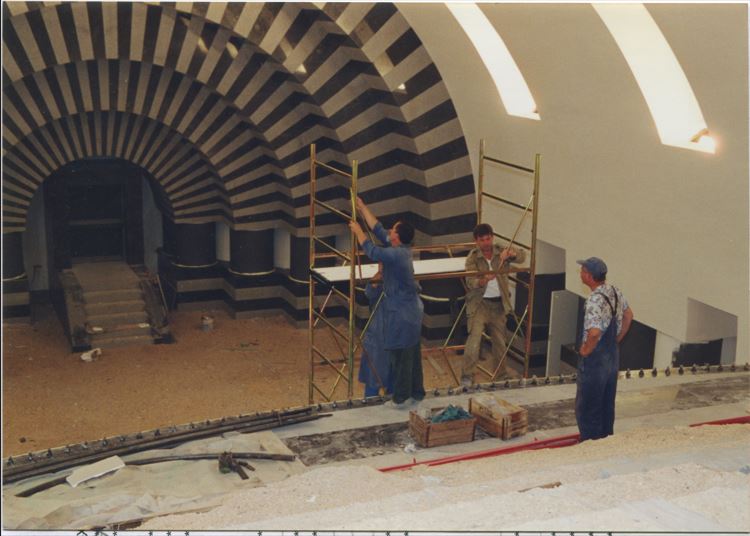
From 1987 to 1996, the Dnipropetrovsk Jewish community campaigned for the return of the synagogue as part of the broader property restitution process. When the community finally took ownership of the building — which was in a state of extreme disrepair — it had a dirt floor and holes in the walls and ceiling. The synagogue underwent major renovations and reconstruction over the course of four years. Regarding funding, the project initially relied solely on an external investor; however, domestic financial players — Ukrainian businessmen—also showed interest during the reconstruction process. In his speech at the ceremony, Rabbi Sh. Kaminetsky highlighted the pivotal roles played by businessmen H. Boholyubov, O. Kahanovskyi, I. Kolomoiskyi, D. Mishalov, O. Khanis, and other members of the community’s Board of Trustees in bringing the project to fruition.
The creative design for the reconstruction was proposed by Oleksandr Dolnyk, a renowned Dnipropetrovsk architect of Jewish descent. In restoring the exterior, the architect drew upon old photographs of the synagogue while also incorporating modern trends. The result was a more minimalist architectural profile for the sacred structure. The main façade, featuring a four-column portico in the Corinthian order, was restored based on historical photographs.
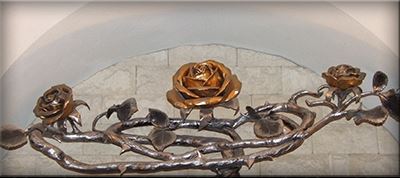
Restoring the interior proved more challenging: the original layout was unknown, and archival records had been lost. O. Dolnik proposed his own vision for the sacred interior. A massive striped portal symbolizes a Jewish man wearing a *tallit* (traditional prayer shawl); six steps—representing the six days of Creation—lead to the Ark of the Covenant, which houses the Torah scrolls; five arches above the Ark signify the Five Books of Moses; twelve pillars beneath the arches represent the twelve Tribes of Israel; and twenty-six rays emanating from the Ark symbolize the name of God. The restored synagogue includes an amphitheater-style seating area for women (in accordance with Jewish tradition, men and women pray separately). The names of donors are commemorated on the foyer walls. Renowned Israeli sculptor Frank Meisler created the magnificent doors for the *Aron Kodesh* (Holy Ark) and a donation box, as well as a sculptural representation of the synagogue’s name—a golden rose on silver stems.
City and regional officials, Israeli Ambassador to Ukraine Anna Azari, members of the city’s Jewish community board of trustees, and other prominent figures attended the opening ceremony of the reconstructed synagogue. The fact that the then-President of Ukraine, Leonid Kuchma, visited the synagogue on the eve of its opening also held political significance. Anticipating that the “Golden Rose” would not accommodate everyone wishing to attend, the organizers set up a screen on Barykadna Street, allowing thousands of people to enthusiastically watch the proceedings taking place inside the synagogue.
With the reopening of the "Golden Rose" following its reconstruction, the site regained its significance as a religious and cultural hub for the Jewish community, attracting a much larger number of visitors. At the same time, this success sparked imagination and inspired community leaders to pursue even bolder projects. Plans were initially made to build a Holocaust Museum alongside the synagogue; over time, this concept evolved into the “Menorah” project — a large-scale, multifunctional Jewish community center.
Thus, the opening of the restored Choral Synagogue marked the beginning of a new stage of Jewish revival in our region.
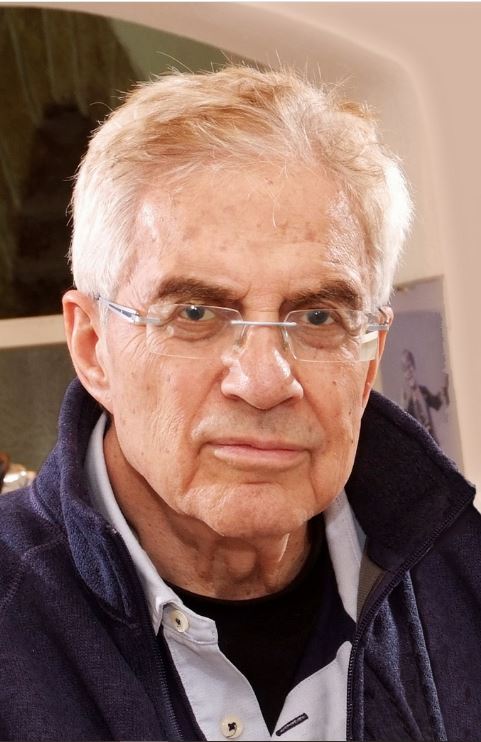
Olena Ishchenko