


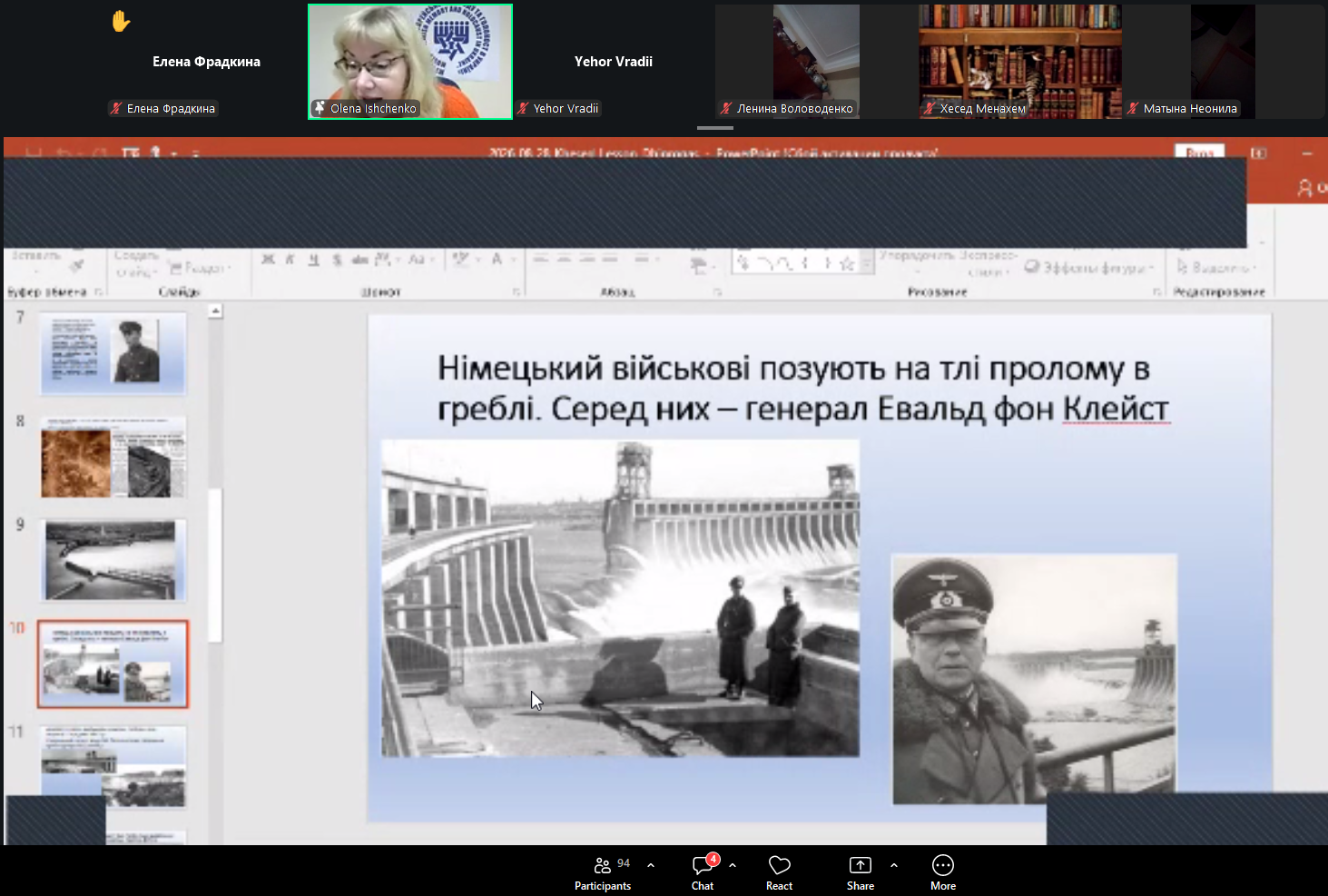
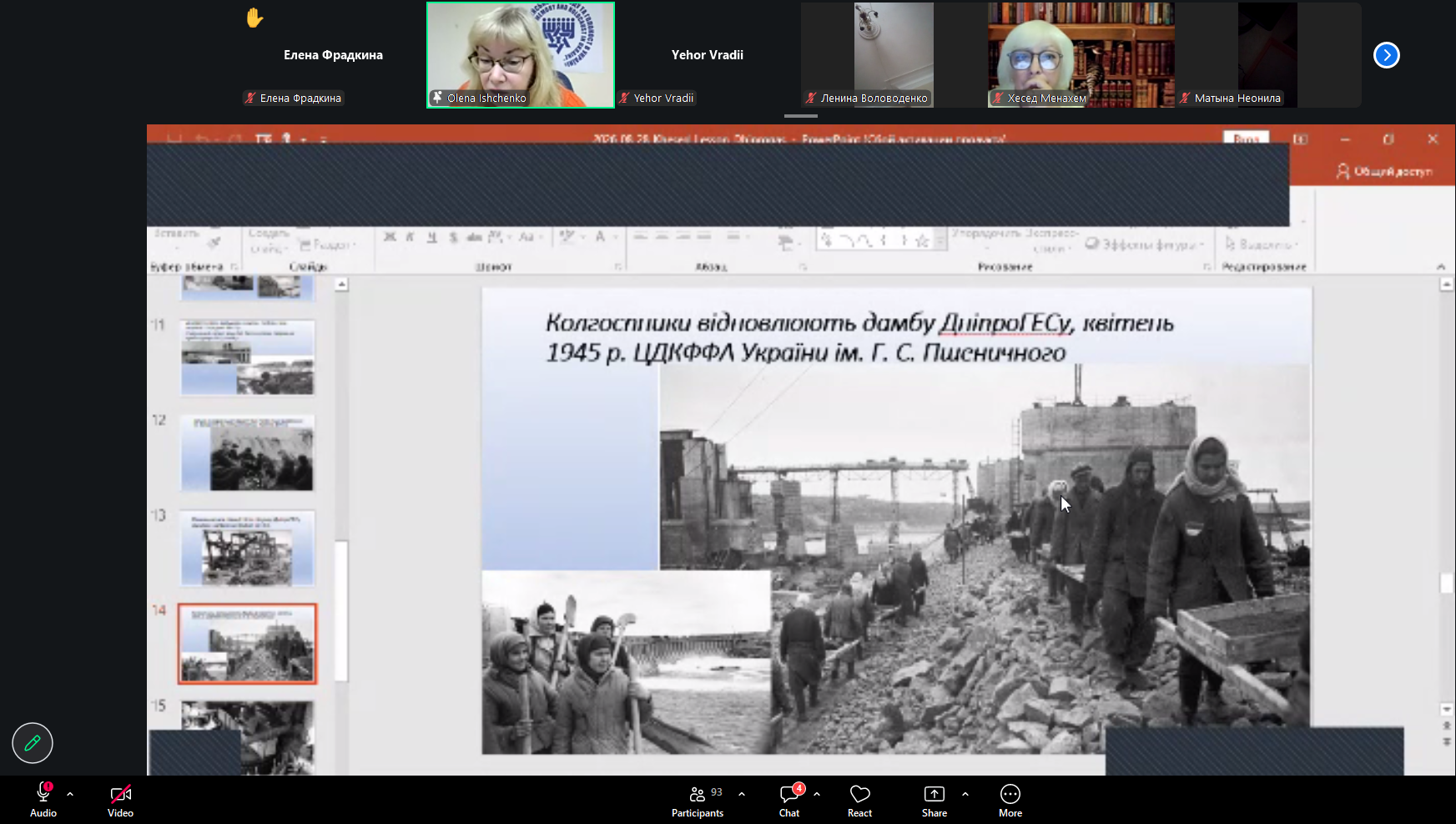
On the occasion of the 85th anniversary of the explosion of the Dnipro Hydroelectric Power Plant by Soviet troops, the Hesed Menachem Charity Foundation, together with the Museum of the Memory of the Jewish People and the Holocaust in Ukraine, initiated a lesson dedicated to one of the important plots of the German-Soviet war.
The listeners of the Open Lecture showed considerable interest in the proposed topic. They recalled how World War II was studied in history lessons in Soviet schools, where similar plots testifying to the criminal actions of the Stalinist leadership were absent. After all, the secret order to destroy the station's equipment and blow up the dam was signed by J. Stalin himself; even for the local command, the explosion of the Dnipro Hydroelectric Power Plant came as a terrible surprise. Therefore, neither the Red Army units that were crossing the Dnipro River at that time or defending in the floodplains or on the island of Khortytsia, nor the local civilian population were warned. As a result of a powerful explosion, a breach more than 150 meters long was formed in the dam. A wall of water, rushing at incredible speed, flooded the coastal area, the island of Khortytsia and settlements downstream (approximately 15 km from the Dnipro Hydroelectric Power Plant). The Soviet military and residents of the lower part of the city of Zaporizhia, coastal villages and farms, as well as refugees (including Dnipropetrovsk residents), who were moving in a southeasterly direction, suffered the most from the flood.
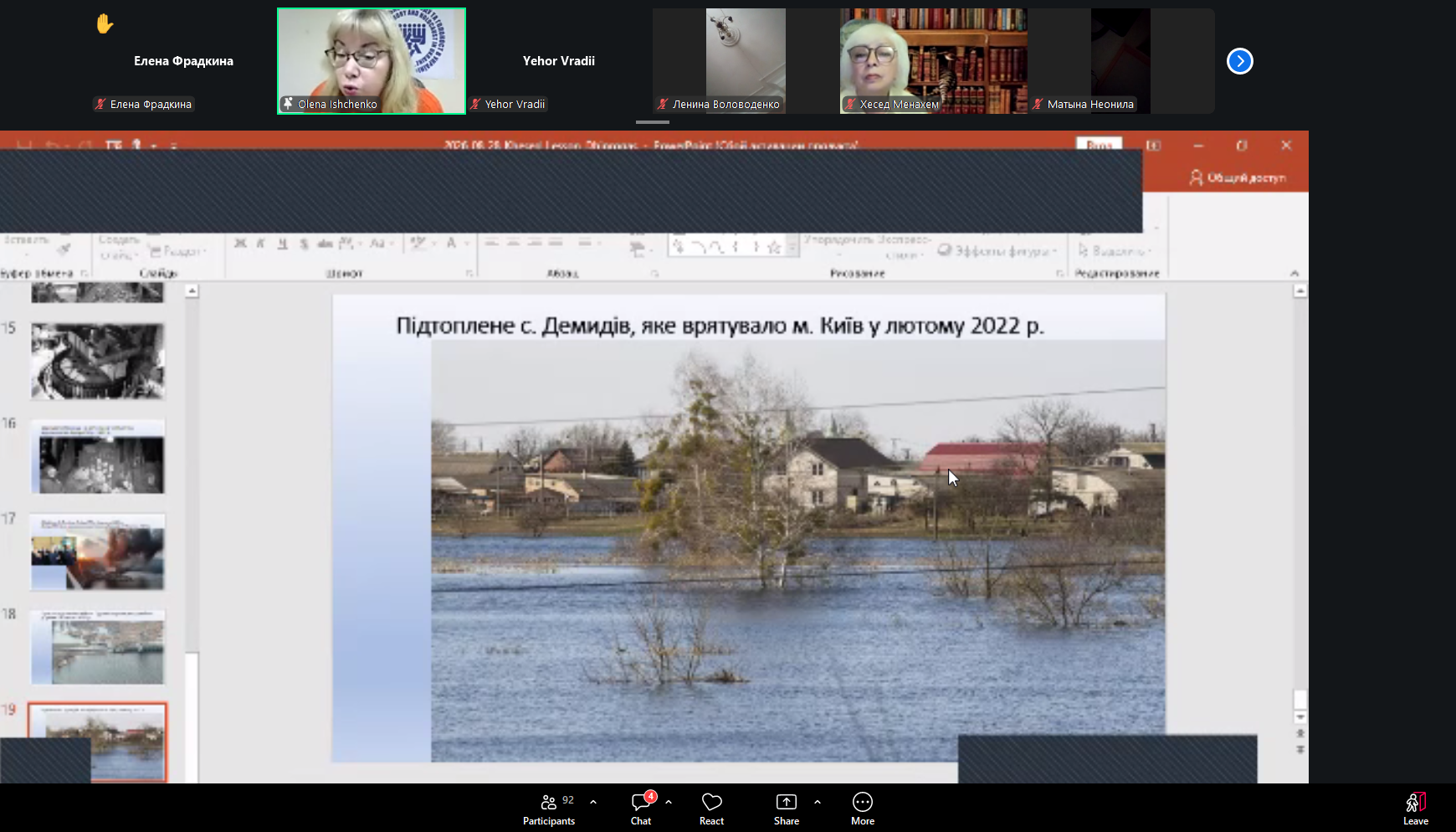
The Museum's researcher, Dr. Olena Ishchenko, tried to assess the consequences of the operation for further hostilities in the region, as well as for the civilian population of the region; she focused on the coverage of the tragic event in historical journalism. The lecturer and the audience also recalled the plots of the full-scale Russian-Ukrainian war associated with hydraulic operations: the explosion of the Kakhovka hydroelectric power station, the destruction of dams on small rivers, the flooding of villages.