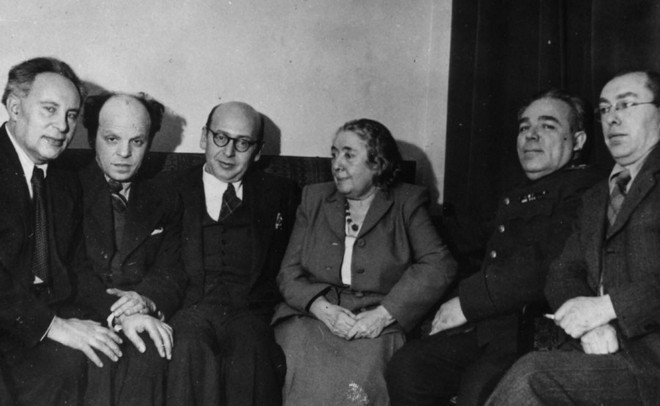
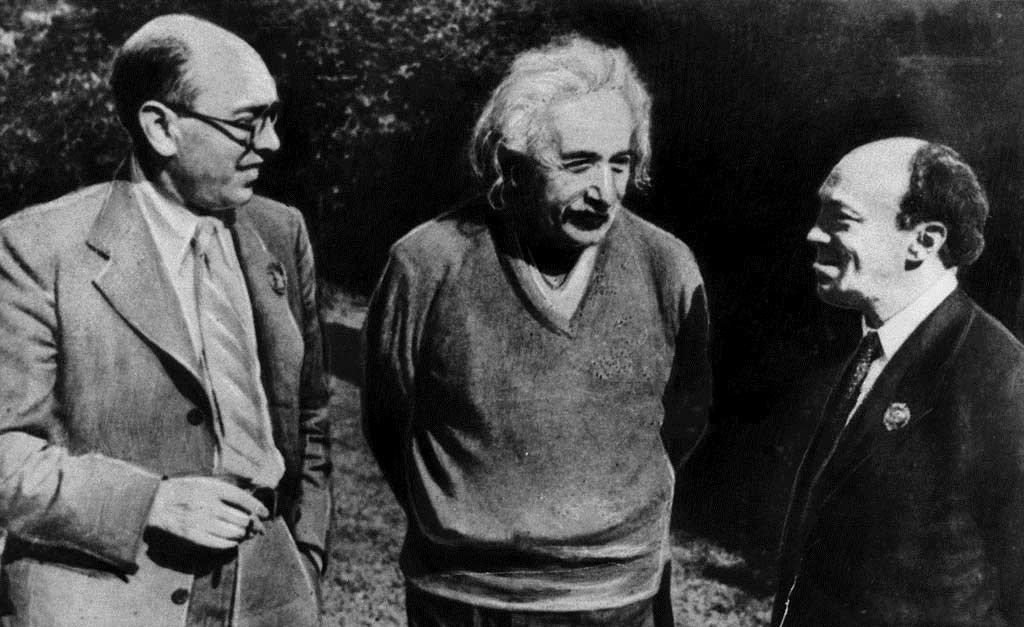
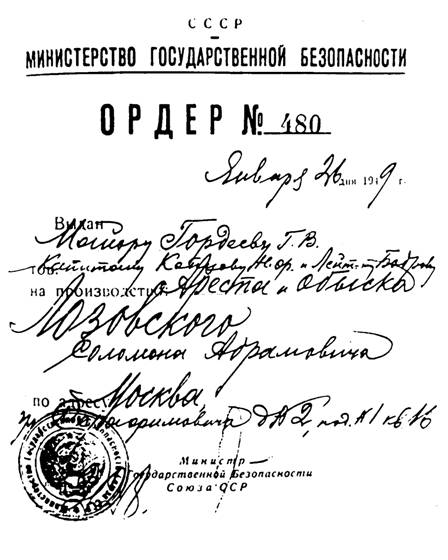
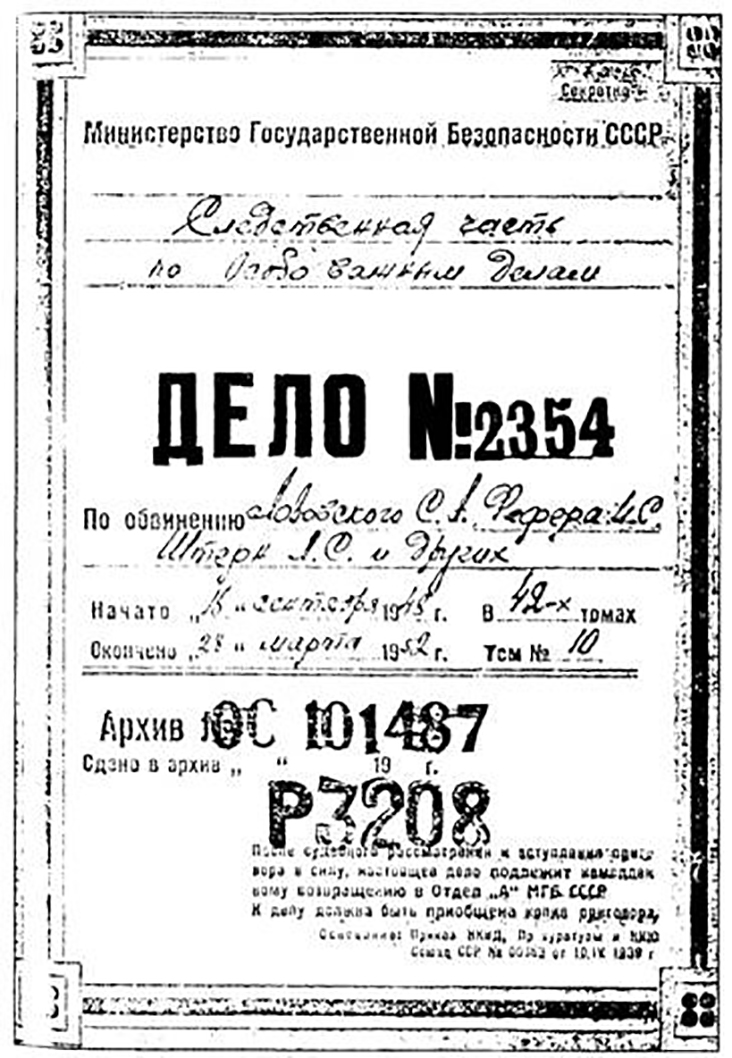
74 years ago, on August 12, 1952, 13 representatives of the Jewish intelligentsia were shot in the USSR on a fabricated case of anti-Soviet activities of the Jewish Anti-Fascist Committee (hereinafter referred to as the JAC). A total of 125 people were repressed in the JAC case, including 23 shot and 6 who died during the investigation. Subsequently, all those convicted in this case were rehabilitated.
The JAC, led by theater actor and director Solomon Mikhoels, was created in 1942 simultaneously with the women's, youth, all-Slavic committees and the committee of scientists, which were to ensure support for the USSR during the war with Germany from relevant foreign circles. The JAC was tasked with establishing ties with foreign Jewish communities and forming pro-Soviet sympathies in them, exposing Nazi crimes against Jews and promoting the heroism of the latter in the fight against Germany.
After the war, the JAC had 70 members, including 15 members of the presidium. In the postwar years, the committee's high popularity and its foreign connections began to bother J. Stalin. Towards the end of World War II, and after it, the JAC was involved in documenting the events of the Holocaust. This contradicted the official Soviet policy of presenting the atrocities of the Nazis as crimes against all Soviet citizens and not emphasizing the genocide of the Jews.
Responding to the growth of domestic anti-Semitism in the Soviet Union and supporting the national movement of Jews who had suffered Nazi persecution in 1939–1945, after the war the JAC effectively became the representative body of Soviet Jews. Since the committee was assigned only image functions in the external arena, its domestic political activities began to worry the Soviet leadership. The direct “curator” of the JAC, Deputy People’s Commissar for Foreign Affairs of the USSR and head of the Soviet Information Bureau, Solomon Lozovsky, was dismissed from the Ministry of Foreign Affairs in 1945 and deprived of the post of director of the Soviet Information Bureau in 1947. In addition, Stalin’s displeasure was caused personally by S. Mikhoels, who was killed on January 13, 1948 (according to the official version, he was hit by a truck and died because of his injuries).
After the creation of the State of Israel in May 1948, Soviet Jews warmly welcomed this event, but the pro-American foreign policy course it chose forced the USSR to abandon support for the newly created state and switch to fighting the Jewish national movement. Already on November 20, 1948, the Politburo of the Central Committee of the All-Union Communist Party (Bolsheviks) liquidated the JAC as a center of espionage and a “center of anti-Soviet propaganda,” and at the end of the year, arrests began in the EAK case. Pressure, threats, and torture were used to extract confessions from the arrested in “counterrevolution,” “nationalist activities,” and espionage for the United States.
Jewish theaters in Moscow, Kyiv, Kharkiv, Odesa, and Minsk ceased operations. On January 19, 1949, the Section of Jewish Writers of the Union of Soviet Writers of Ukraine was dissolved “as an organizational form that had not justified itself.” The Office for the Study of Jewish Soviet Literature, Language, and Folklore of the Academy of Sciences of the Ukrainian SSR, whose employees were engaged in collecting materials for the “Black Book” – a collection of testimonies about the Holocaust, was closed in 1950, and its employees were repressed. The campaign of persecution of Jews took place under the slogan of fighting “rootless cosmopolitans” throughout the country.
After intensive investigations and interrogations of the arrested, the case of the anti-Soviet activities of the JAC came to court in the spring of 1952. After a week-long consideration of the charges presented by the Ministry of State Security in a closed session, on July 18, the Military Collegium of the Supreme Court of the USSR sentenced 13 out of 15 people to capital punishment with confiscation of property: the former head of the Soviet Information Bureau Solomon Lozovsky, the former secretary of the JAC poet Isaac Fefer, the prose writer and playwright David Bergelson, the former research fellow at the Institute of History of the USSR Academy of Sciences Joseph Yuzefovich, the former chief physician of the Central Clinical Hospital named after Botkin Boris Shimeliovich, poet Peretz Markish, artist, artistic director of the State Jewish Theater Veniamin Zuskin, poet Leib Kvitko, poet David Hofstein, former editor of the international department of the Soviet Information Bureau Emilia Teumin, senior controlling editor of the State Publishing House of Literature in Foreign Languages Ilya Vatenberg, journalist and translator Leon Talmi, translator Chaika Vatenberg-Ostrovska. Other figures in the case also suffered repressions: medical scientist, full member of the USSR Academy of Sciences Lina Shtern was sentenced to 3.5 years in prison and exile for 5 years; former government official Solomon Bregman, who could not withstand the trials, died in a prison hospital in early 1953.
On August 7, the Politburo of the Central Committee of the All-Union Communist Party (Bolsheviks) rejected the convicts' request for clemency, after which the sentence was carried out on August 12, 1952. Although not all of those executed were poets, this event went down in history as the "night of the executed poets" and is now commemorated in Israel as a day of mourning.
After the death of J. Stalin on March 5, 1953, the campaign of persecution of Jews ceased. The review of the JAC case in 1954–1955 showed its contrivedness, falsifications and the use of torture. On November 22, 1955, the Military Collegium of the Supreme Court of the USSR overturned the verdict against the members of the Jewish Anti-Fascist Committee due to the absence of elements of a crime in their actions.
The “Night of the Executed Poets” killed an entire generation of Jewish writers, and World War II and Stalin’s repressions put an end to the flowering of Jewish literature in Ukraine. During the Holocaust, almost 1.5 million Jews died in Ukraine, and the flowering of Jewish writing died in one night – August 12, 1952. As they later said, Hitler killed the readers of Yiddish literature, and Stalin killed the writers.
Czech scholar of Jewish literature Petr Jan Vinš wrote about this crime: “We lost first-class masters. The Soviet Union at the turn of 1940-1950 was one of the largest centers of Yiddish literature, comparable to Warsaw or New York. And Stalin's anti-Semitic repressions destroyed what little remained of Yiddish literature in Eastern Europe after World War II.”