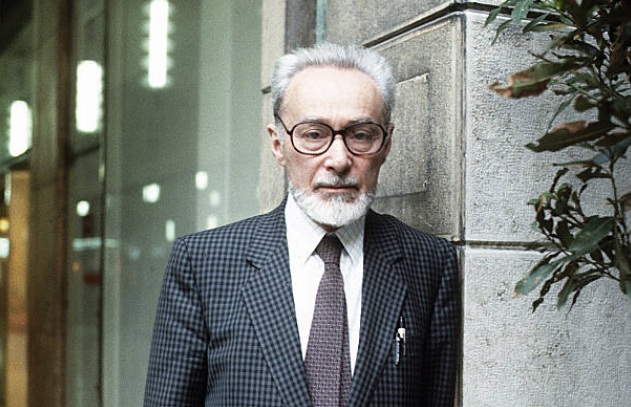
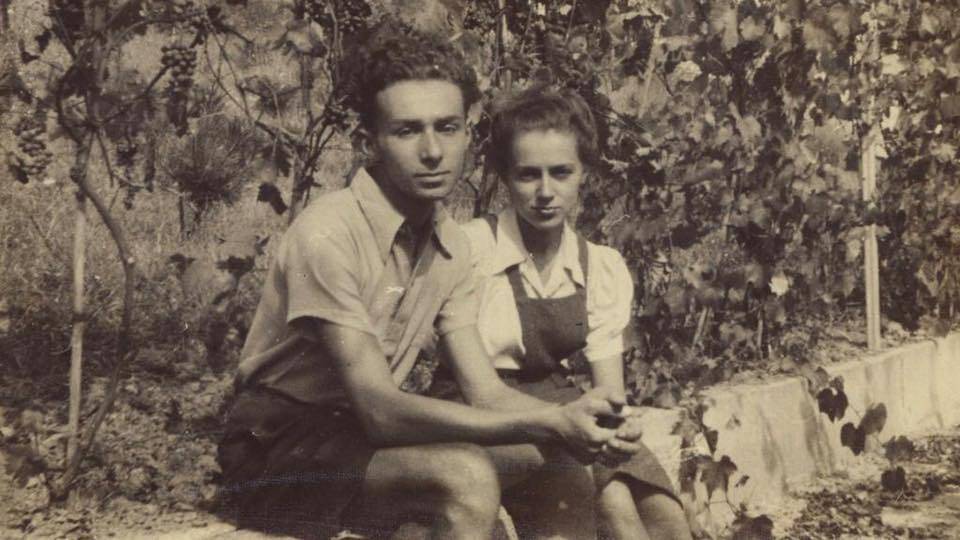
On July 31, 1919, a son, Primo, was born to the family of Piedmontese Jews Cesare Levi and Esther Luzzatti, who later became one of the few writers to survive the Holocaust.
He studied at the classical lyceum and at the chemistry faculty of the University of Turin. He worked in chemical laboratories and enterprises in Turin and Milan. Primo's childhood and youth fell on the reign of the fascist dictator Benito Mussolini. In 1938, the fascist authorities banned Jews from studying in state schools and universities. Primo recalled: “Yes, I am impure. Just a few months ago the magazine “Protection of the Race" began to be published, and the more there was talk about purity, the prouder I became of belonging to the impure. To be honest, until now I did not attach much importance to the fact that I was Jewish; I and my fellow Christians treated my origin more as a curiosity that had no significance; as a ridiculous defect like a crooked nose or freckles. A Jew is someone who does not put up a Christmas tree at Christmas, who should not eat smoked pork sausage but does, who knew a little Hebrew at the age of thirteen and then forgot. But if you believe the aforementioned magazine, a Jew is greedy and deceitful, although personally I was neither greedy nor deceitful, and my father was not like that either.”
After German troops entered northern Italy in September 1943, Primo Levi joined a partisan detachment. In December of the same year, German units surrounded the detachment. In captivity, P. Levi did not hide his Jewish origin. Later, Primo was sent to the Fossoli camp near Modena. On February 11, 1944, he was deported to the Auschwitz-Birkenau (Monowitz) death camp. “We have nothing of our own: they took away our clothes, shoes, and even our hair; if we speak, they will not listen to us, and if they do, they will not understand. They will even take away our name – and if we want to keep it, we will have to find the strength to do it in such a way that behind this name there is something of us, of us as we once were… my number is 174,517. I managed to develop a special protective reaction in myself, thanks to which I not only survived, but also retained the ability to think, to be aware of the world around us, and even to do quite delicate work in conditions of constant, daily threat of death… Our hunger at that time was an inescapable need… Eating, getting food – was the main goal, the number one problem, followed by all other problems of survival by a wide margin, pushing home and the fear of death to the very end.”
On January 27, 1945, the troops of the 1st Ukrainian Front liberated Auschwitz-Birkenau. Only in October 1945 did P. Levi return to Turin. He remained faithful to his love of chemistry. He worked in a research laboratory for many years. However, the terrible experience of life led him to literature. The most famous work of his life, "Is This a Man?", is autobiographical. This book was published in 1947 and became one of the first memoirs about the Holocaust. Primo said: “…if I had not lived through my life in Auschwitz, I would probably never have written anything. I would have had no reason or incentive to write; during my studies my progress in Italian was mediocre and in history – quite bad, I was more interested in physics and chemistry, and in the end, I chose for myself the profession of chemist, which has nothing to do with the world of the written word. It was the concentration camp experience that forced me to write, I did not have to fight laziness, stylistic problems seemed ridiculous to me, I miraculously found time to write, without even spending hours of my main work on it – it seemed to me that this book was already in my head, and I only had to let it out, write it down on paper.”
In 1962, P. Levi wrote another novel – “Truce”. This is a continuation of the book "Is this a person", in which he described the path of returning home through several countries, including Ukraine. Primo Levi's works are a living voice of the Holocaust, a penetrating and poignant testimony of crimes against humanity.
Iryna Piskareva