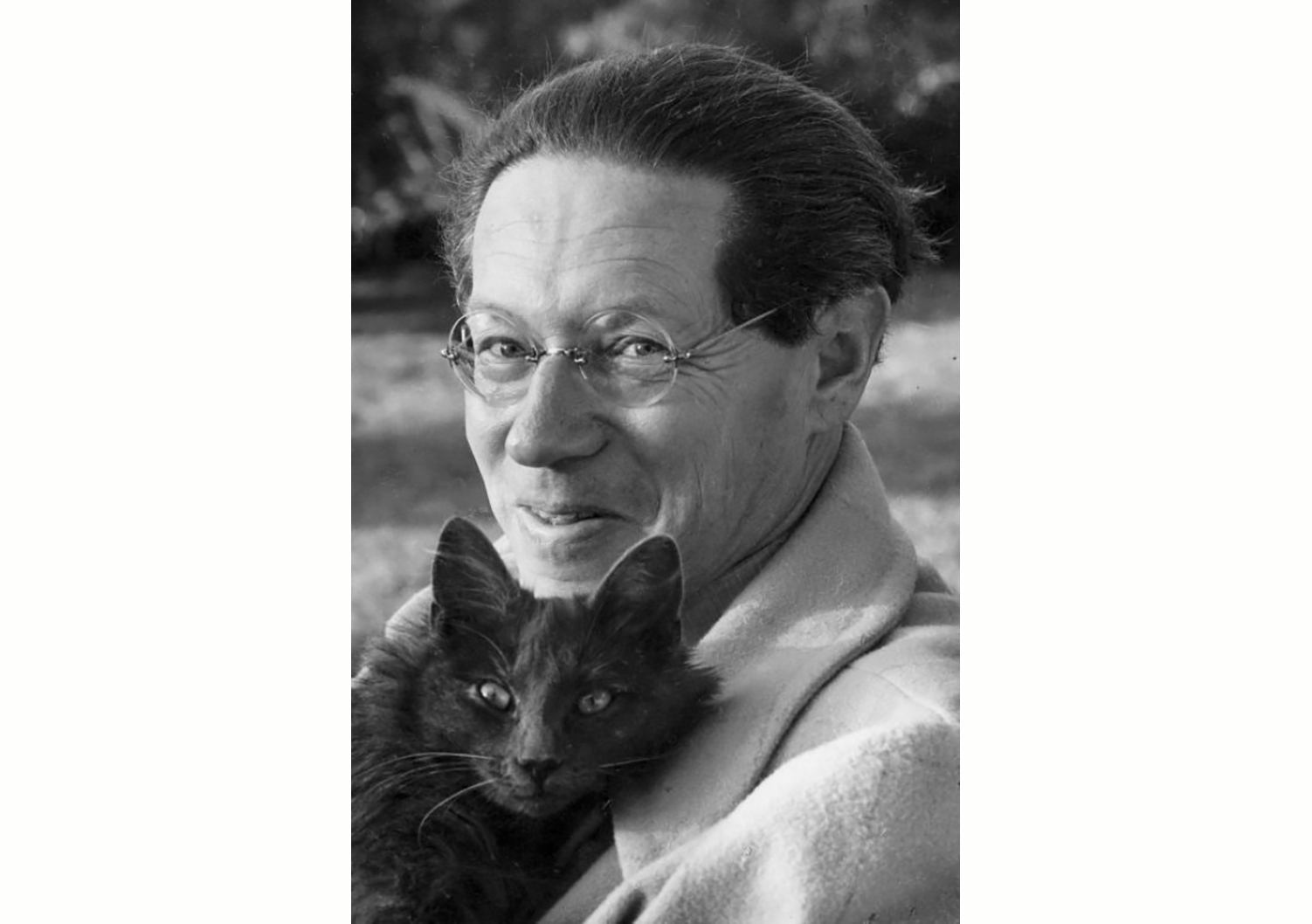
Leon Feuchtwanger is rightly considered the founder of a new trend in historical fiction. In his works, reflections on the fate of humanity in different periods of existence have clear parallels with the events taking place in the modern world.
Leon Feuchtwanger was born on July 7, 1884, in Munich into a wealthy Jewish family. He was the eldest of nine siblings. His father, Sigmund Aaron Meir, was a successful manufacturer. His mother, Johanna, was a housewife and a homemaker. The Feuchtwanger family practiced Orthodox Judaism, so from a young age they instilled in their son a love for the religion and culture of their people. Even as a child, Leon showed an ability to study ancient Hebrew and Aramaic. He received a liberal arts education at a gymnasium, then at the universities of Munich and Berlin. He studied German philology, history, philosophy, and Sanskrit. In 1907, he received his doctorate. During his studies, Feuchtwanger refused financial assistance from his parents and earned his living by giving private lessons. At the same time, he began his literary career. At first, as a playwright and journalist, he published the literary magazine “Der Spiegel”. He also worked as a theater critic, translated and edited the tragedies of Aeschylus, C. Marlowe, and the comedies of Aristophanes, and then became interested in the genre of historical novels. It was then that he met the love of his life. In 1912, Leon Feuchtwanger married Martha Leffler, who became his friend and assistant in literary affairs until the end of his life.
During World War I, he served in the German army, from which he was demobilized due to health reasons. Then he lived in Munich, and from 1925 in Berlin, where he continued his literary activity. In 1923, Feuchtwanger wrote “The Ugly Duchess”, and in 1925 he published the previously written novel “The Jew Suess”, which attracted a considerable readership and caused controversial public assessments. This novel is about the fate of the financier Joseph Suess Oppenheimer, his success and fall from the heights of power. In that tragic story, the author tried to answer the question: “Why did this medieval Jew not betray his faith, to which he was not particularly attached, and, refusing to accept Christianity, accepted a martyr's death?” Thanks to this novel, the writer gained worldwide fame along with accusations of Jewish nationalism and anti-Semitism at the same time. Jewish readers accused the author of anti-Semitism, and German chauvinists accused Feuchtwanger of Jewish nationalism. The novel was translated into many languages. Apparently, as the writer himself noted, he managed to write a historical work in which a living person acted with all the feelings and passions inherent in him, which continued to excite the author's contemporaries.
In 1934, the novel “The Jew Suess” was adapted into a film in Great Britain, and in 1940 a film about it was released in Germany. The English film was directed by Lothar Mendes, who had emigrated from Germany in the 1920s. The German film was directed by Veit Harlan, a favorite of Goebbels. In Berlin, Mendes' film was described as “unheard of Jewish insolence,” while Harlan's was heavily promoted. After the film was released, Goebbels ordered that it be watched by the entire SS and police and wrote in his diary: “This is the best anti-Semitic film we could ever wish for.”
Starting with “The Jew Suess”, the Jewish theme will run like a red thread through all of Feuchtwanger's work. In 1933, his novel “The Opperman Family” is published, with “Success” and “Exile” he creates the trilogy “The Waiting Room”. It tells the story of the collapse of the Weimar Republic and the establishment of Hitler's power using the example of one Jewish family. Then Feuchtwanger turned into the figure of Josephus. The novel “The Jewish War”, “Sons” and “The Day Will Come” will make up a trilogy about a Jew who took part in the uprising of Judea against the Romans, but then went over to the side of the conquerors and became the most famous historian of antiquity.
The author fought against anti-Semitism all his conscious life. He called Judeophobia universal stupidity because he believed that it could not be explained by political, nationalistic, or economic reasons. However, having gone through a long path of knowledge, he became convinced that this evil was ineradicable, and once wrote in his heart: “Not every scoundrel is an anti-Semite, but every anti-Semite is a scoundrel.” Leon Feuchtwanger was one of the first to sharply and unequivocally point out the criminality and danger of Nazi ideology. In July 1933, Leon Feuchtwanger was included in the list of persons deprived of German citizenship. The author of “Success” was not only deprived of his citizenship – his property was confiscated, but his house in Berlin was also ransacked, the manuscripts found there were destroyed and a huge library was burned, and his head was valued at 10,000 marks.
On January 30, 1933, the day Hitler was appointed Chancellor, Feuchtwanger was in Washington as an honored guest at a party hosted by the German ambassador. The next day, the latter telephoned the writer to warn him not to return to Germany. Feuchtwanger heeded the advice and settled in France, which he considered safe for him. After forced emigration to France, the writer wrote the work “The False Nero”, where readers easily recognized Hitler as the main character. In the novel, the author allegorically described the rise of the Nazis to power and the rapid fall of the Nazi regime. In it, the master presents his reflections on the lust for power and the fact that even a worthless person, if given power, changes his insides.
In 1940, during the occupation of France by Germany, the writer was interned in a French concentration camp in the town of Le Mille. His memories of his camp life, full of all kinds of humiliation and hardship, were reflected in his book The Devil in France. In addition, the camp inmates were in danger of being captured by the Nazis, and then it was decided to transfer them to another camp (Nimes). Having escaped from there and having obtained the necessary documents with great difficulty, Feuchtwanger and his wife, with the help of an American priest, moved to the United States. Since November 1943, the Feuchtwangers settled in the Aurora villa in California. Unlike many of his fellow writers who emigrated, Feuchtwanger had many readers outside Germany. This largely saved him from material problems and, on the other hand, allowed him to help lesser-known German authors in the United States. Thanks to royalties from films based on his works, Feuchtwanger amassed a library of 20,000 volumes. Fruitful work was characteristic of the American period of the master's work. Already in 1943, his novel “The Lautensack Brothers” was published. Together with his friend Bertolt Brecht, he worked on the novel “Simon”, which was published a year later. In 1946, the world saw the novel “Foxes in the Vineyard” about the behind-the-scenes events of the US War of Independence and the era of pre-revolutionary France of the 17th century. The writer's reflections on the fate of humanity, characteristic of his work, are illustrated here by bright, lively characters and fascinating details that characterize the era.
For seven years, Feuchtwanger worked on a large-scale historical novel “Goya or the Hard Way of Knowledge”, in which he described the life and creative path of the famous Spanish painter Francisco Goya. Almost at the final stage of his life, Feuchtwanger created one of the best love novels in world literature – “The Jewess of Toledo”, which he dedicated to his wife and daughter. It can be considered a hymn to love and human wisdom and admire a talented person who managed to write so young about love and not only about it three years before his death, burdened by illness and age.
On December 21, 1958, Leon Feuchtwanger left this world, leaving us with his books that provoke thought and help us remain human.
You can learn more about Leon Feuchtwanger and his family from the online lesson posted on the Museum's YouTube channel.