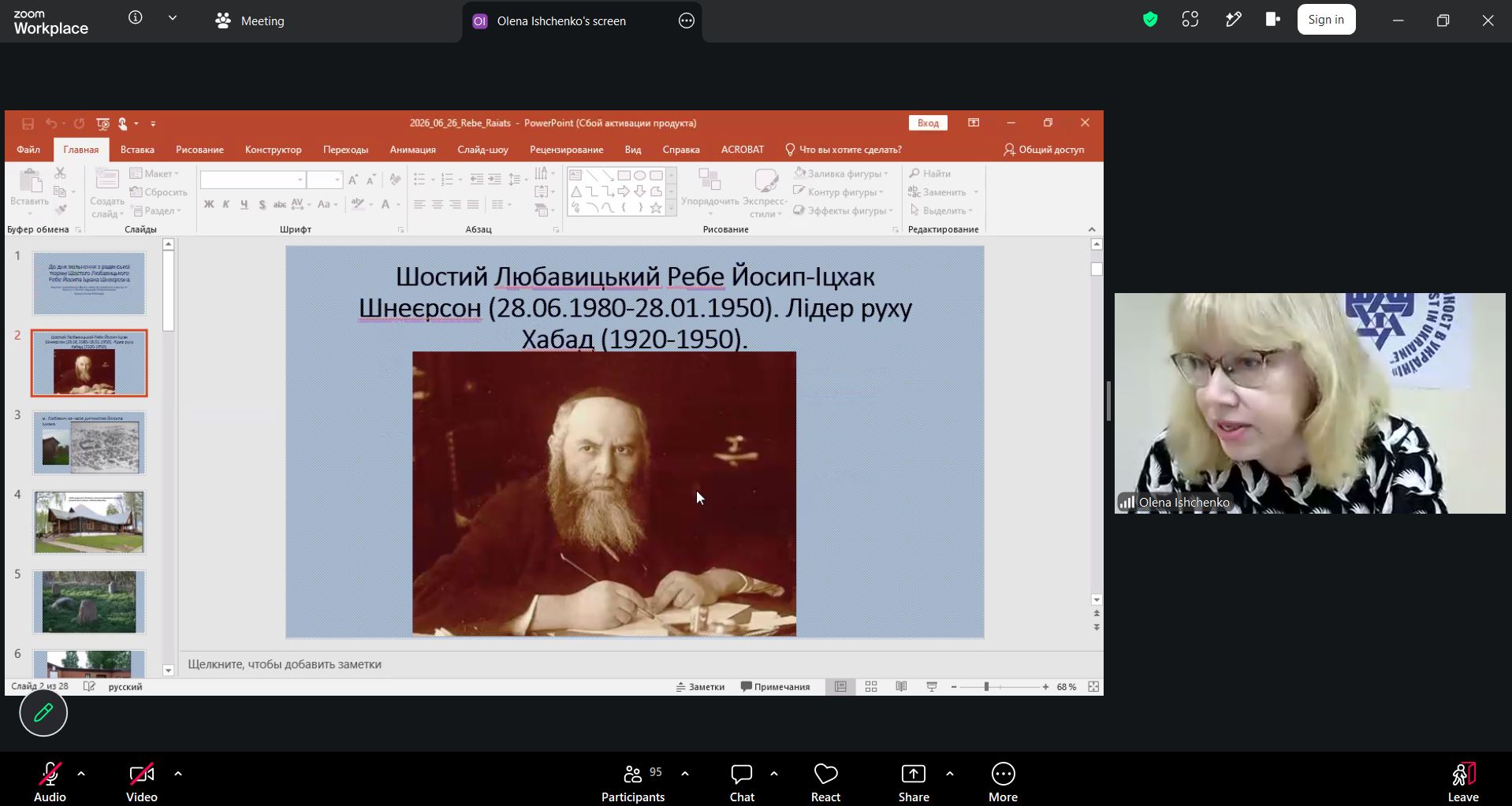
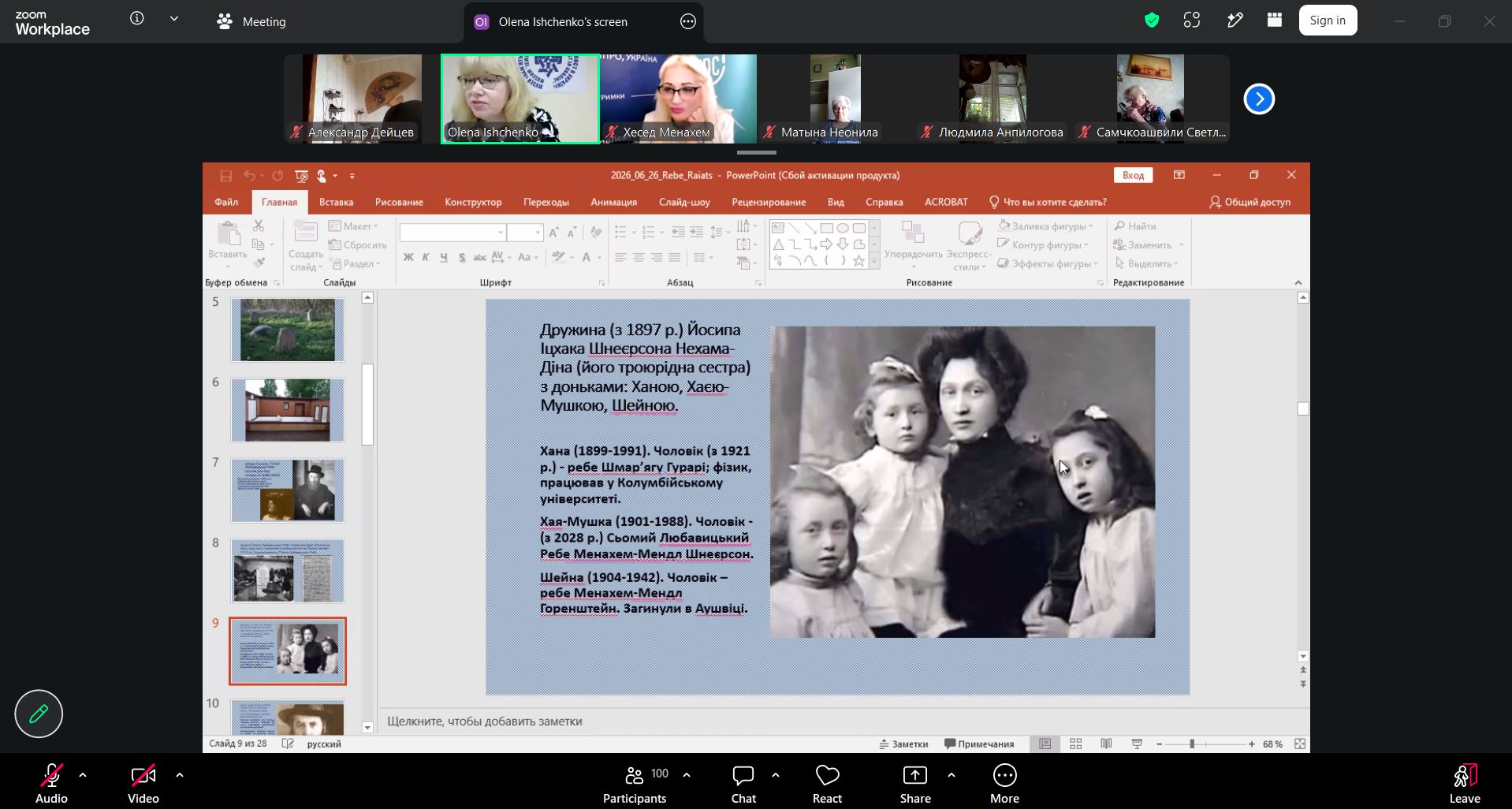
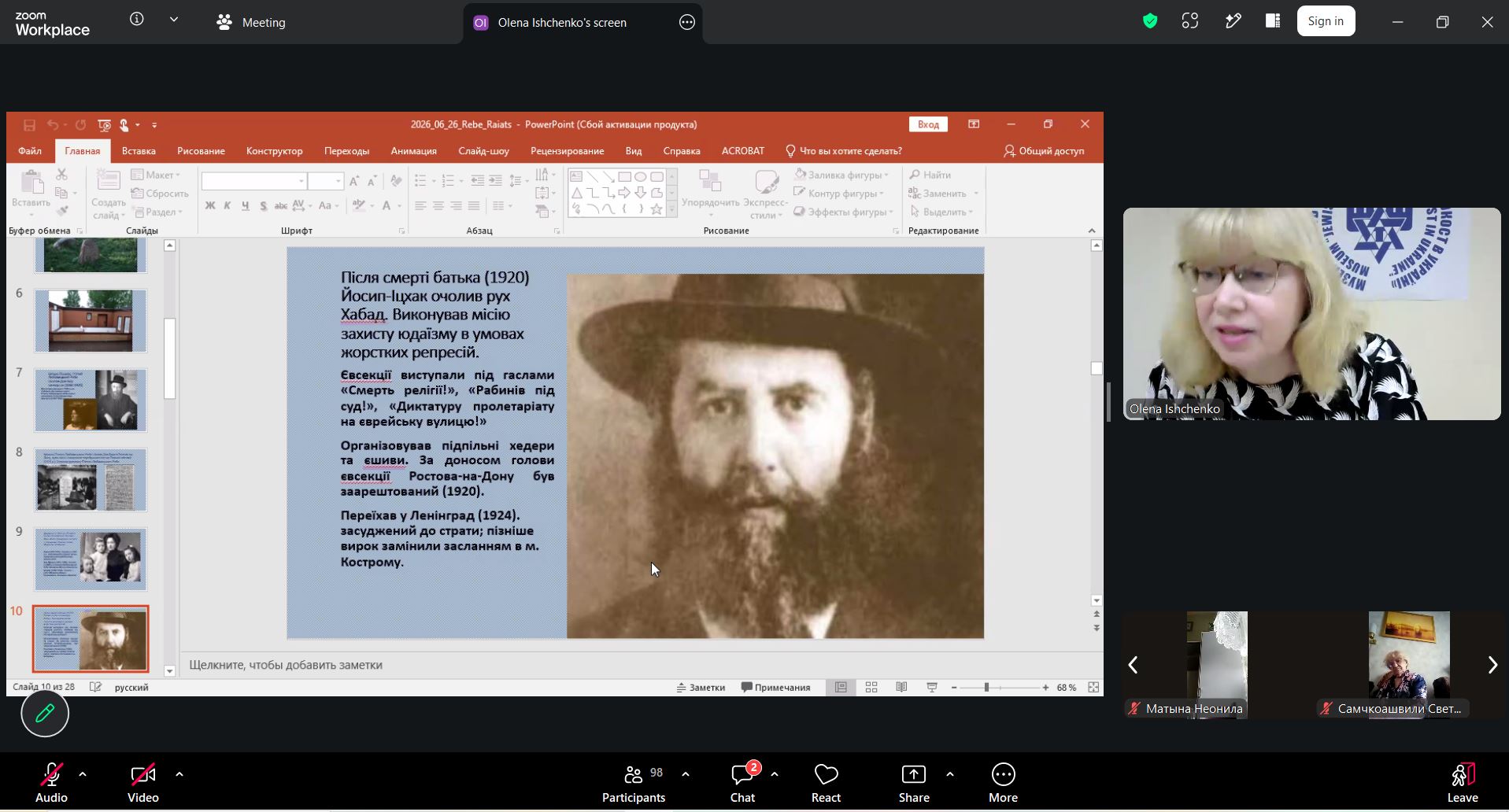
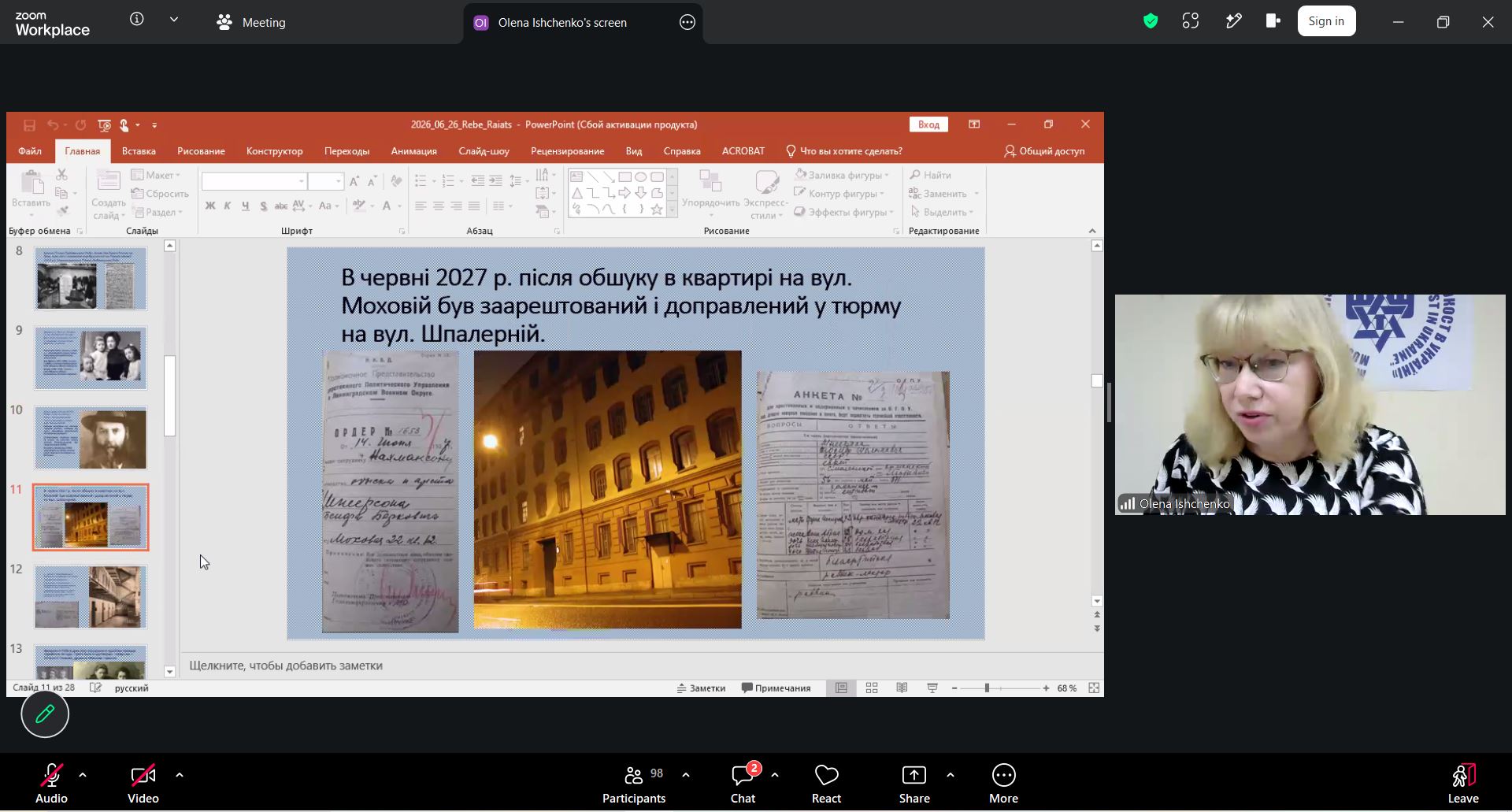
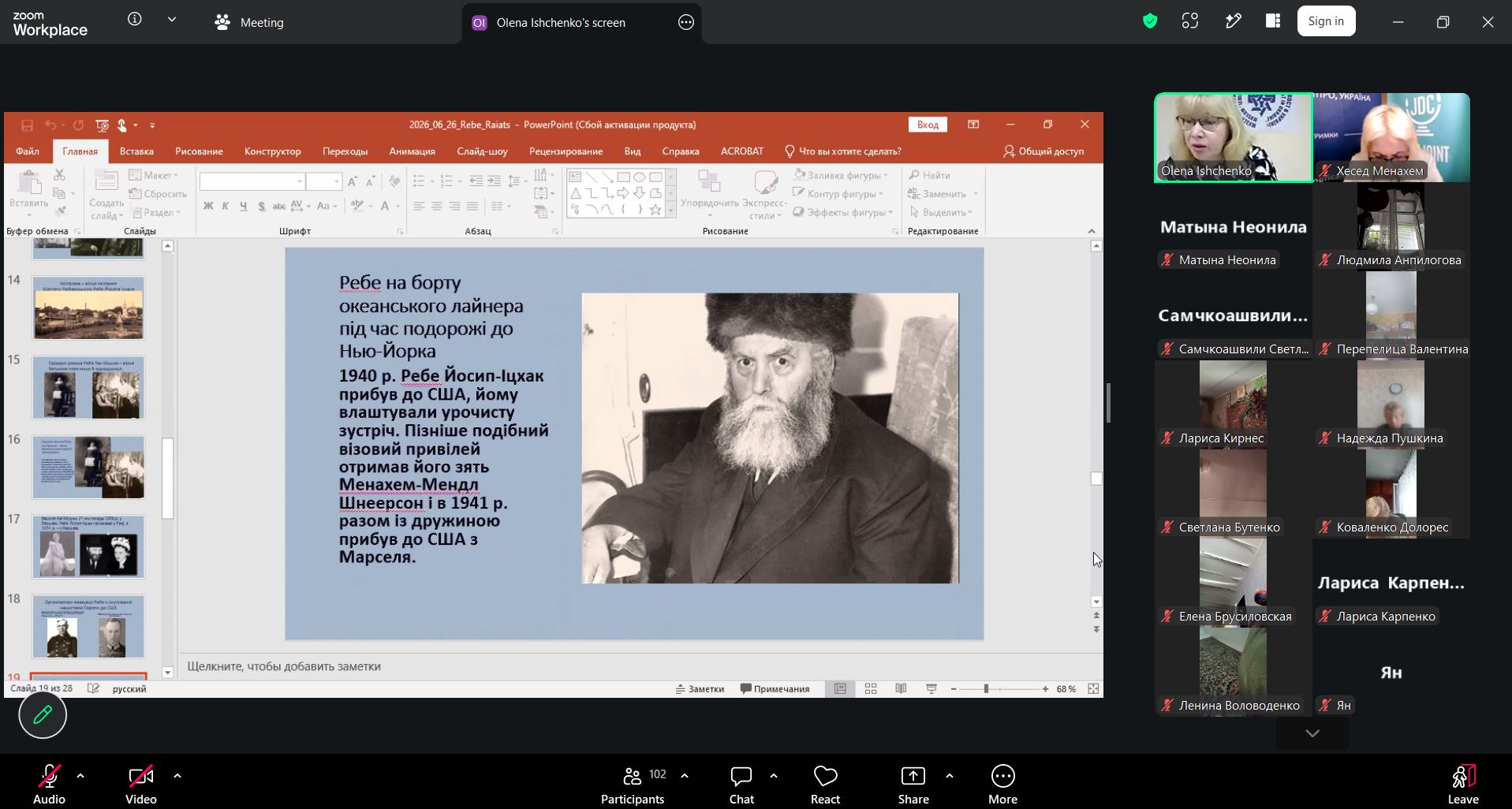
As part of the “Jewish Heritage” project, partner organizations of the Hesed Menachem Foundation and the Museum “Jewish Memory and Holocaust in Ukraine” invited the audience of the Open Lecture to a lesson dedicated to the figure of one of the brightest figures of the Hasidic movement. After the death of his father, the Fifth Lubavitcher Rebbe Sholom Dov-Bera, his only son Yosif-Yitzhak became the leader of the generation in 1920. In an incredibly difficult time, when Judaism and Hebrew were outlawed, he developed an underground system of Jewish education and traditional institutions of public life. The Soviet press called him a “rogue” – so cunning and dexterous was the Rebbe in dealing with enemies. The arrest of Joseph-Yitzhak Schneerson in June 1927 was the seventh in a row during his life: five times this happened in Tsarist Russia, twice – in Soviet Russia. The last time, for active resistance to militant atheism and the policy of Jewish assimilation introduced by the communist authorities, the Rebbe was sentenced to death. Thanks to the support of influential friends and international organizations, the death sentence was replaced by exile in the city of Kostroma, and later by expulsion from the USSR together with his family and several students, among whom was his future son-in-law, the Seventh Lubavitch Rebbe Menachem-Mendl Schneerson. The revocation of the death sentence and the Rebbe's release from custody were perceived by associates of the Sixth Lubavitch Rebbe as a miracle of God's intervention in earthly affairs. While abroad, Yosyp-Yitzhak Schneerson continued the mission of the head of the Chabad generation, including for illegal Jewish communities in the USSR. For example, in Dnipropetrovsk until 1939 there was an illegal Yeshiva “Tomhei Tmimim”, financed by the Rebbe. Escaping from the Holocaust, Yosyp-Yitzhak crossed the ocean (German military intelligence helped him to leave Europe); in the USA, he founded “Tomhei Tmimin” educational institutions, community centers, and a book publishing house. To trace the incredible life path of the Sixth Lubavitch Rebbe, the peculiarities of his worldview, was helped by Dr. Olena Ishchenko, a research associate of the Museum. After the lecture, the audience discussed the perception of Hasidic spiritual heritage by contemporaries.