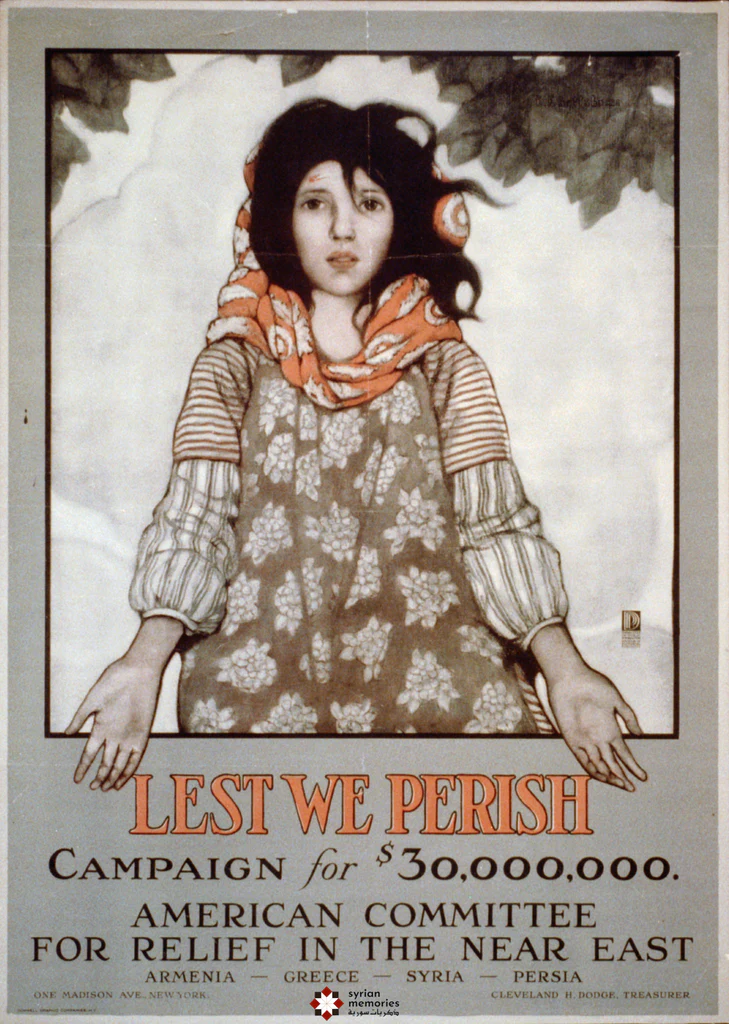

111 years ago, on April 24, 1915, the leading nationalist institution of the Young Turks, the Committee of Unity and Progress (hereinafter referred to as the Committee), arrested over 200 Armenian intellectuals and religious leaders in Constantinople; most of them were executed. This date is considered the day of the realization of the Ottoman regime's intentions to exterminate the Armenian community, which lasted for at least several years.
These events were preceded by an openly nationalist policy of the Ottoman Empire, supported by the growth of anti-Christian sentiments and the desire to create an ethnically homogeneous community. Large-scale military defeats of Turkey became a determining factor for the future of the national minorities of the empire. This primarily concerned the Armenians, Greeks and Assyrians, whose communities were compact and had a significant social status. The Armenian community was one of the largest Christian groups in the empire. As Turkish nationalist sentiments grew, its situation became increasingly tense, which ultimately led to the pogroms of 1894–1896, which claimed the lives of hundreds of thousands of Armenians.
On the eve of 1915, the Ottoman authorities significantly restricted education, property ownership, and religious services for all communities, including Armenians. The significant defeat in World War I forced the Turkish government to “search for traitors” within the country, which the Armenians were recognized as. Deliberate lies became the justification for further repression and abuse.
Armenian men who were in the ranks of the Turkish army at that time were disarmed and killed. At the same time, irregular forces of the Turkish army began to carry out mass killings in Armenian villages near the Russian border. In response to these actions, a resistance movement developed among the Armenians, which became an excuse for the authorities to adopt an even harsher repressive policy.
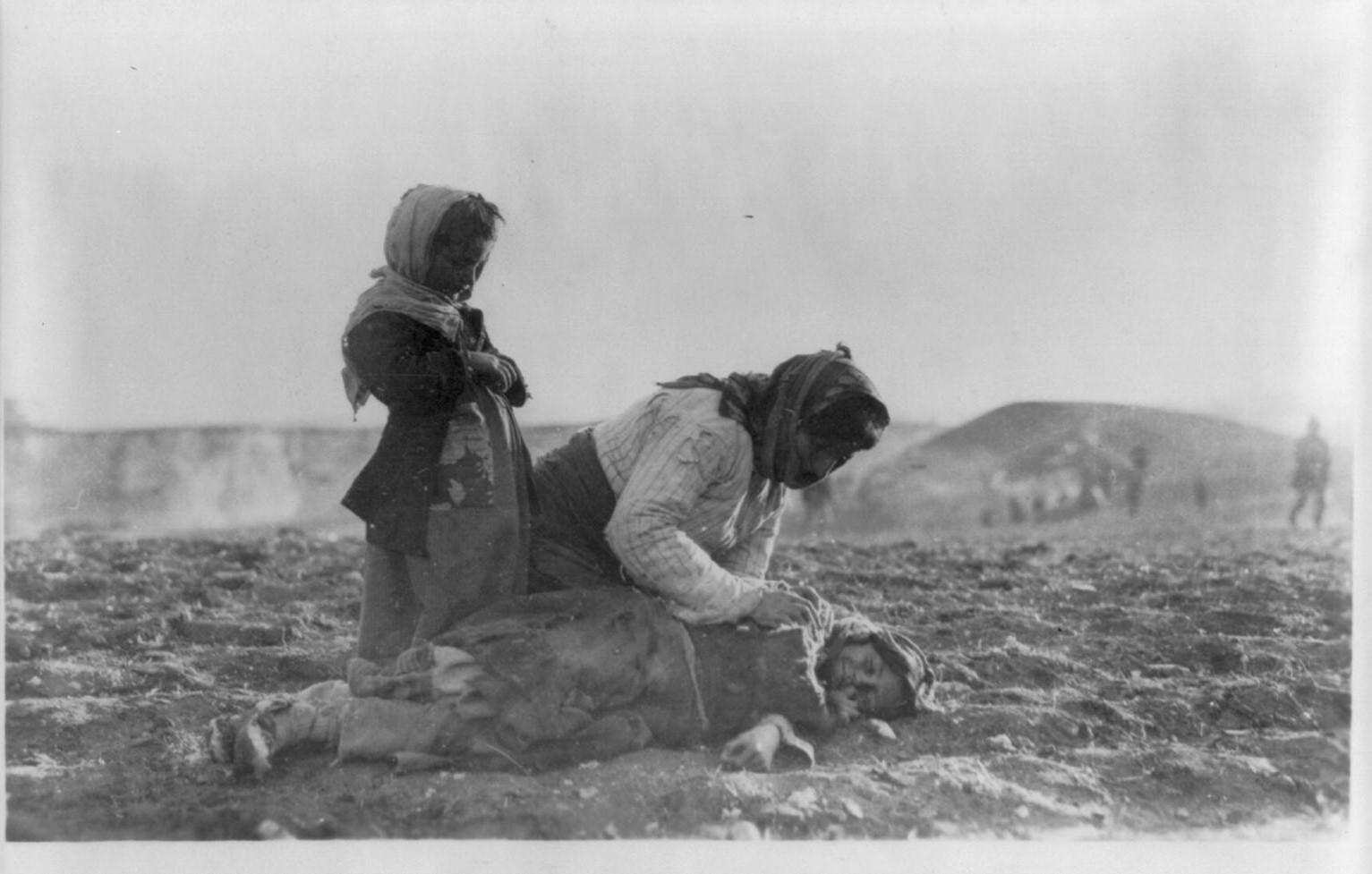
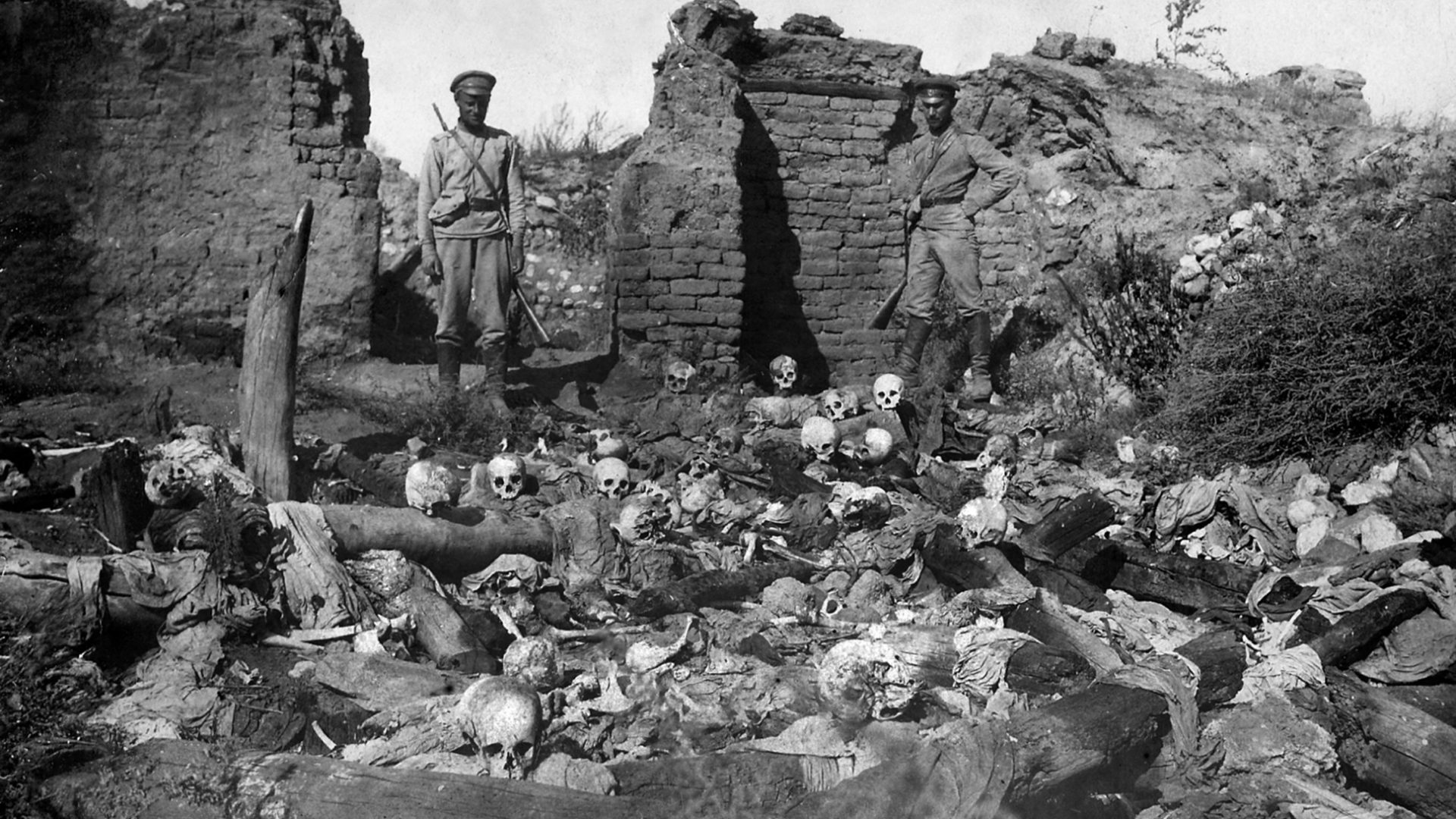
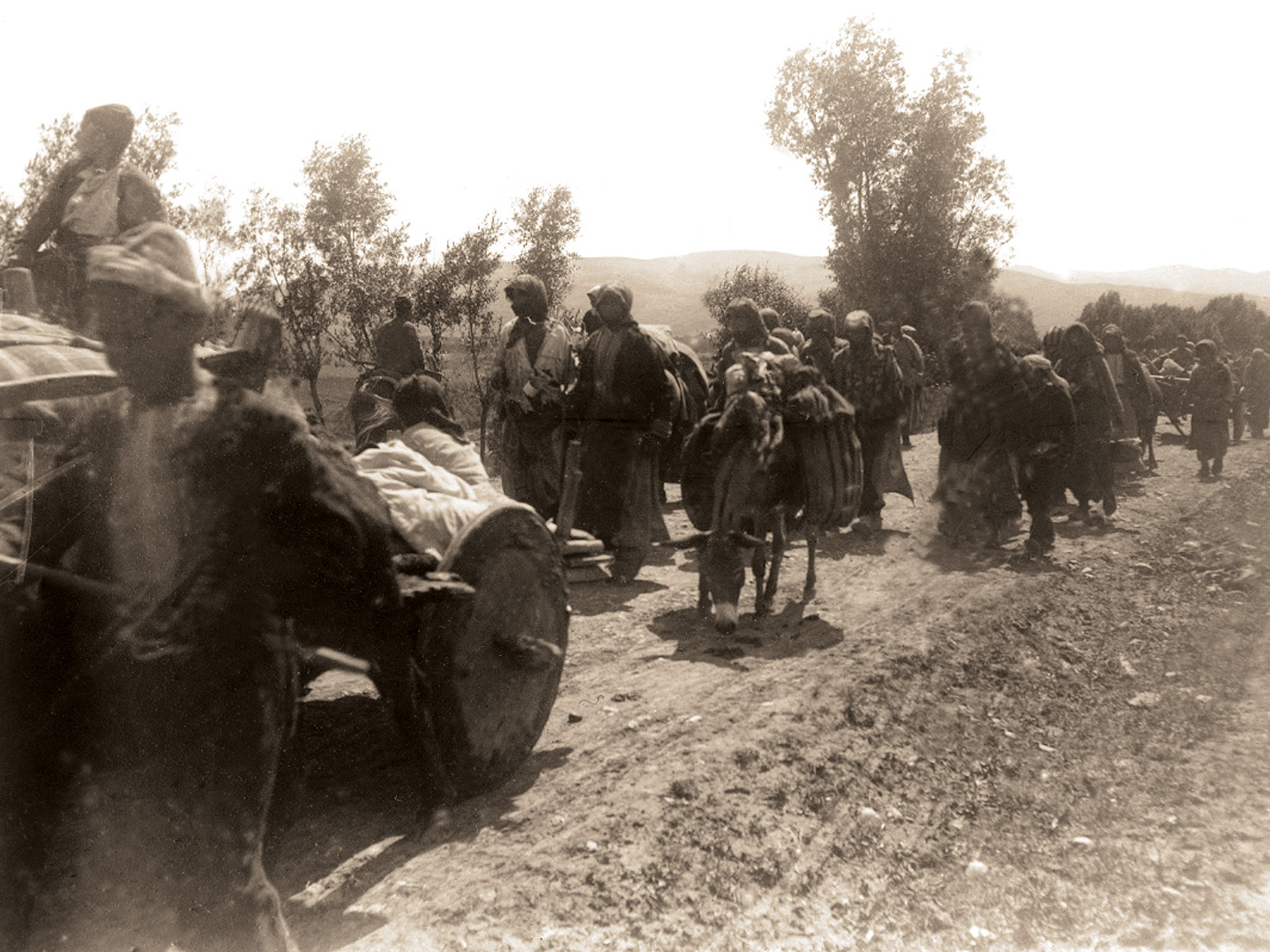
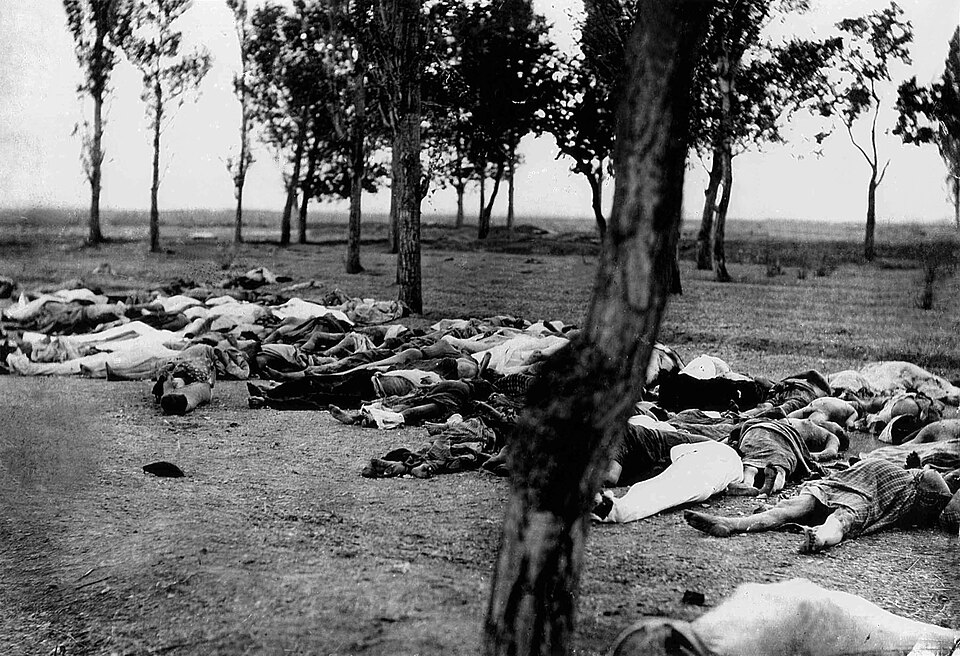
Starting in 1915, coded telegraph messages sent by senior Committee officials (including Jemal Pasha, Talaat Pasha, and Enver Pasha, the main organizers of subsequent repressive actions against Armenians) contained a clear order to deport the Armenian population from across the empire to so-called resettlement centers. Most men and teenage boys were separated from these deportation caravans and soon killed. Women and children were forced to walk for weeks over difficult terrain away from the main roads without food or rest. During the deportations, many of them died or were killed, others were kidnapped, and women were often raped. The destination for the unfortunates was the concentration camps in the city of Deir ez-Zor and the surrounding desert in the northeast of modern Syria. There, the deportees faced either immediate death or suffering from hunger and exhaustion. In some areas, the victims put up desperate armed resistance to the repression. In the absence of their owners, Armenian homes, businesses, churches, and private property were looted, forcibly confiscated, or destroyed.
Those who survived had different fates. Conversion to Islam was usually impossible, but there were many cases of Armenian women and children becoming Islamized through adoption or kidnapping by Turks, Kurds, or Arabs. Some survivors found refuge in orphanages set up by American and European missionaries. Those who survived the deportations ended up in refugee camps in the Middle East. Others, rescued by neighbors, reached the West or managed to find refuge among Armenians in Istanbul and Izmir, where the presence of diplomatic missions prevented mass killings.
The plight of the Armenians, described in his reports and references by the US ambassador to Constantinople, Henry Morgenthau Sr., caused an unprecedented public reaction in American society. Hundreds of thousands of Americans responded to help the Armenian refugees and orphans, a targeted campaign was organized with the active support of US President W. Wilson and cultural figures, which allowed to collect significant financial funds.
These atrocities marked the beginning of a process of systematic persecution and extermination of Armenians by the Ottoman Empire, which continued until 1923, when the Turkish Empire ceased to exist and the Turkish Republic was proclaimed. It is estimated that by 1918, about 1 million Armenians had been exterminated, and hundreds of thousands had become homeless and stateless.
According to the leading Polish jurist and the author of the term “genocide”, Raphael Lemkin (1900–1959), “the discriminatory actions of the Turkish government against the Armenian community became the first officially recognized act of genocide in international law”, which was accordingly reflected in the adoption of the Convention on the Prevention of the Crime of Genocide in 1948.
The Armenian Genocide has been recognized and condemned internationally by many countries of the world (USA, France, Germany, Italy, Poland, etc.), influential international and regional institutions, political organizations (Council of Europe, European Parliament, etc.), individual regions and provinces of states (in particular, Ukraine: the cities of Dnipro and Uzhhorod, Cherkasy and Poltava regions; Canada: the province of Quebec, etc.).
Dr. Iryna Radchenko