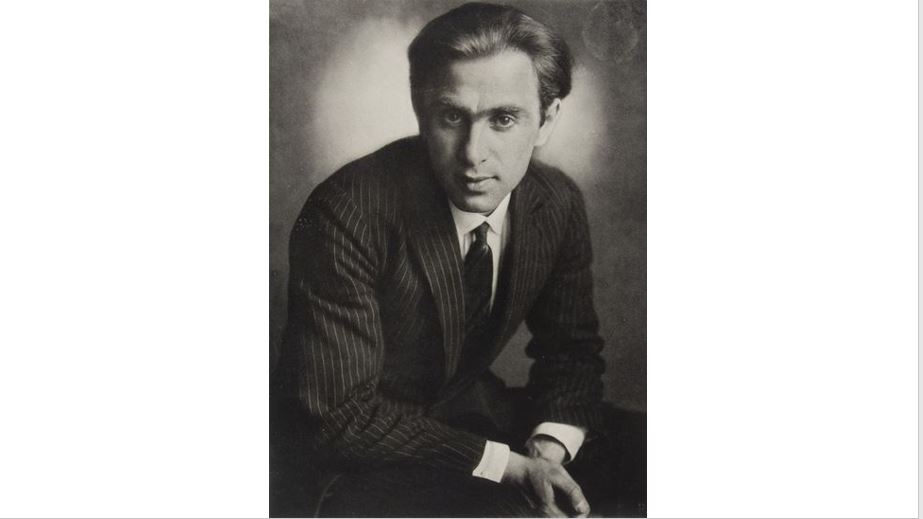
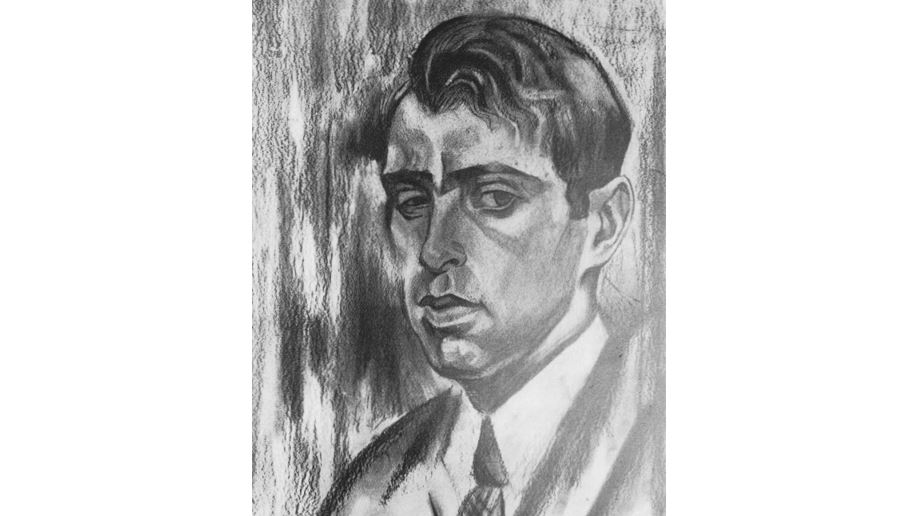
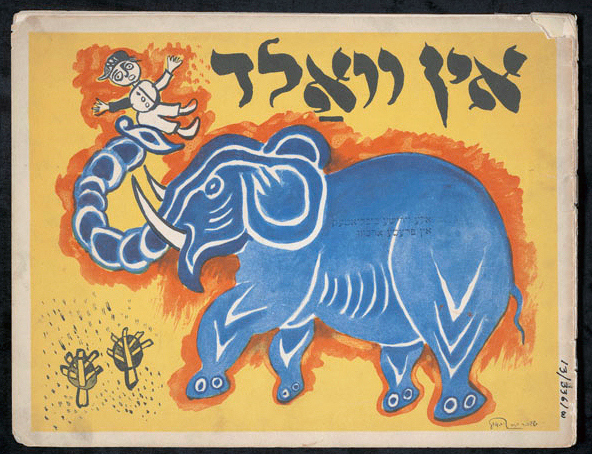
Issachar-Ber Rybak is a Jewish artist of Ukrainian origin, painter, graphic artist and decorator, member of the art section of the Kultur-League.
Born on February 2, 1897, in the town of Yelysavetgrad (now Kropyvnytskyi), the youngest in a poor Jewish family with many children. Issachar realized early on that his passion for drawing was not approved by adults. Time that can be spent helping the family.
At the age of 10, before the end of the heder, Issachar began attending evening drawing courses for workers that had opened at one of the local factories. A year later, on the recommendation of his teacher F. Kazachinsky, the gifted teenager entered the two-year courses that had just been established in Elisavetgrad for the training of qualified artist-workers. Such arbitrariness led to a conflict with his father, and a year later Issachar left home.
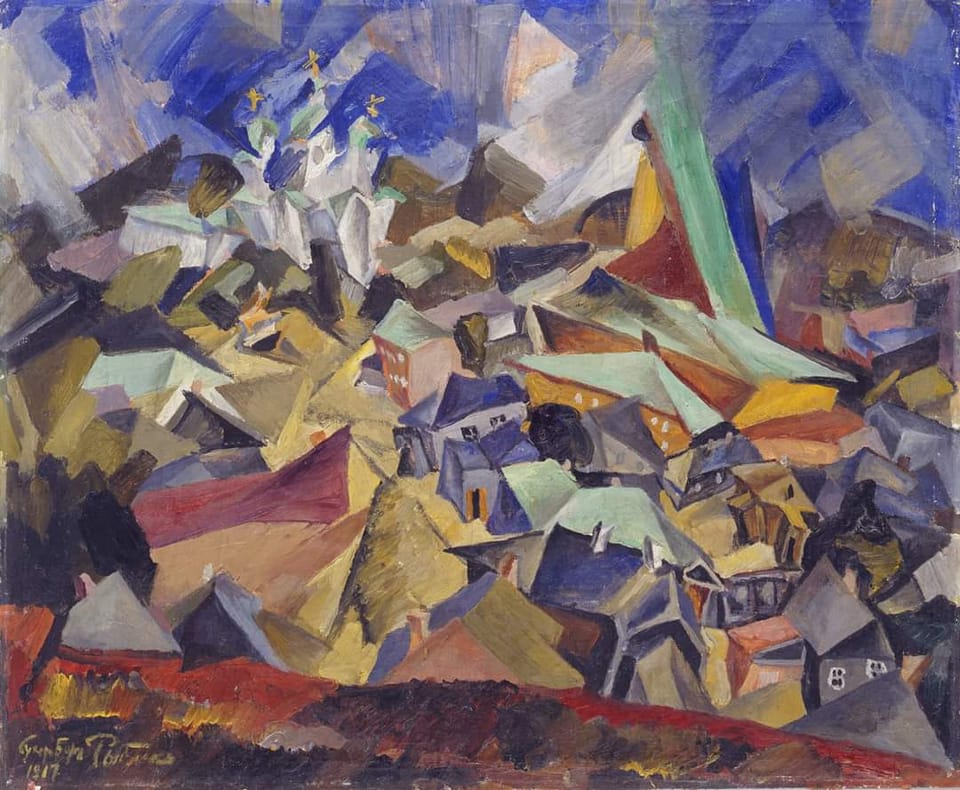
Since 1909, the young man, earning a living in a craft painters' artel, painted village churches near Kherson. At the same time, he became interested in studying the life of Jewish towns, examined Jewish synagogues, became interested in national art, and made many sketches. This theme would later become the main one in his work.
At the age of 14, Issachar came to Kyiv. In 1911–1912, he studied at the Kyiv Art School under Ivan Seleznev and in the studio of Oleksandr Murashko. His teachers were the cubo-futurists Oleksandr Ekster and Oleksandr Bogomazov. Issachar was one of the best students. Rybak became fascinated by the avant-garde, and despite the harsh criticism of this trend, he began to express his national themes through abstractionism.
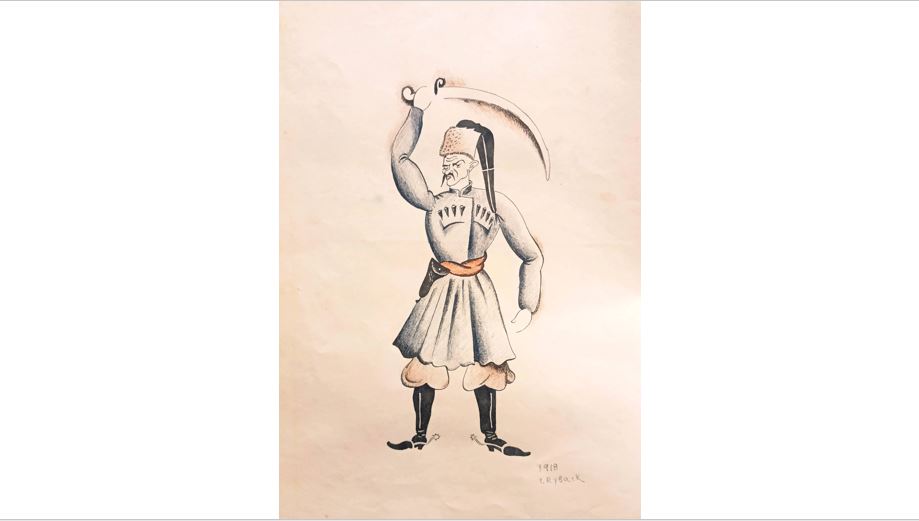
As part of the Historical and Ethnographic Society in 1916, Rybak examined wooden synagogues and studied Jewish folk art in Ukraine. The expedition was financed by the Jewish Society of Ethnography and History; its goal was to create a series of paintings dedicated to Jewish cemeteries and synagogues. Issachar's faithful companion and like-minded person was El Lissitzky, who later also became a popular artist. Their sketches of everyday scenes, narrow streets, shops, schools, and houses later became extremely valuable, since this patriarchal Jewish way of life disappeared forever due to the consequences of the Holocaust and World War II. In the sketches of Issachar-Ber Rybak of that time, one can see people with the seal of everyday wisdom on their faces, expressive poses, and Jewish national clothing.
In 1917, the Kultur-League was created, which widely promoted Jewish art. It is not surprising that Rybak became its active participant. At the same time, Rybak participated in society not only as an artist, but also as a theorist. Together with Boris Aronson, he wrote a program article “The Paths of Jewish Painting”. For Issarach, the theme of the origin of the native language and original culture became the meaning of creativity. He showed himself as a wonderful illustrator. Adhering to the ideas of the Kultur-League, he illustrated children's books written in Yiddish.
In 1919, a wave of anti-Jewish pogroms swept across Ukraine; Rybak's family was also affected by the tragedy - his father was killed during these events. Then the 23-year-old young man decided to go to Moscow, accepting an offer to teach at the Free Art Studio. In 1919–1920, he taught, drew posters, and painted scenery at the Jewish Theater.
So, in 1921, Rybak moved to Berlin, where he found like-minded people in the avant-garde society Secession (German: Sezession). At that time, he created prints in the style of “Suprematism” for the Jewish avant-garde magazine “Albatross”. Already in 1923, the artist's first exhibition took place in Berlin, where he presented two cycles “Small Town”, which depicted ordinary people living their ordinary lives, and “Pogrom” – which recreated the cruel reality of the Jewish pogroms. In those fruitful years, the young artist released 2 albums of lithographs with Yiddish captions: “My Ruined House. Memories” (1923) and “Jewish Types of Ukraine” (1924), which were created in the style of Cubism and avant-garde and conveyed the threatening atmosphere of the pogrom.
In 1924, Issachar Rybak tried to return to his homeland. He had a name, success, and wanted to be useful to the country. He immediately declared his talent, working on plays in the Jewish theaters of Kharkov and Moscow. He illustrated children's books. He spent two months in the Kherson region, where he depicted the new life of his countrymen after the events of 1917. Thus, was born the album “On the Jewish Fields of Ukraine.” After that, Rybak left for France forever, where this album was exhibited in 1928.
Since 1926, Rybak has lived in Paris. Here he works as a theater artist, an illustrator of Yiddish books, master’s the skill of a sculptor and continues to paint. He remains faithful to the theme of the Jewish town. In France, he decisively departed from Cubism and joined the artists of the "Paris School". In 1934, Rybak created a series of terracotta painted figurines – “Hasidic Dance”, “Simchat Torah” and “Folk Dance” – for the Paris exhibition “International Dance”. Later they were made of porcelain at the Sevres Porcelain Manufactory and included in the permanent exhibition of the Sevres Museum.
In the 1930s, the most prestigious exhibition halls in France, Holland, Belgium, and the USA competed for the right to present the work of Issachar-Ber Rybak. One of his favorite areas of work remained illustrating children's books. They were published in Kyiv, Berlin, etc.
Unfortunately, the artist's life was cut short at the peak of his creative work by a disease - tuberculosis, which Issachar had suffered from since his youth. Rybak died on December 22, 1935, at the age of 38.
His paintings were preserved by his widow, Sonya Rybak, during World War II, and in 1962 she transferred them to the Issachar-Ber Rybak Museum in Bat Yam (Israel). Some of the artist's works are also kept in museums in Ukraine.
Rybak's name and work are well known abroad, and honorary scholarships in his name have been established for young, bright artists.
Daria Madyar