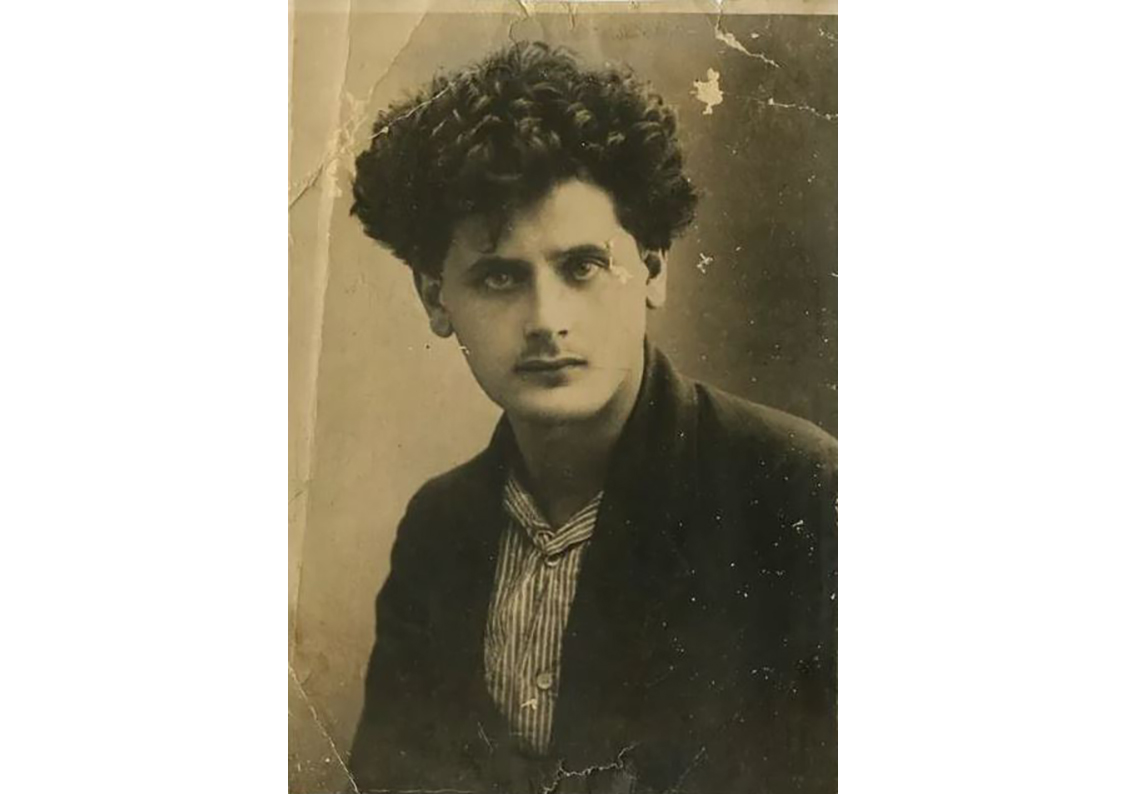
The future writer was born in the town of Polonne (Volyn province, Russian Empire; now Khmelnytskyi region, Ukraine) in a traditional Jewish family. The family, in which seven children grew up, was poor: his father worked as a melamed (a teacher at a Jewish school), Haya's mother sold herring pieces at retail; his father-in-law, the tailor Shimshon-Ber, helped. But still, the family was unable to buy clothes and shoes for all the children - the younger Perets carried the burden of the elders. From the age of eight, he worked: he sang in the synagogue choir, served as a clerk in a loan society. Until the age of ten, Perets was taught by his father, and from the age of three, the boy attended a heder. However, he left his hometown early and went south – he visited Chisinau, Balta, Odessa. During his travels, he took up odd jobs – he picked grapes, gave lessons, sang, etc. The young man tried to take an external course at a gymnasium in Odessa (he failed because later in the application forms, he indicated: “education – home”).
During the First World War, the young man was mobilized into the tsarist army. Wounded, Perets ended up in a military hospital in Katerynoslav (now Dnipro). By that time, his parents had already moved here. In 1917, Markish's first poems were published in the Katerynoslav Yiddish newspaper “Kemfer” (“Fighter”). The works written here – the poem “Volyn”, collections of poems “Thresholds”, “Just Like That”, “Night Robbery” – put P. Markish in the first rank of Jewish writers. He boldly introduced neologisms, amazed with the accuracy of unexpected comparisons and metaphors. In Katerynoslav, the young man began writing the poem “Kupa”, dedicated to the Jewish pogrom in the town of Horodyshche in the Cherkasy region. The topic was familiar to Peretz firsthand: he participated in the Ekaterinoslav Jewish self-defense unit, led by Menachem Mendel Schneerson, the future Seventh Lubavitcher Rebbe; his comrades in armed defense were the famous Russian-speaking poets of Jewish origin Mikhail Epstein (Golodny) and Mikhail Sheinkman (Svetlov).
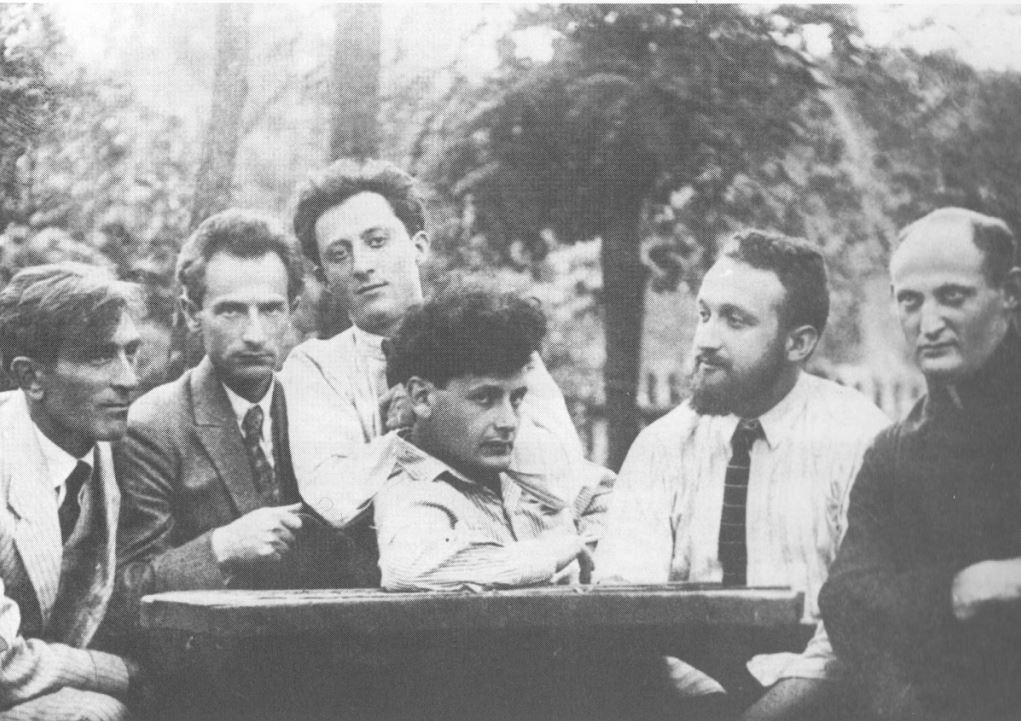
Travel fever and the search for his own path in literature lead Peretz to Warsaw (where he joined the expressionist art group “Chałastra” (“The Gang”) and further west – to Berlin, Paris, London, Rome. Everywhere the young writer writes a lot, is published – much less often: the desperate attempts of the young Jewish poetic “gang” run into a wall of indifference and lack of money.
The futurists pinned their last hopes on Palestine – a steamer with a group of Yiddish-speaking writers (among them the hero of the essay) arrived in Jaffa in December 1923. However, even there, everything did not turn out as expected. Eretz Israel was experiencing an acute phase of the struggle for linguistic unity: newcomers from different continents had to master Hebrew. Yiddish was perceived as a symbol of the “old” world – Jewish obedience, lawlessness, pogroms... So, writing in Yiddish under such conditions was a very thankless task.
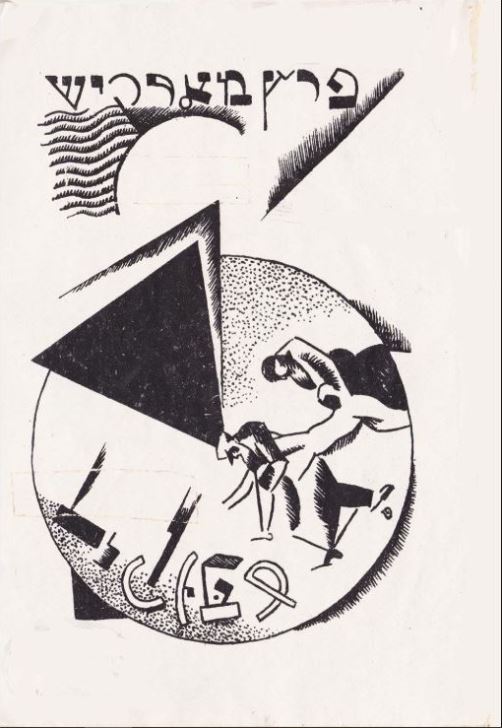
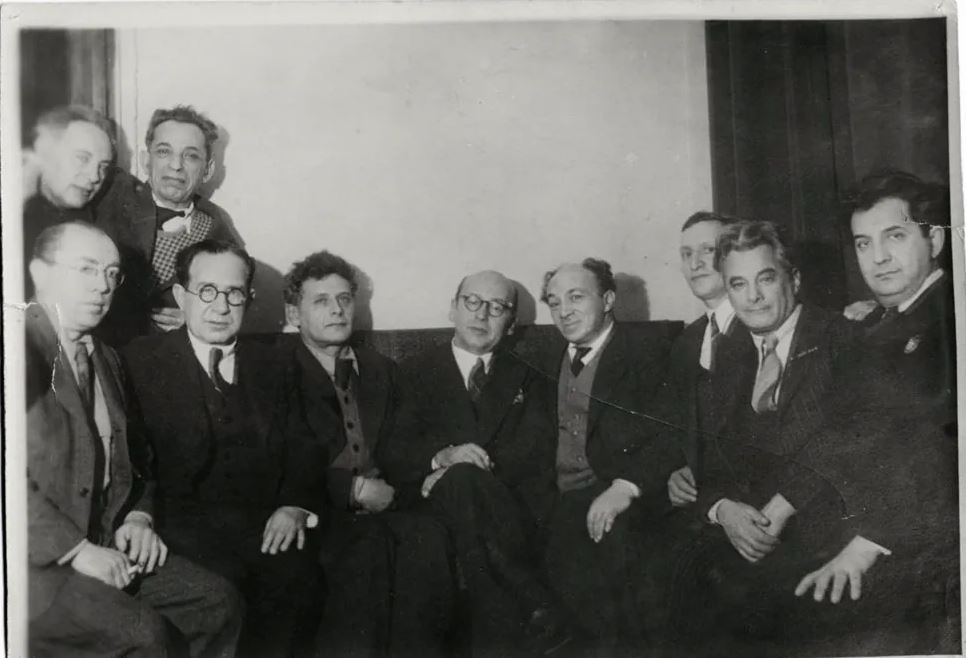
Soon, P. Markish and most of his like-minded people returned to the USSR, where indigenization continued, which tolerated the development of literature in the languages of national minorities, including Yiddish. In the 1930s, indigenization was curtailed, however, for some time there remained the opportunity to write in the native language, of course, within certain ideological frameworks. From this time on, P. Markish mastered the art of compromise with ideological chimera. His epic style suddenly became accustomed to grandiose communist rhetoric, bringing the writer to the forefront of literary beau monde. Markish mastered various literary genres, his prose and dramatic works were successful. Among the books of the pre-war period, the most famous are the historical and everyday novels “Always” (1929), “Alone” (1934), the poems “Brothers” (1929–1941), “Jewish Dancers” (1940), the collections of poems “Stuck Dials” (1929), “Land of the Fathers” (1938), the plays “Land” (1930), “Don't Worry” (1931), “The Ovadis Family” (1937), the monograph “Michoels” (1939). P. Markish headed the Jewish section of the Union of Writers of the USSR (1926), and after the great Stalinist terror he received the Order of Lenin (1939), became a candidate (1939), and then a member (1942) of the Communist Party.
Far behind was a poor childhood; a turbulent youth, full of desperate searches for ways to express himself. It seemed that everything had been found. Only the social context became less acceptable. Like many artists of those times, Peretz had to live a double life. According to the recollections of contemporaries, P. Markish carefully preserved his father's Torah scroll, tefillin, which he inherited. He openly admired the heroic past of his people. Therefore, it is no coincidence that in the 1930s P. Markish was from time to time accused of manifestations of national narrow-mindedness.
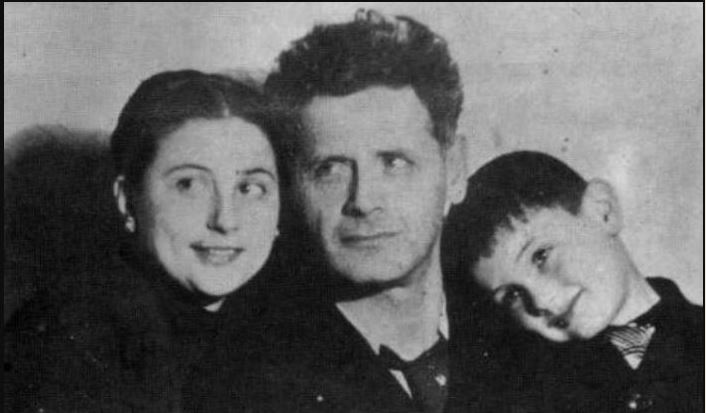
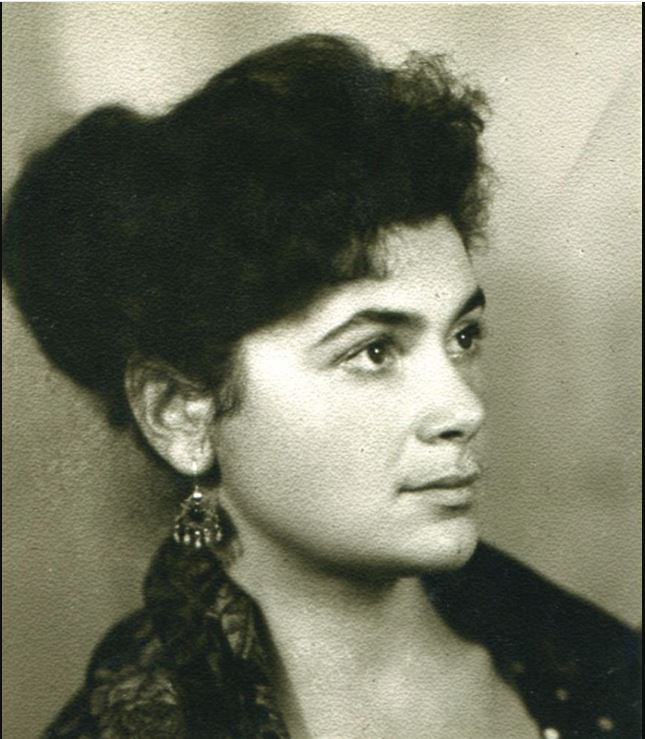
In 1937, Stalin's repressions first affected the Markish family. Perets had a daughter from his first marriage; Lyalya was raised by her mother and stepfather. In 1937, linguist Borys Tkachenko (stepfather) was accused of “Ukrainian bourgeois nationalism” and executed. His wife, translator Zinaida Ioffe, awaiting arrest, handed her daughter over to her biological father, P. Markish; he took her from Kyiv to Moscow, where his family – his wife Esther Markish and their sons, Symon and David – lived at the time.
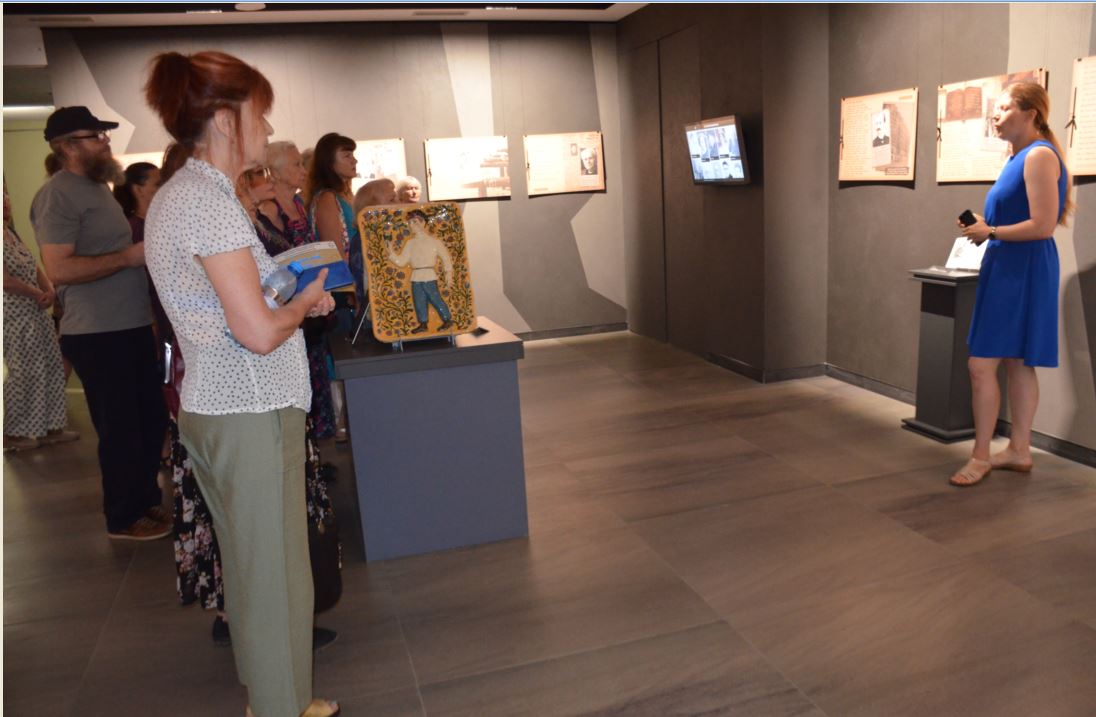
*The fate of the writer's daughter ultimately turned out happily: Olga Markish-Rapay, after exile in the Krasnoyarsk Territory, and later in Northern Kazakhstan, which she served as the daughter of enemies of the people, graduated from the Kyiv State Art Institute (now the National Academy of Fine Arts and Architecture) and became a sculptor. She worked in the field of decorative plastics, monumental decorative sculpture, and architectural ceramics. Our Museum's holdings contain some ceramic works by Olga Rapay-Rapay. In the summer of 1924, the Museum exhibited a temporary exhibition “You are lucky, Black Sea...” dedicated to writers of Jewish origin who lived and worked in Odessa. Ceramic panels “Girl” and “Boy” by Olga Rapay-Rapay were exhibited for public viewing and attracted the attention of visitors.
During the German-Soviet War, P. Markish served in the active army as a war correspondent. In 1942, he joined the presidium of the Jewish Anti-Fascist Committee (EAC). He organized the editorial staff of Yiddish radio broadcasts intended for Jewish listeners in the United States. In the post-war period, the writer dared to take rather risky actions: he did not hide his admiration for the proclamation of the State of Israel; on January 16, 1948, at the memorial service for S. Mikhoels, P. Markish delivered a poem in which he accused the authorities of the murder of the artist.
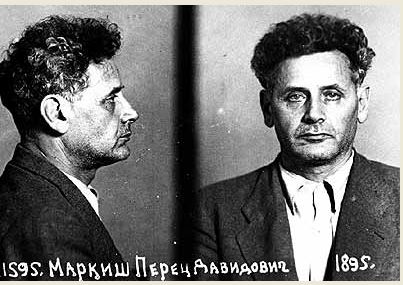
On the night of January 28, 1949, P. Markish was arrested as a member of the presidium of the EAK. Soon the Jewish section of the Writers' Union of the USSR was liquidated. In May 1952, the trial of the EAK began. The accused were brought to the Supreme Court building – a military tribunal session was held there. Studying the materials of the investigation (See: Unjust Court. The Last Stalinist Execution. Transcript of the Trial of the EAK Members. Moscow, 1994) leads to sad reflections on the imperfect nature of man. Outstanding artists, strong personalities (Markish among them) are unable to resist the machine of terror: they are trying with all their might to “whitewash” themselves in the eyes of the investigation – to prove their own “innocence”, impeccable loyalty to the communist principles, to the party of Lenin-Stalin. (Of course, everything is done using the methods of investigation that have been tested on hundreds of thousands of Soviet people.) When the prisoners are given some peace for a while, they refuse to give their previous statements. Then comes the “intensive” phase of the investigation again – all this continues for years. So, it was under the influence of interrogations with the use of torture that P. Markish refused to write in Yiddish anymore and admitted the harmfulness of all his previous literary work. However, even this did not save his life. On August 12, 1952, Perets Markish was shot. Rehabilitated in 1955.
In the library of the Museum “Jewish Memory and Holocaust in Ukraine” you can read the following editions of Peretz Markisch's works:
1. Маркіш П. Наречений завірюхи: Вірші і поеми. Київ: Сфера, 2000. 228 с.
2. Маркиш П. Избранное: Стихотворения и поэмы. Москва: Советский писатель, 1957. 416 с.
3. Маркиш П. Избранные произведения в двух томах. Т. 1: Стихотворения. Москва: Художественная литература, 1960. 384 с.
4. Маркиш П. Избранные произведения в двух томах. Т. 2: Поэмы. Москва: Художественная литература, 1960. 320 с.