


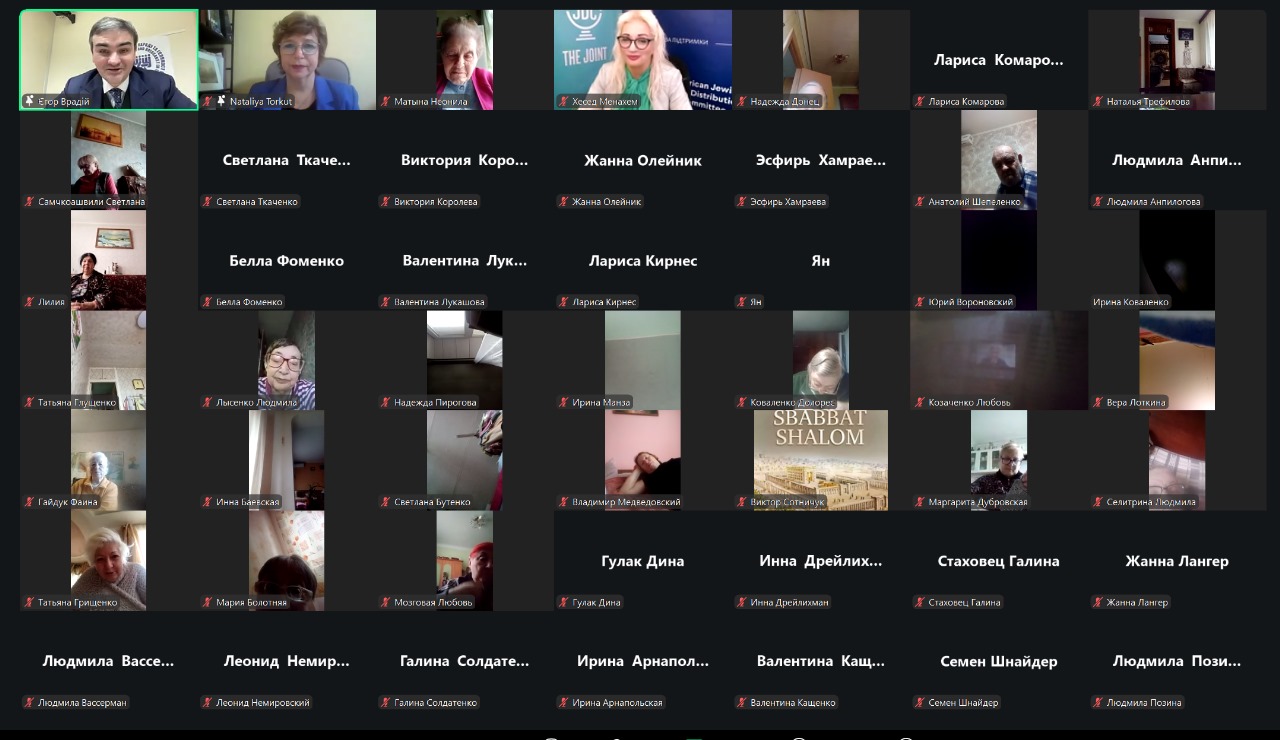

On November 28, that is, on Friday, which just passed, another educational meeting took place as part of a joint project of the Hesed Menachem Charitable Foundation and the Museum “Jewish Memory and Holocaust in Ukraine”. This time, the conversation was about classical literature, namely the legacy of William Shakespeare (1564-1616) – an integral part of the late Renaissance era.
The interest in Jewish themes in Renaissance England (16th century) seems rather strange at first glance, because it is known that according to the edict of King Edward I (1290), Jews were forbidden to settle in the territory of the kingdom under pain of death. Why is it that in the works of many authors of that time the Jew is the main character? What factors led to increased attention to the figure of the Jew in the time of Queen Elizabeth I? How is the usurer Shylock depicted in William Shakespeare's completely uncomic comedy The Merchant of Venice, and how was this play later used by the ideologists of the Third Reich to form anti-Jewish sentiments in German society? How does Shakespeare's Shylock appear today on stage and screen?
All of this, as well as “Jewish” plots in the works of other prominent representatives of British literature as early as the 19th century, was discussed in a lecture by Professor Natalia Torkut, Doctor of Philology, Honorary Senior Research Fellow at the Shakespeare Institute (Stratford-upon-Avon).
The meeting was moderated by Yehor Vradii, Deputy Director for Scientific Work of the Museum “Jewish Memory and Holocaust in Ukraine”, Candidate of Historical Sciences.