On November 27, the Museum “Jewish Memory and Holocaust in Ukraine” (Dnipro) organized an educational event entitled “Family Archives as a Source for Studying the Holocaust History and Other Genocides.” At the beginning of the meeting, the Director of the Museum, Dr. Iryna Radchenko, addressed the participants and spoke about the importance of studying the Holocaust and understanding its lessons in today’s conditions. It was emphasized that family archives are an important addition to the scientific research of historians. They often contain details that do not make it into official historical records, expanding the understanding of the tragedy. Dr. Iryna Radchenko also recalled that it was in November 1941 that a Jewish ghetto was created in Lviv – one of the largest in Nazi-occupied Europe (after Warsaw and Łódź), in which about 250,000 Jews were killed by the fall of 1943.
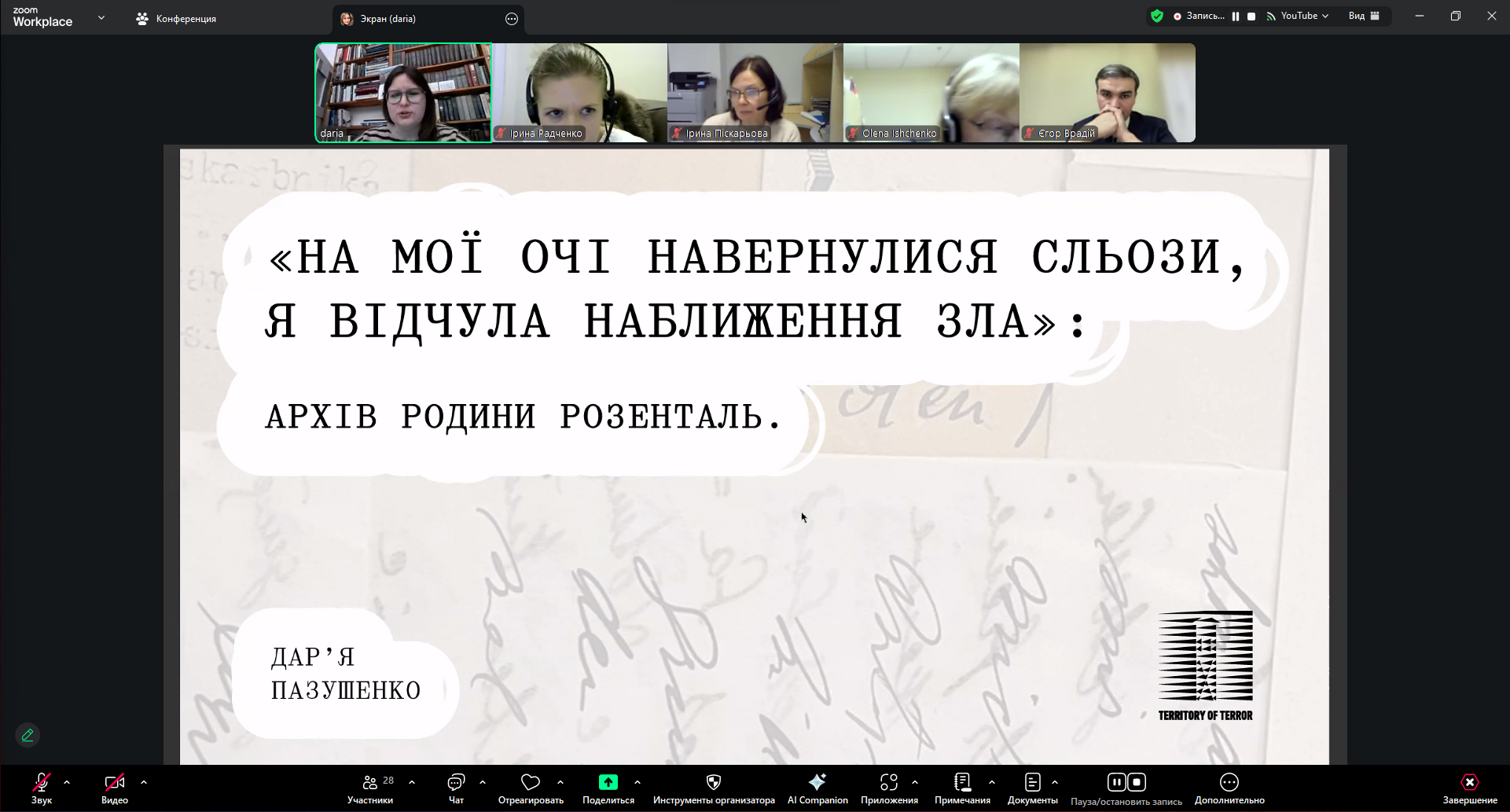
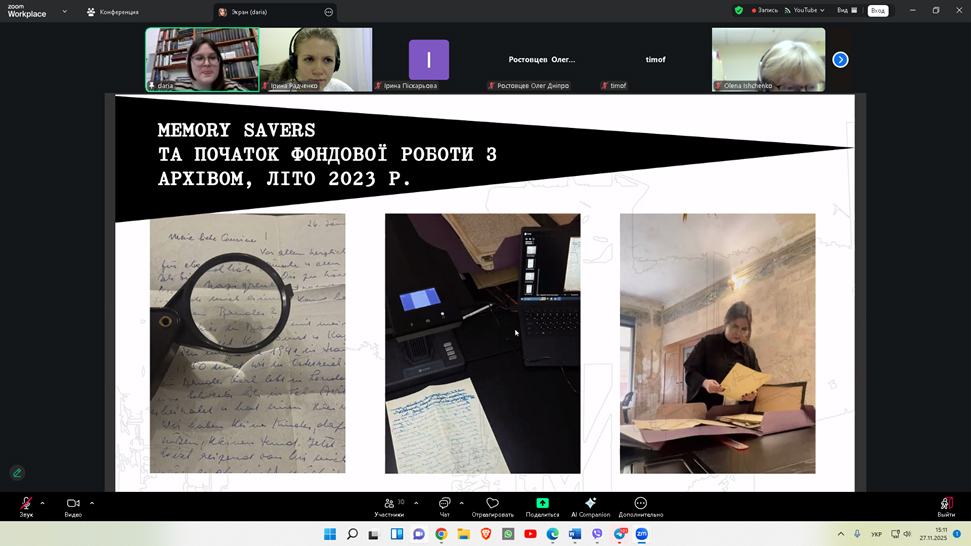
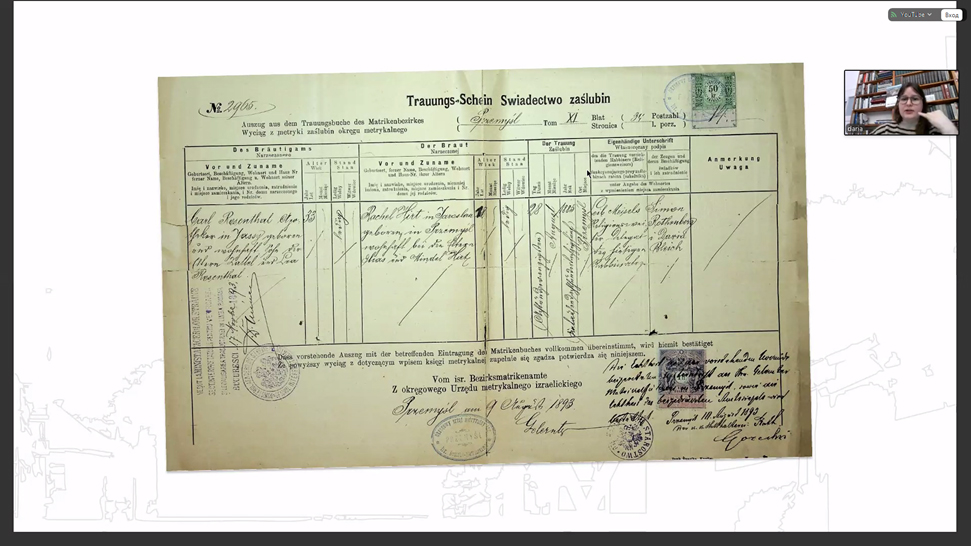
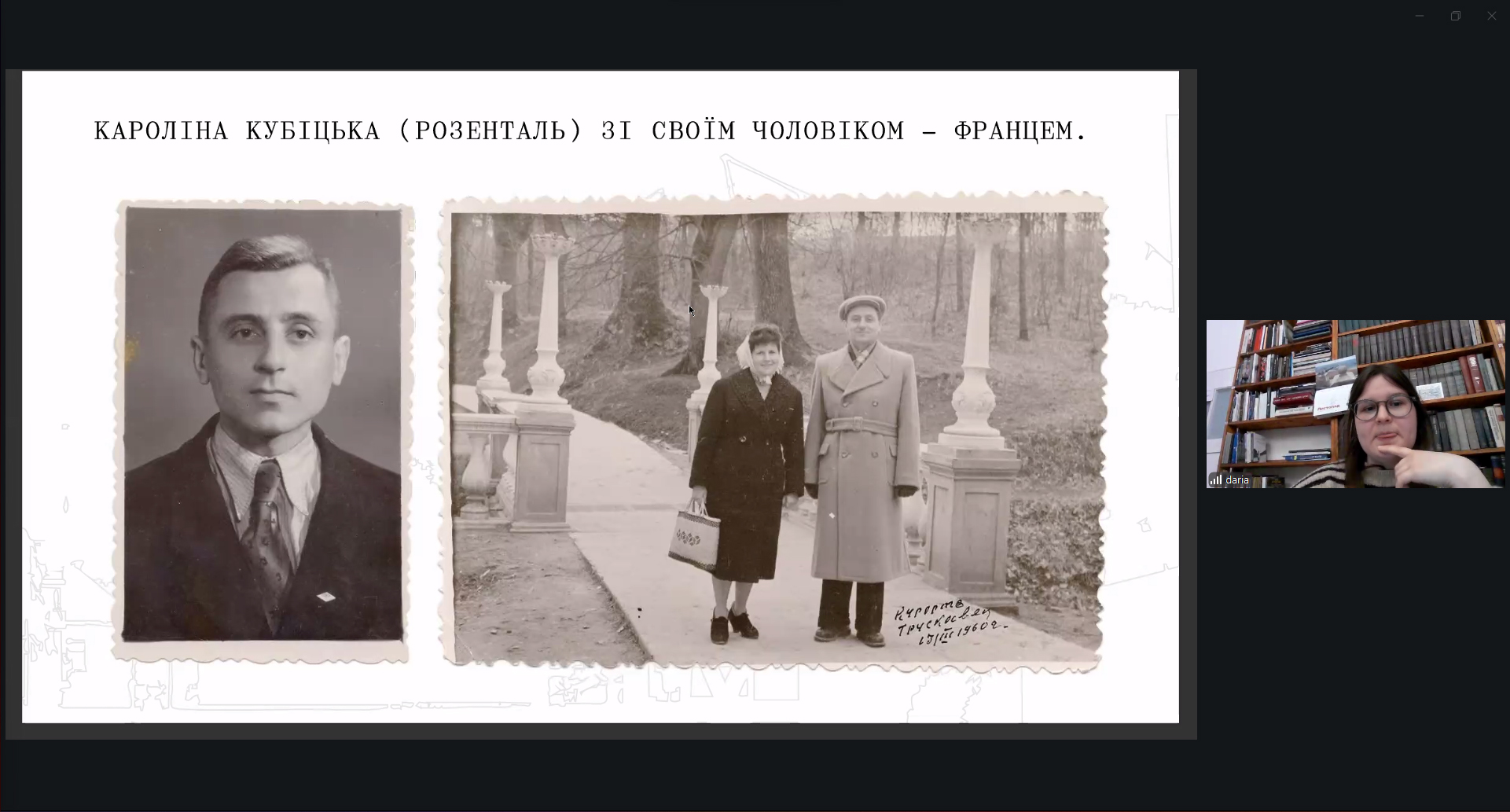
The event guests were given a lecture-discussion by Daria Pazushenko, a museum curator and research fellow at the Memorial Museum of Totalitarian Regimes “Territory of Terror” (Lviv). The event participants learned how, eight decades after the destruction of the Lviv Ghetto, a woman visited their museum and, wishing to remain anonymous, handed over a folder with documents to the staff. As it turned out later, the transferred folder contained a kind of archive of the Jewish Rosenthal family, the materials of which chronologically cover the period from 1838 to 1960. The lecture examined this archive as evidence of life before, during and after World War II – through the history of one Jewish family living in Lviv. The lecturer presented archival documents and photographs that clearly demonstrated the everyday life of the Lviv Jewish Rosenthal family on the eve of the war, which turned their world upside down.
At the end of the meeting, a discussion was held, where questions and reflections were raised on the peculiarities of working with family archives, since they contain unique testimonies, photographs, letters and documents that reveal the personal experience of people who survived these events. It was emphasized that family archives allow us to preserve memory, supplement general historical knowledge about tragedies and honor the victims. The lecture aroused interest among fellow museum workers, archivists, teachers and lecturers of history, representatives of the Jewish community, students, etc. It is noteworthy that participants from different regions of Ukraine, including Donetsk and Zaporizhia regions, joined the class.
You can join the online lecture by following this link