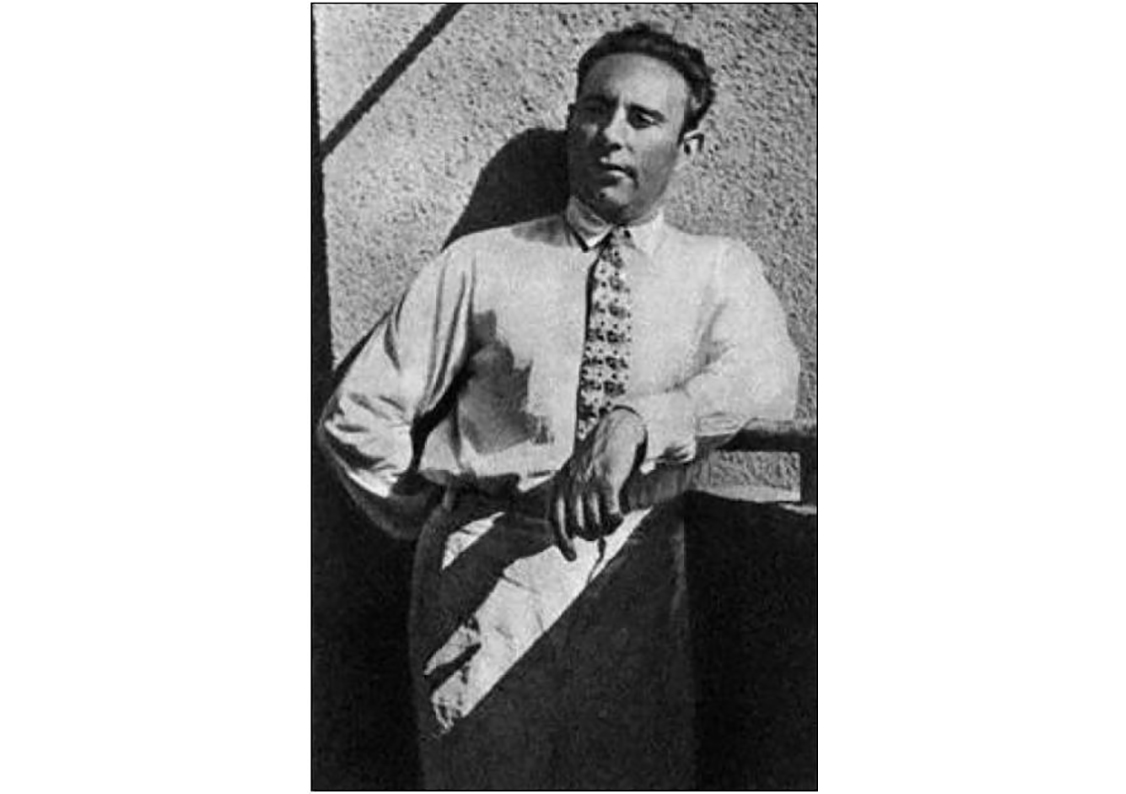
The future poet was born in Goloskov, Podolsk province (Russian Empire, now Ukraine, Khmelnytskyi region) in a Jewish family. His father worked as a bookbinder and traveling teacher; the large family barely made ends meet. Disaster struck when his father, and later his mother, died of tuberculosis. The older children were forced to look for work: one of Leyba's brothers became a bricklayer, another a loader, two sisters got a job as seamstresses, and the third a teacher. Fate was not kind to the children, who were orphaned early: all Leyba's brothers and sisters died of tuberculosis at a young age. The boy was cared for by his grandmother. “From the age of ten I supported myself,” the poet would later write in his autobiography, “working at an oil refinery, as a bricklayer, a porter for a rawhide dealer, a cutter and a foreman for workshops, wandering around different cities of Ukraine together with the same exhausted homeless boys.” There was no question of Leib attending school (“Poverty, hard work with different masters in different towns was my school,” the poet noted in a letter to his friend, children’s writer K. Chukovsky). However, Leib, as a clever child, taught himself to read and write, and even earlier – to compose poetry. It was this ability that distinguished the boy from his surroundings and helped him maintain faith in himself and his own future. In one of his few prose works, the autobiographical story “Lyam and Petryk”, the writer talked about the wanderings of his fellow boys, a Jew and a Ukrainian, who, despite the poverty and obscurity of their lives, did not lose their zest for life.
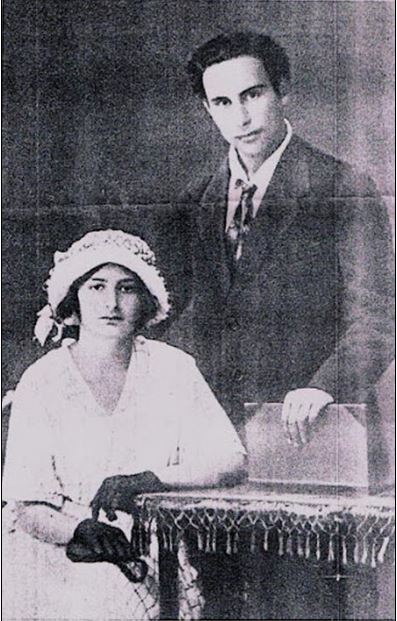
Leiba perceived the revolutionary events positively – in accordance with the position of a person who has nothing to lose in a social flood. The young man sincerely believed in new horizons; in his autobiography he emphasized that it was the revolution that “rescued him from obscurity” and “put him on his feet.” In the city of Uman (now Cherkasy region), Leiba met the Jewish writer David Bergelson, who introduced the talented young man to the circle of writers who wrote in Yiddish. In Uman, Leiba also met his future wife, Bertha.
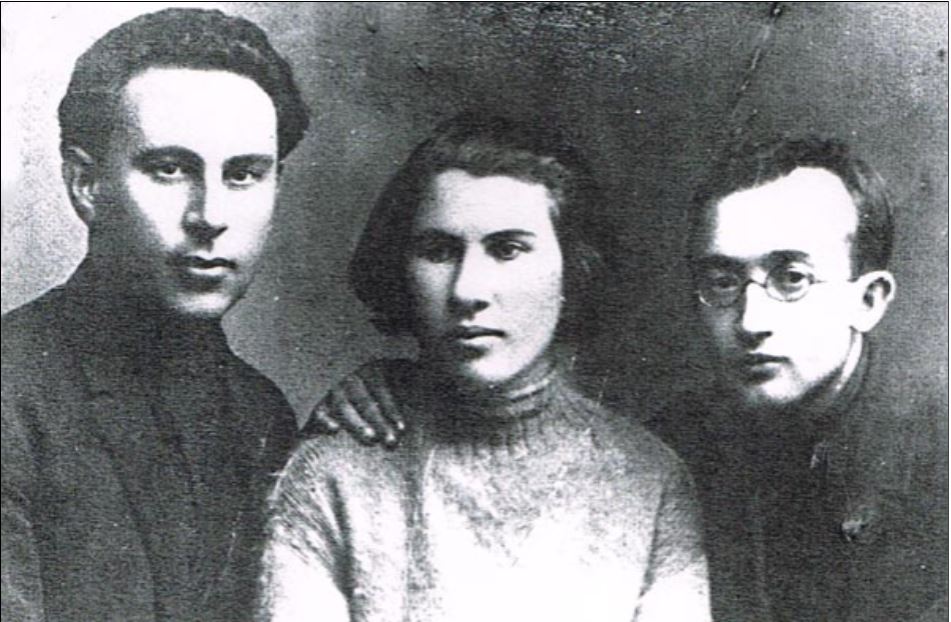
In 1917, the young family settled in Kyiv. The first publication of L. Kvitko's poems in the collection “Eings” (“Native”) made the young poet famous. Together with David Hofstein and Peretz Markish, Leiba Kvitko became one of the leading masters of the “Kyiv group” of Yiddish-speaking writers. Young creative people breathed the future and without sadness said goodbye to everything that seemed archaic to them at the time. L. Kvitko's poems attracted with their colorful language, poetic innovation, and good humor. The translators of his poems from Yiddish into Ukrainian were N. Zabila, I. Kulyk, V. Sosyura, P. Tychyna, R. Troyanker.
In 1921, L. Kvitko went abroad to Berlin, which became the center of the booming activity of Jewish publishing houses. There, the young writer had the opportunity to publish in Soviet and Western periodicals. For some time, he lived in Hamburg, where he joined the Communist Party of Germany; in 1923, he returned to the USSR.
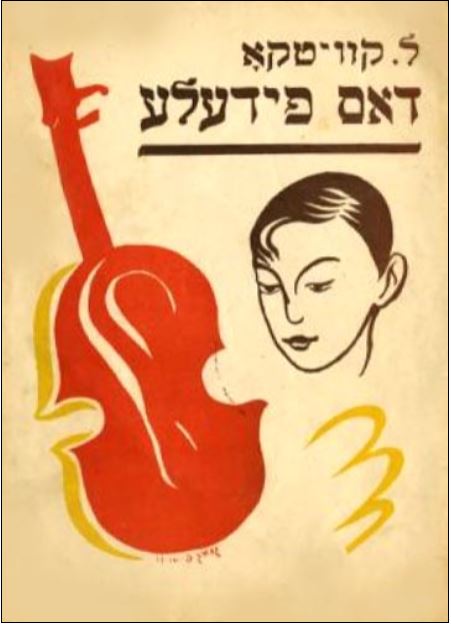
In the Soviet Union, he was expected to become famous as a poet who wrote about and for children. It was in this area that L. Kvitko's talent was most clearly revealed. Moreover, this niche seemed to be a reliable protection from political persecution. However, the poet's path was not easy. With a series of caustic satirical poems, Leiba responded to the dictates of the Yevsections (organizations created to involve Jews in communist construction). L. Kvitko was truly despised by those who worked for the rapid assimilation of Soviet Jews. The poet branded the editor-in-chief of the Yiddish-language newspaper Der Emes, Moisei Litvakov, as a “stinking bird of Moi Li.” The reaction was not long in coming: Leiba was accused of “right-wing bias” and was therefore excluded from the literary process. For some time, L. Kvitko worked at the Kharkiv Tractor Plant. A ban was imposed on the publication of books.
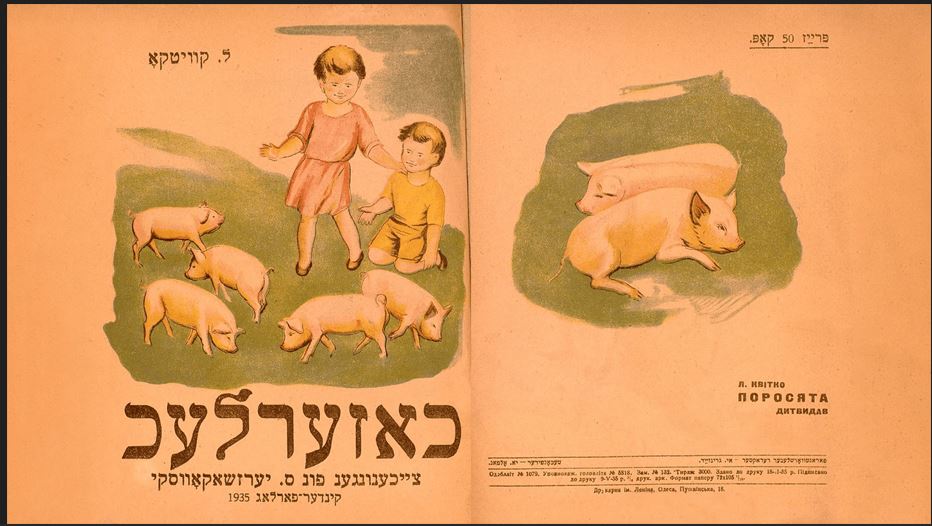
However, the already acquired popularity contributed to the poet's return to professional literary activity. Several generations of children grew up in his poems. When he fell into political disgrace, the authorship of L. Kvitko's poems was often attributed to translators - A. Barto, S. Marshak, S. Mikhalkov... Thus, children and their parents became alienated from the true creator of their favorite poems “Anna-Vanna, our detachment wants to see pigs...”, “Have you heard about the little cat about my dear...”, about the loser Lemela and Klim Voroshilov…
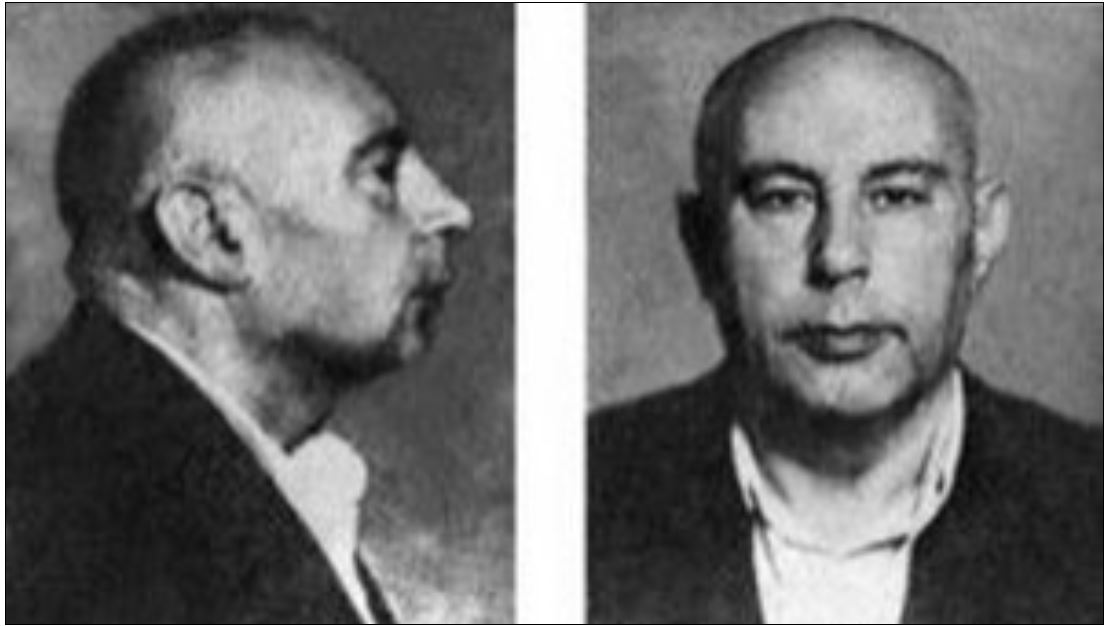
During World War II, L. Kvitko went to Kuibyshev (now Samara, Russian Federation) to work in the Jewish Anti-Fascist Committee. This organization raised enormous funds among wealthy Jews in the USA and Western Europe to arm the Soviet army. However, after the victory, Stalin groundlessly declared the Jewish Anti-Fascist Committee a reactionary Zionist body. On January 23, 1949, L. Kvitko was arrested. He was accused of allegedly establishing contact with the American resident Goldberg, whom he informed about the situation in the literary community of the USSR. The poet was also reminded of his departure to Germany (completely legal in the early 1920s). At the trial, L. Kvitko admitted his mistake(?!): he allegedly wrote poetry in Yiddish, thereby hindering the assimilation of Jews into the family of peoples of the USSR. Thus, he had to accept that creativity in his native language was a manifestation of “bourgeois nationalism.” Hopes for the flourishing of his native culture ended in failure.
The confessions made in court did not save his life. On April 18, 1952, the Military Collegium of the Supreme Court of the USSR accused L. Kvitko of treason. The poet was shot on August 12, 1952. He was rehabilitated after Stalin's death on November 22, 1955.
***
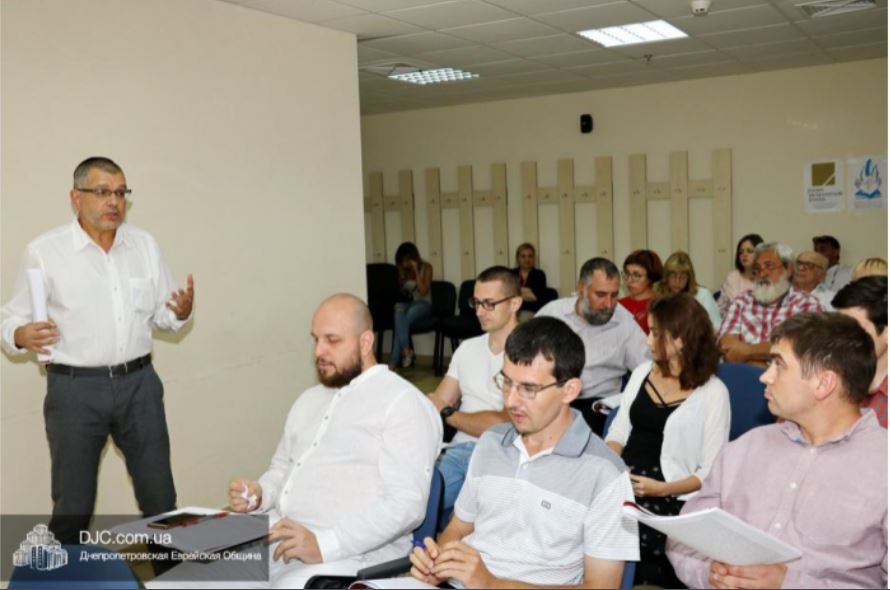
In 2017–2018, Professor of Jewish History Yohanan Petrovsky-Shtern (Northwestern University, Chicago, USA) visited our Museum twice with a course of lectures “Jews and Ukrainians: A Millennium of Co-existence”. The classes were interactive, using the author’s collection of excerpts from sources. These materials recently came into my hands when I was sorting through stacks of papers on a shelf. I opened a page with a poem by L. Kvitka about pigs (in Yiddish – “Hazerlech”). And I remembered how the discussion of this seemingly simple, familiar work from early childhood provoked a rather deep discussion about Jewish collective farms, indigenization, which led some Jews to Ukrainian culture. Even then, I thought that Soviet Jews and Ukrainians were united by sincere trust in the prospects of their peoples under the Bolshevik banner. The figure of L. Kvitko, the tragic fate of the poet, is a significant illustration of the illusory nature of such hopes.
In the library of our Museum you can read the following publications about L. Kvitka:
Olena Ishchenko