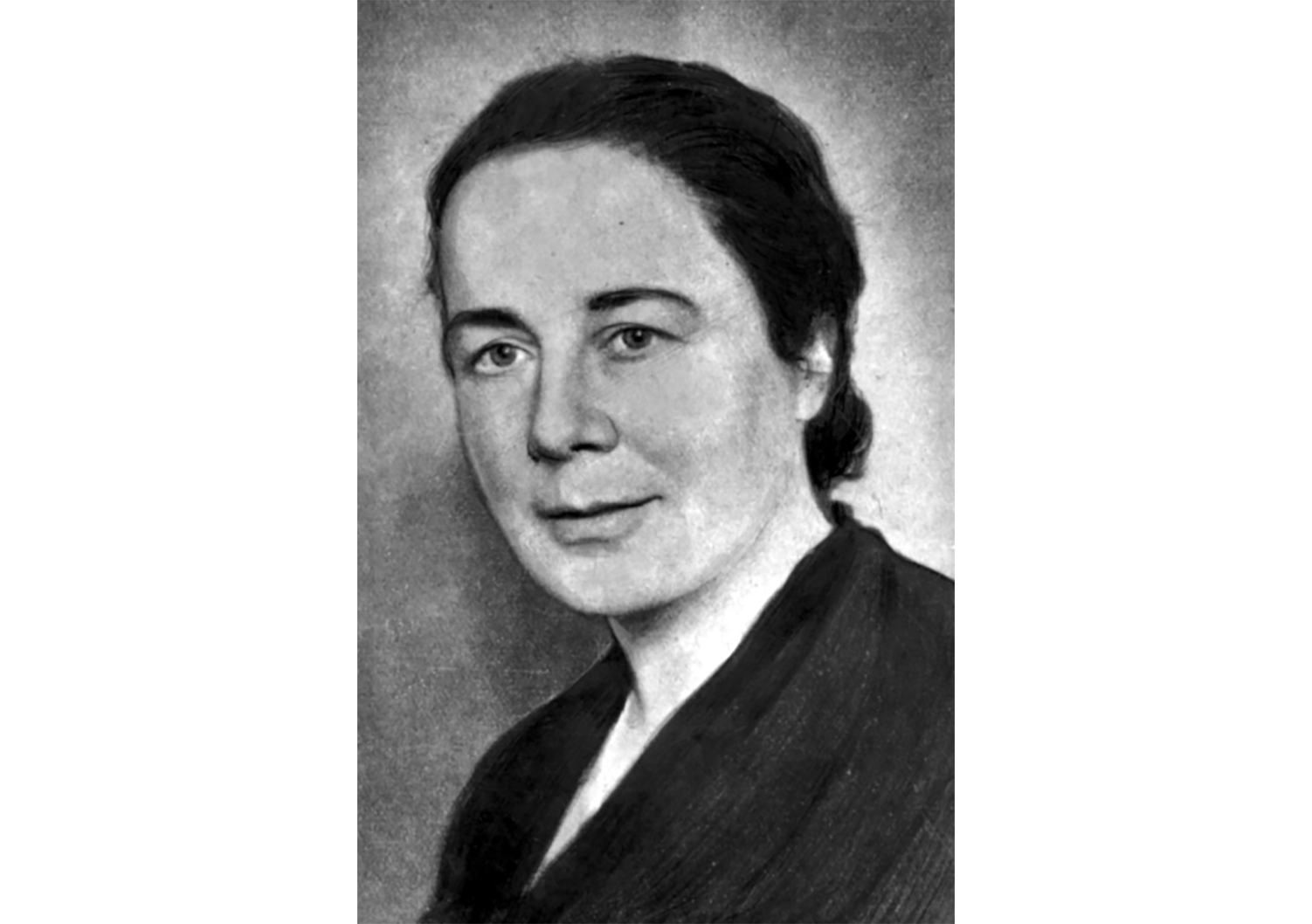
Zofia Kossak-Szucka – prominent Polish writer, organizer of aid to Jews in German-occupied Poland, participant in the Warsaw Uprising.
Born on August 10, 1889, in the Kosmin village (Poland) in a creative family: her uncle and grandfather were famous Polish artists. Initially, she received home education. Since 1906, she worked as a teacher in Warsaw. She studied at the Warsaw School of Fine Arts, later at the Geneva School. After the death of her husband Stefan Shutski, she settled in her parents' estate in Cieszyn (Silesia). There she met Zygmunt Satkowski, an officer in the Polish army. In Cieszyn, she took an active part in public discussions, in her articles she was critical of Polish-Jewish relations, and to this day her texts are often condemned as anti-Semitic.
With the beginning of World War II, Zofia Kossak led an active anti-war activity. Her works were included in the list of “dangerous and undesirable anti-German literature”. The writer was closely watched by the Gestapo. In 1941, together with friends and Father Edmund Krause from the parish of St. Cross, she became the founder and head of the “Front for the Rebirth of Poland”.
On July 22, 1942, the first large-scale extermination of Jews in the Warsaw Ghetto began - over 300,000 people were sent to the Treblinka death camp or killed on the spot. Thousands of ghetto residents fled in search of refuge in the Polish part of Warsaw and other places in the General Government.
In August 1942, Zofia Kossak's manifesto was published. This document sharply criticized the world community for the lack of any reaction to the Holocaust. The appeal stated: “In the Warsaw ghetto, separated from the world by a wall, several hundred thousand suicide bombers are waiting for death. They have no hope of salvation. No one will come to their aid. The number of murdered Jews has exceeded a million, and this figure is increasing every day. Everyone is dying. Rich and poor, old people, women, men, young people, infants ... They are guilty only of being born Jews, condemned by Hitler to extermination. The world looks at these crimes, the most terrible of all that history has seen, and is silent ... We cannot tolerate this any longer. He who remains silent in the face of the fact of murder becomes an accomplice to the murderer. He who does not condemn is allowing it. Therefore, we, Catholic Poles, will raise our voices.”
The writer's manifesto was distributed in occupied Poland in a print run of 5,000 copies. And on September 27, 1942, the Konrad Żegota Temporary Committee for Aid to Jews (later the Żegota Council for Aid to Jews) was established, founded by Zofia Kossak-Szczucka and Wanda Krachelska-Filipowicz. To help a Jew at that time meant, first, to hide him, find him a secret apartment and, if possible, a job, obtain forged documents; to clothe him, feed him, cure him, and in case of danger, quickly find him a new apartment.
In 1943, Zofia Kossak was arrested by the Gestapo. The woman was imprisoned in Pawiak prison, where she was brutally tortured, but she did not betray anyone or reveal her identity. As Zofia Śliwińska, she was sent to Auschwitz, from where she was liberated at the end of July 1944. She took part in the Warsaw Uprising. After the surrender of Germany, she ended up in Częstochowa, where she recorded her memories of Auschwitz in the book “From the Abyss”.
In June 1945, Zofia Kossak was summoned by Jakub Berman, the new Polish Minister of the Interior, a Jew. He strongly advised her to leave the country immediately. This was done for her protection, the minister knew what his government would do to those who did not support the communists. From his brother, Adolf Berman, he knew what Zofia had done to save the lives of many Jews. Thus, Jakub Berman saved her life. In 1945, Zofia Kossak, sent from the Polish Red Cross mission to London, remained in exile for 12 years, managing a farm with her husband and continuing her writing. In the West, her novels made the bestseller lists. Zofia lived the last years of her life in Poland, on the family estate in Górki Wielki. Shortly before her death in 1968, Zofia Kossak said that her underground activities and her stay in a Nazi death camp, which she survived thanks to prayer, love and sympathy for people, were a gift and the greatest victory of her life.
For her unique services to the country, Zofia Kossak was awarded the highest state award of Poland - the Order of the White Eagle. In 1982, she was awarded the medal and the title of Righteous Among the Nations.
Iryna Piskareva