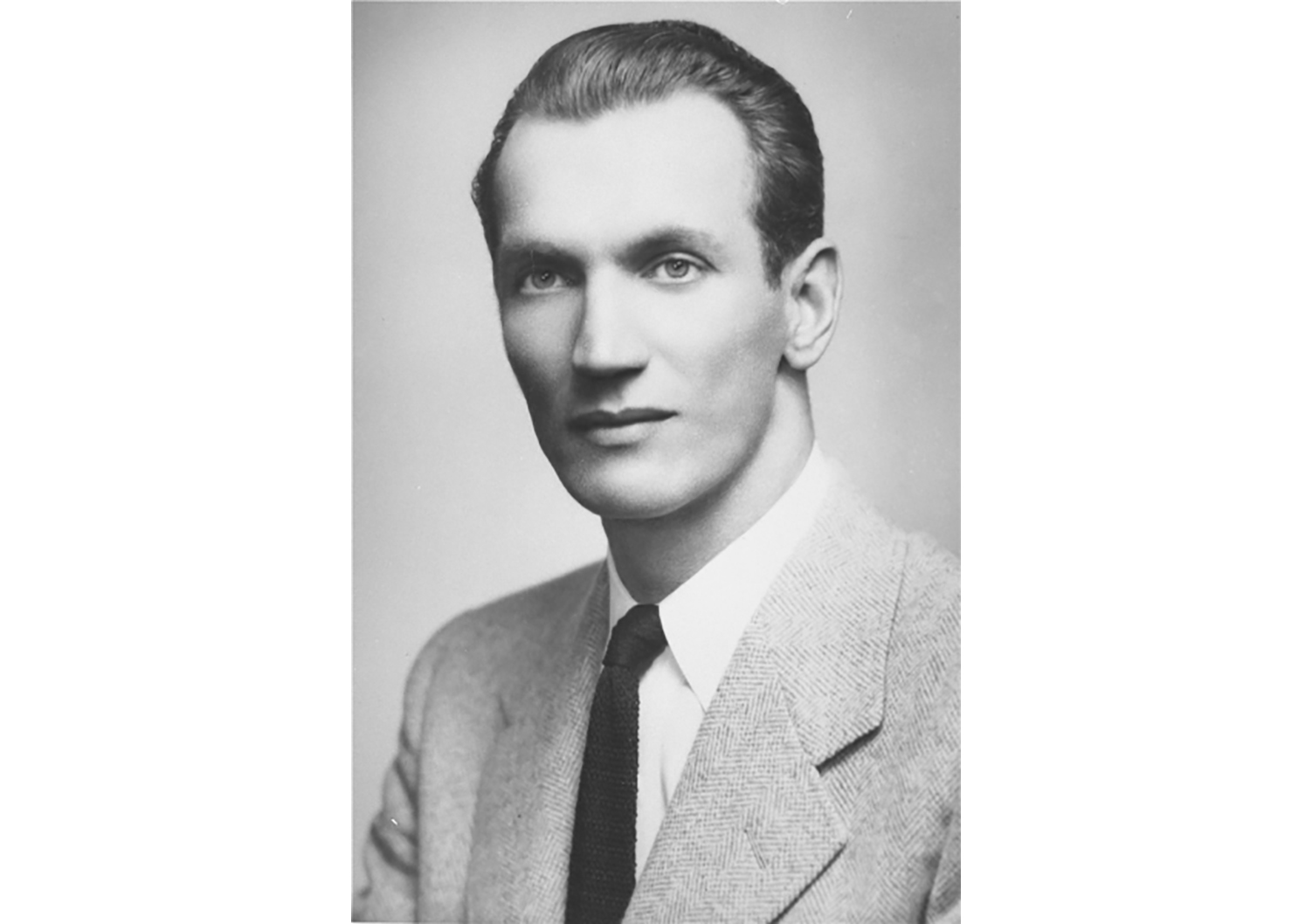
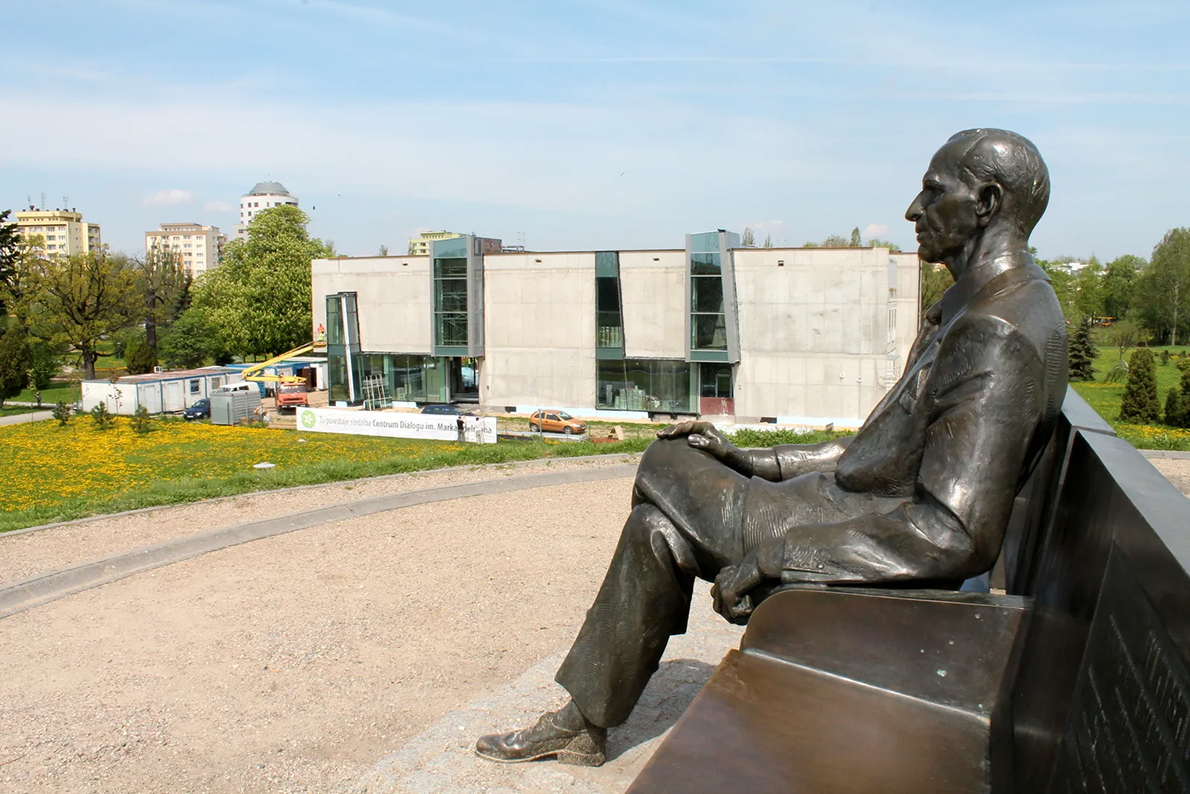
Jan Kozelewski (pseudonym – Karski) was born on June 24, 1914, in Łódź (Poland) into an intelligent Catholic family with many children. In 1931, the young man came to Lviv (his older brother was appointed commandant of the provincial police in Lviv). In 1935, Jan graduated from the Faculty of Law and Diplomatic Studies at the Jan-Kazimyrs University of Lviv (now the Ivan Franko National University of Lviv) and soon began his diplomatic career in the Polish Ministry of Foreign Affairs.
At the beginning of World War II, Karski's military unit was attached to the Kraków Cavalry Brigade. After the surrender of Poland, while trying to escape to Hungary, Jan was captured by the Red Army and transferred to a German prisoner of war camp in Radom. While being transported to another city, Karski escaped, returning to Warsaw, where, together with his older brother Marian (who held the position of chief of police in Warsaw), he joined the Polish Resistance movement, the Home Army (hereinafter referred to as the AK). The young man's unique photographic memory and attention to detail came in handy in his new job - as a courier between the underground movement and the Polish government in exile, which was based first in France, then moved to London.
His first trip, which was intended to familiarize himself with the conditions of the Soviet and German occupation, ended unsuccessfully: although Karsky managed to find his way back across the border, together with a group of Jews fleeing the German occupation; however, no one in Lviv wanted to communicate with him (out of fear that the noble mission could be a Soviet provocation). However, he managed to learn and record some things (for example, about the daily humiliations, mass deportations of residents).
With his perseverance and diligence, Jan impressed the Polish government. During a secret trip to Slovakia, he was captured by the Gestapo and subjected to brutal torture. He was hospitalized for some time. Due to serious injuries, Karski was forced to take up a different type of work. For example, in Krakow he listened to Soviet radio broadcasts and translated them for the underground press. At the end of 1941 he returned to Warsaw, where he began working in the AK Information and Propaganda Bureau.
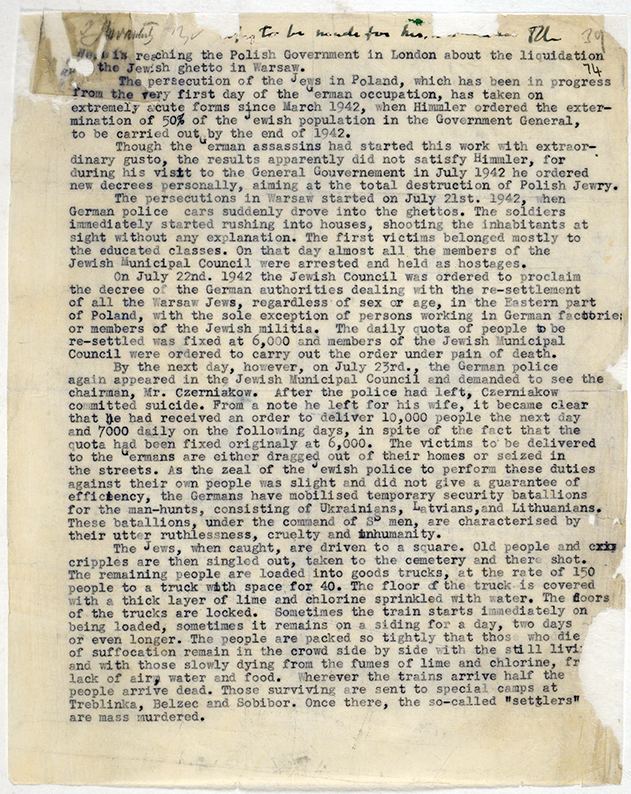
By the time of his crucial mission in London (September 1942), he had learned absolutely everything he could about the Holocaust. For him, as for most Polish underground members, the extermination of the population in the Warsaw ghetto in the summer of 1942 was a particular shock from the realization of the Nazis' intentions.
Although the primary purpose of the London mission was to inform the Polish government about the state of underground activity in Poland, the man's personal priority was to report the real situation about the Holocaust. Karski conveyed everything he saw and analyzed to the Polish Prime Minister and President with a request to inform the Vatican about it, which was done, but to no avail.
Karski also conveyed messages from the Jews of Warsaw to Jewish leaders in London, including Shmuel Siegelboim, a member of the National Council of the Polish government-in-exile. Shortly thereafter, in January 1943, the Nazis attempted to deport several thousand more Jews from the ghetto and met with armed resistance. The Jewish underground in Warsaw then began planning an uprising, which ended in the actual defeat of the insurgents, but their heroism became known to the whole world.
In June 1943, Karski went to Washington on another special mission. At that time, Poland was effectively at war with Nazi Germany and the USSR (the latter broke off diplomatic relations in April 1943 in response to Poland's demands for an independent investigation into the Katyn affair). The mission was intended to foster some sympathy for Poland (after the ghetto uprising) and help Americans understand the danger posed by the USSR. But for Jan, it was also an unnecessary excuse to inform the public about the course of the Holocaust.
After such public appearances with high-ranking officials in various countries, Karski’s career as a secret courier was apparently to end. During his second visit to Washington in early 1944, he compiled a book that became a sensation during the author’s lifetime, “History of the Secret State.” In this publication, the Polish emissary presented the information he had, focusing particularly on the terrible situation of Polish Jewry. For a whole year, he gave lectures, wrote articles for newspapers, and spoke on the radio about the Nazi occupation of Poland, the Polish Resistance movement, and the plight of Jews under the Nazi invasion.
After the war, Karsky remained in the United States, where he began working as a lecturer at Georgetown University, where he defended his PhD thesis (1952). He remained in this position until 1984, already holding the highest academic position - full professor.
For more than 30 years after what he had experienced and seen with his own eyes, Karsky remained silent. But in 1978 he made an exception: at the request of French director Claude Lanzmann, who was making a documentary about the Holocaust, Jan agreed to tell the public about his experiences; the eight-hour interview became a kind of “second mission” for the man because of the sincerity and insight of the story from a direct participant in the terrible events.
In 1965, Jan met Pola Nirenska, a prominent Polish dancer of Jewish origin (he had first seen her in London during a performance in 1938), whom he soon married. Both were connected by a common past – their homeland, memories of the terrible genocide and personal tragedies (most of Pola's family was destroyed during an attempt to escape from occupied Poland). But a happy future never materialized: marriage turned out to be childless, each was busy building their own careers. In 1992, sick and tired of feeling unfulfilled expectations, Pola made another (this time successful) suicide attempt.
After his wife's death, Karsky devoted himself to research, particularly in the fields of history and political science, and in particular, he completed his own two-volume monograph “Great Powers and Poland 1919–1945: From Versailles to Yalta” – a publication that, according to its author, “is the embodiment of the fate of Poland in the 20th century.”
During his life, Jan received many honorary titles and earned respect from the governments of various countries. For example, in 1982, the International Institute of Catastrophe and Heroism “Yad Vashem” honored him with the title of “Righteous Among the Nations”; and later, the government of the State of Israel and his hometown of Łódź granted Jan honorary citizenship (1994). “…In a sense, I also became part of the Jewish community…. And now I, Jan Karski, by birth Jan Kozelewski – a Pole, an American, a Catholic – also became an Israeli,” Jan emphasized in his emotional speech during the presentation of the honorable distinction.
In 1988, Karsky was nominated for the Nobel Peace Prize. In 2012, he received the Presidential Medal of Freedom from US President Barack Obama (posthumously). Jan Karsky died on July 13, 2000 in the United States.
Iryna Radchenko