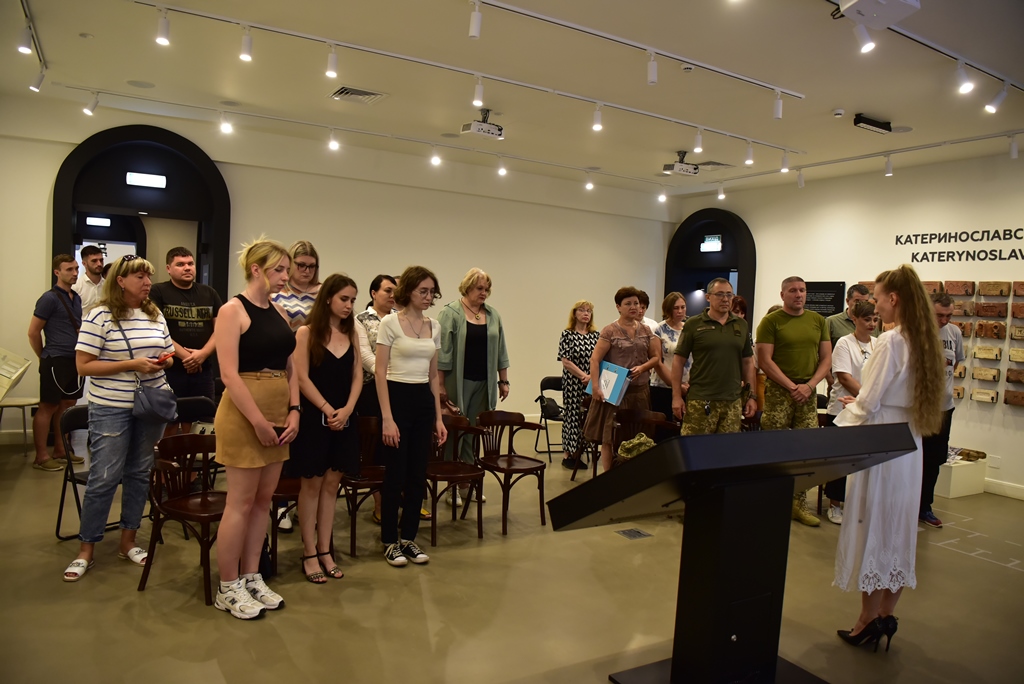
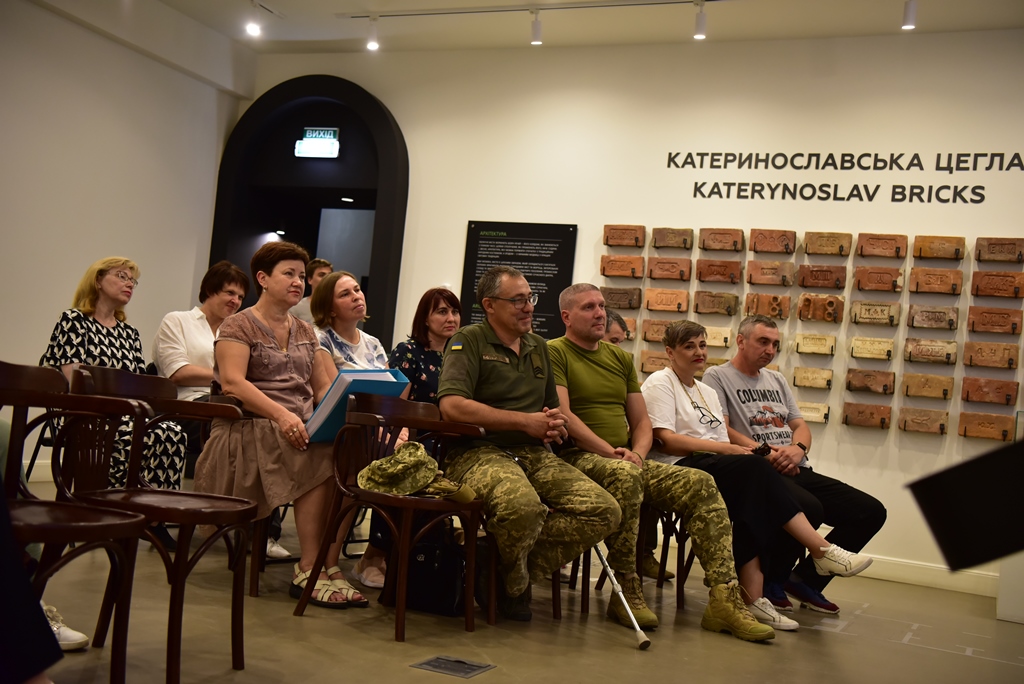
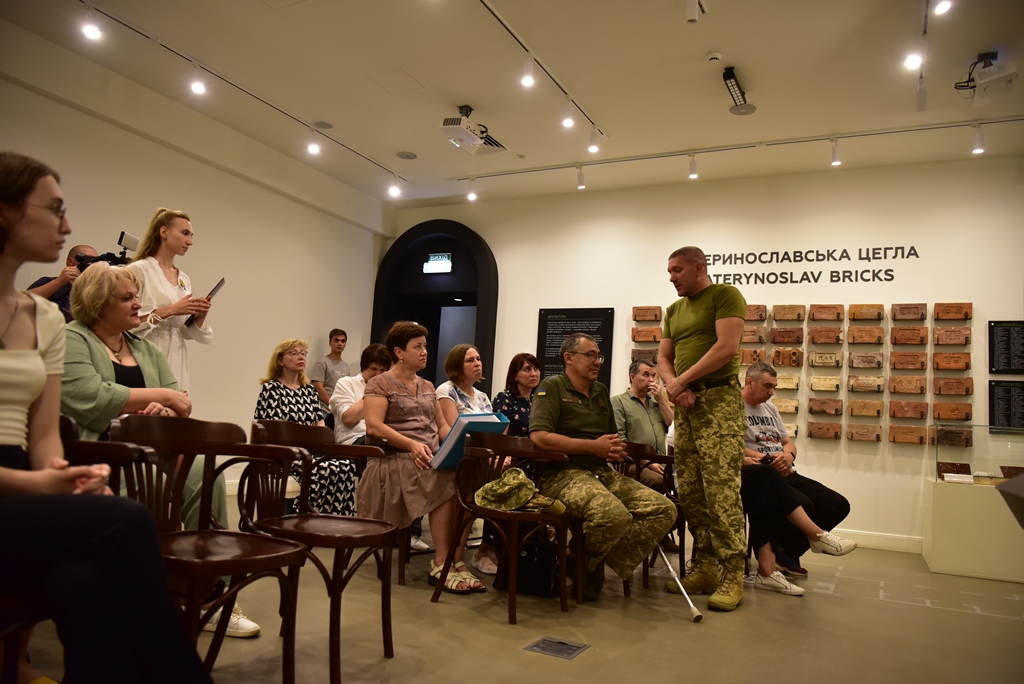
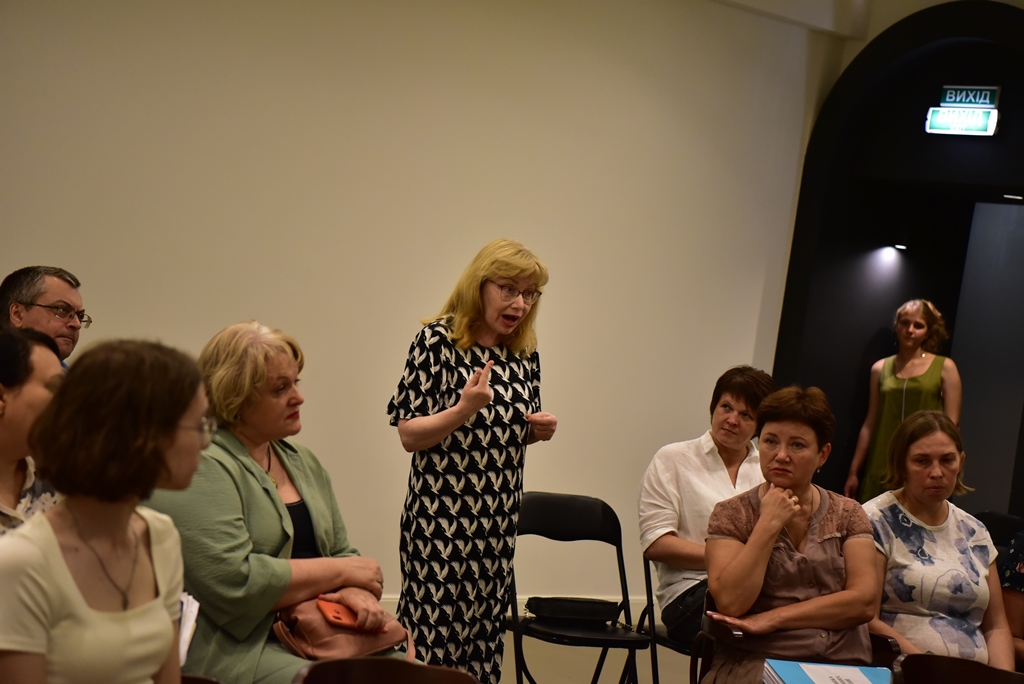
On August 3, a presentation of the media archive project “Voice of War – Telephone Stories” was held at the Dnipro History Museum under the auspices of the Dnipro City Council. Despite the fact that hostilities are actively ongoing on the territory of Ukraine, a group of Dnipro historians, archivists, and journalists initiated the formation of a grand narrative of the war experience of Ukrainians who found themselves during the war in various roles: a participant in hostilities; former prisoner; displaced person; volunteer; a resident of a Ukrainian city that was experiencing a blackout, rocket fire; resident of the occupied city.
Director of the Department of Youth Policy and National Patriotic Education of the Dnipro City Council, Darya Bila, while presenting the prepared videos, emphasized that the project has an all-Ukrainian character, however, the regional emphasis will be on the Dnipro region and its residents. The head of the project, historian Dr. Dmytro Kayuk emphasized the main goal of the project – to collect testimonies “on the hot trail”, when emotions have not yet had time to “cool down”, and the details have faded from the memory of future narrators. It is for this reason that the most accessible and most efficient telephone survey format was chosen (which does not exclude the conduct of an extended face-to-face interview).
The discussion was both emotional and constructive. It was attended by the head of the archival department of the Dnipro City Council Lyudmila Chorna, the dean of the history faculty of the Dnipro National University, prof. Dmytro Arkhiereyskyi, Dr. Oksana Gudoshnyk, deputy dean of the Faculty of Mass Communication Systems and Media, Dr. Olena Ishchenko, researcher of the Museum “Jewish Memory and Holocaust in Ukraine”. All of them spoke in favor of creating a powerful platform for the collection and distribution of historical evidence and outlined their own resources for supporting the project. O. Ishchenko shared her museum experience of collecting oral historical evidence of the history of World War II and warned against mythologizing the event we are experiencing. She also supported the expansion of the telephone format to full-fledged interviews, by which future historians will be able to study the deep motivations and behavioral strategies of the participants in the historical process.
The project has a tentative name so far. Any ideas are welcome. So it will continue.