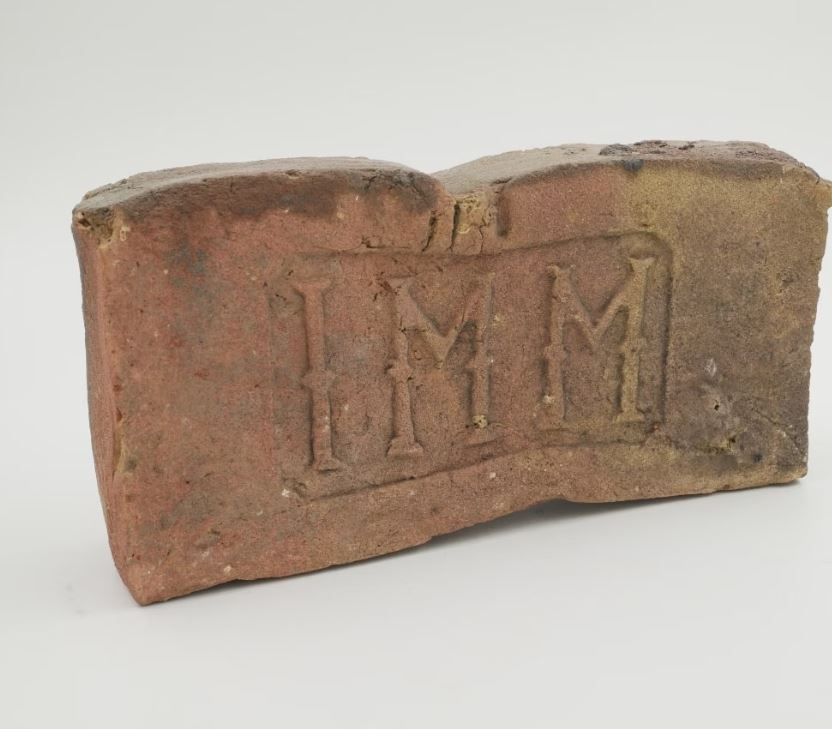
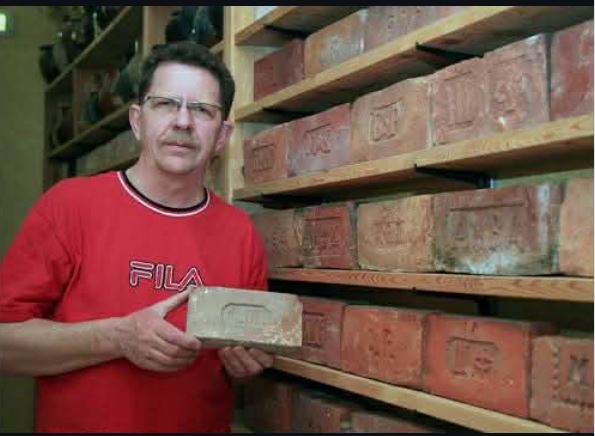
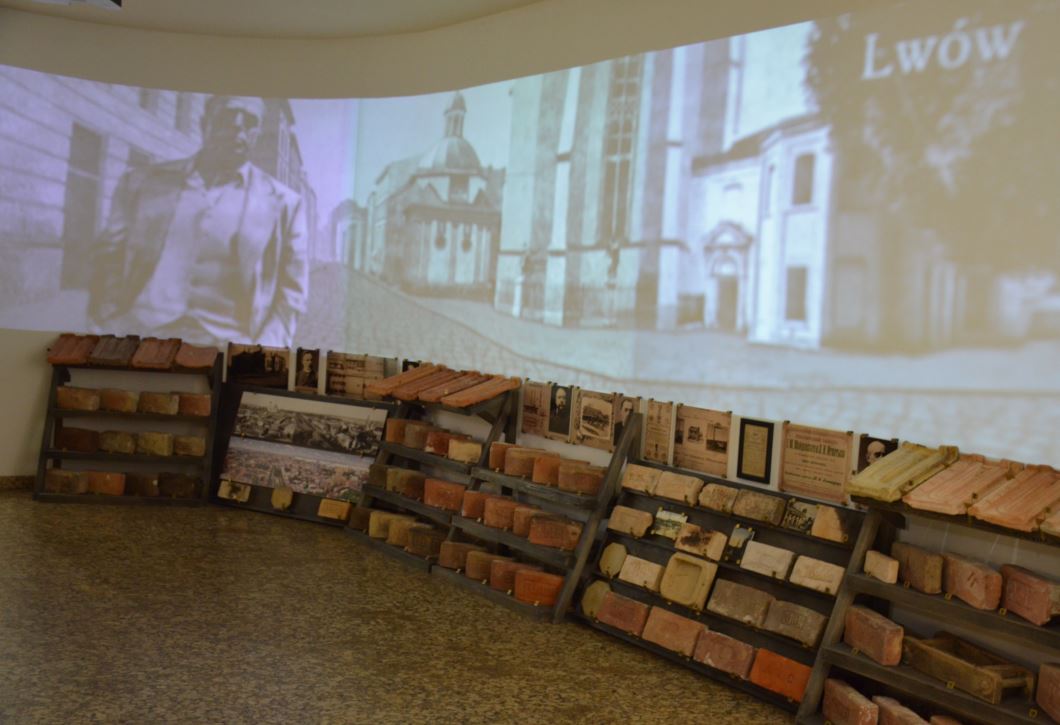
On the first floor of the Museum, in the exposition “City”, there is a collection of bricks produced by factories of the Ekaterinoslav province in the second half of the 19th – early 20th centuries. with the brands of the owners. Not only Jewish brickyards are presented here – popular products were also produced in their estates by such famous countrymen as O. Pol, D. Pcholkin, M. Urusov, V. Khrinnikov. Jewish entrepreneurs did not have estates; in general, the law of 1804 “On the Settlement of Jews” deprived them of the right to live in rural areas - so they founded brickyards on the outskirts of Katerynoslav.
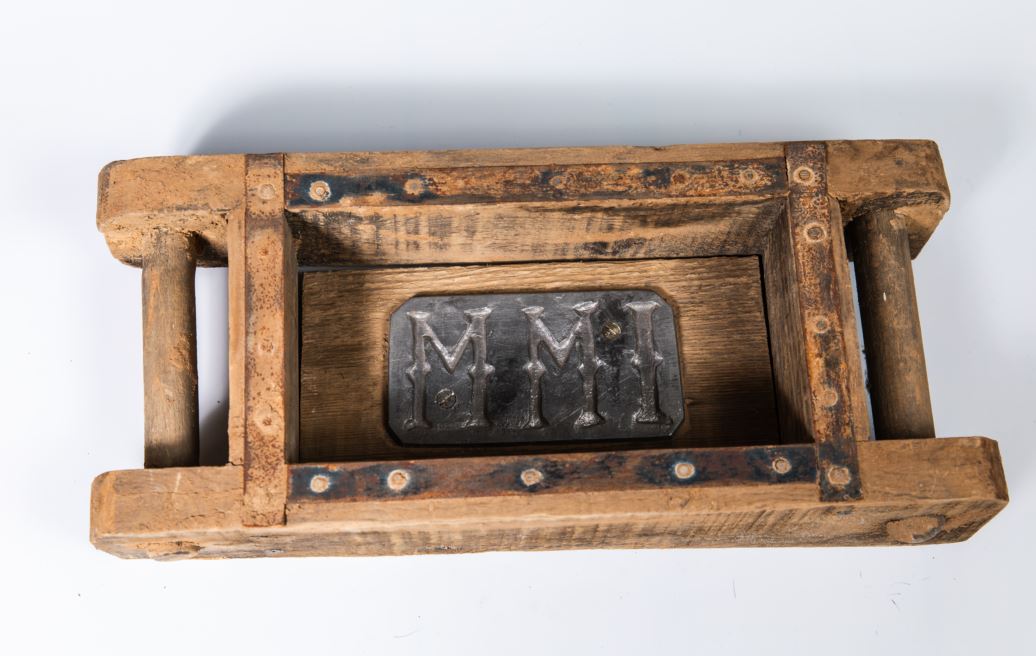
The presented exhibit is made of red-brown building clay; on the front side, the monogram of the name of the owner of the brick factory – Yekaterinoslav entrepreneur Iona Mikhailovich (Mihelevich) Maidansky – “MiI”, “I.M.”, “IMM” is pressed out. Together with L. Ignatiev (monogram “MiI”), he owned the factory in Rybakivska (now Rybalska) Balka and alone – the factory in Aptekarska Balka. The exhibition also presents a mold for making bricks from Maidansky’s enterprise – a special wooden box where clay mortar was placed. At the bottom of the mold, a mirror image of the letters was embossed on a special metal plate. When the clay was pressed against the mold, a branded relief – the owner’s monogram – remained on it. Then the brick was dried in the sun for up to two weeks, after which it was fired in a furnace at a temperature of up to 1000 degrees Celsius. The cooled brick was now ready for use.
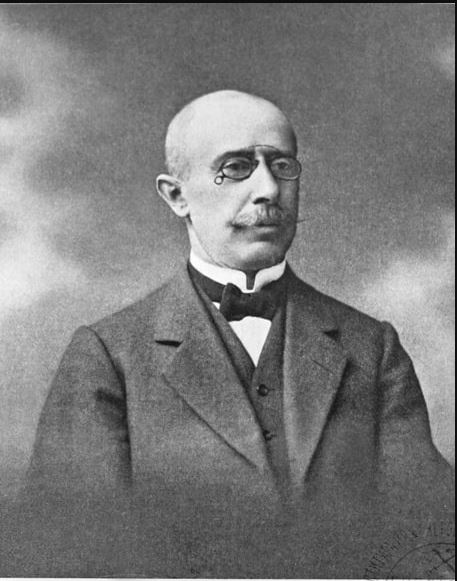
The famous Katerynoslav engineer, architect, and construction contractor Iona Maidansky was born 165 years ago – on October 10, 1961, in the city of Zaslav, Volyn province (now the city of Izyaslav, Khmelnytsky region) into a Jewish family. His father Mykhailo (Mikhael) was a merchant, and in 1875 he moved with his family to the city of Katerynoslav. Here he continued his commercial activities; and became a respected member of the Jewish community: he was elected gabai (headman) of the Choral Synagogue and therefore carried a heavy burden of public affairs – administrative, economic, and financial. M. Maidansky was elected a glasnym (deputy) of the Katerynoslav city duma and was a well-known patron of the region.
After graduating from the real school (1879) in Katerynoslav, the son of Mikhail Ion additionally took a one-year course of preparation for entering a higher educational institution at the Kremenchuk real school, studied exact and natural sciences – higher mathematics, physics, chemistry, drawing, etc. Then the young man entered the capital's university – the St. Petersburg Institute of Railway Engineers and in 1886 successfully graduated: “1st category” in those days gave the graduate significant advantages at the beginning of his career. The main advantage was energy, business “sense”, which allowed not to waste life's chances. In addition, Ion ended up, as they say, in the right city at the right time. After all, Katerynoslav was in an intensive phase of development – demographic, industrial, transport. What could be better for a young, ambitious, well-educated enterprising person?
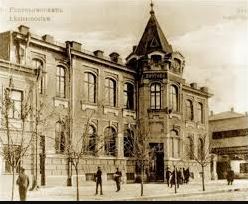
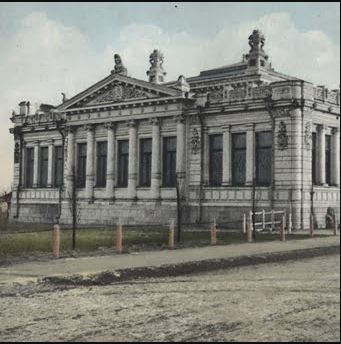
In 1865, the population of Katerynoslav was 23 thousand inhabitants, and as of 1897 - over 112 thousand. In the wake of the demographic surge, a construction boom came. The demand for bricks was met by dozens of factories. Maidansky did not miss the opportunity to take advantage of this for his own enrichment. After all, the production of building materials is one of the industries that gives maximum profit without large capital investments. He opened a brick factory in Aptekarskaya Balka, where they began to produce branded Katerynoslav bricks, which were distinguished by high density and a special red shade, as well as characteristic grooves and irregularities. Dozens of iconic buildings of the city were built from it, in particular, the buildings of the Post and Telegraph Office, the Commercial Bank, and the Regional Museum of Local Lore named after. Field. Maidansky acted as a contractor engineer, that is, he managed the process and was responsible for the implementation of the project.
Iona was an inventive entrepreneur: for the sake of competitive advantages, he was ready to mislead buyers who wanted foreign goods. He decorated some of the bricks with exotic inscriptions “London”, “Paris”, “Berlin” (the same was done by the clever manufacturers of tiles and other goods in wide demand at that time; similar samples are also presented in the Museum’s exposition). Of course, all this “European” stuff was produced at local enterprises.
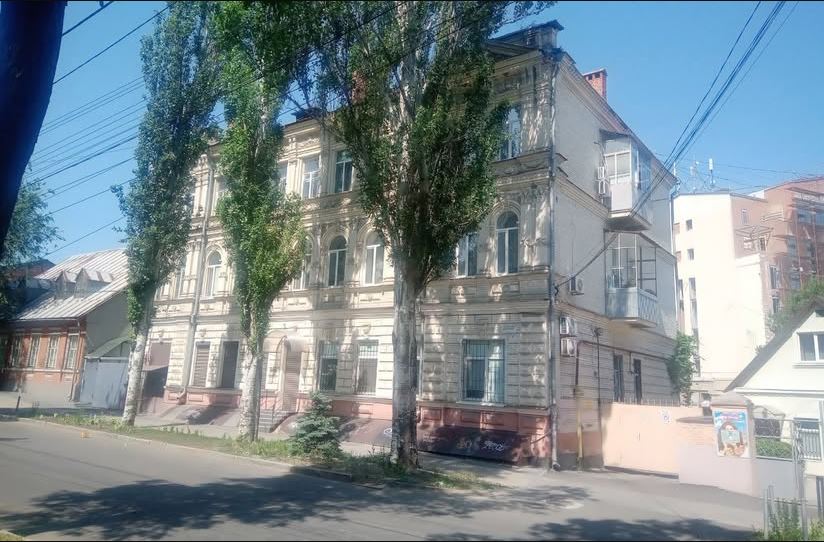
The rapid development of the industry also caused a significant demand for expensive housing. A new phenomenon for Katerynoslav arose – the construction of multi-storey apartment buildings of increased comfort, which were built mostly in the city center and were intended for rental as residential apartments and institutions. It was in this area that Maidansky saw a niche for enrichment – his apartment buildings were in the prestigious mountainous part of the city – on Potemkinskaya Street (now Serhiy Yefremov Street), Novodvoryanskaya (now Volodymyr Vernadsky Street), Poltava (now Olesya Honchara Street), Baseyna (now Pisarzhevsky Street). Iona Maidansky and his family lived in the city center, in the Jewish quarter – on Kharkivskaya Street.
After the revolution, I. Maidansky lost his own enterprises, but did not leave the country, remaining in his hometown. He worked as an engineer in design organizations, in the municipal economy system. The last mention of him in archival documents dates to the beginning of 1941. His son, Mykhailo Ionovich Maidansky, inherited his father's interests and abilities, became an architect, and worked in Dnipropetrovsk in the 1920s and 1930s.
Olena Ishchenko